January 10, 2013. You need a head to think, a heart to feel and hands to serve humanity. --Paraphrase--Swami Vivekananda.

|
Bhagavad-Gita: 18 Chapters in Sanskrit |
| Download Bhagavadgita-all 18 chapters in Sanskrit, English, |
| transliteration and word for word translation. |
Bhagavadgita in English
| bg07-Sanskrit | bg10-Sanskrit | bg11-Sanskrit | bg12-Sanskrit | ||
| bg13-Sanskrit | bg14-Sanskrit | bg15-Sanskrit | bg16-Sanskrit | bg17-Sanskrit | |
https://myindiastories.com
|
The popular verse from the Vaiṣṇavīya Tantrasāra makes out that the Gītā restates the central teachings of the Upaniṣads, The Upaniṣads are the cows and the cowherd's son, Kṛṣṇa, is the milker; Arjuna is the calf, the wise man is the drinker and the nectar-like Gītā is the excellent milk. Excerpt from Bhagavadgita. translation by Dr. Radhakrishnan. page 13. |
|
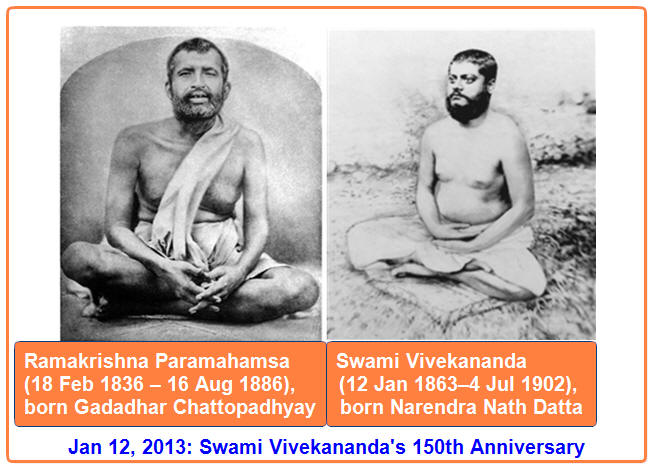
December 24, 2012. Swami Vivekananda's 150th Anniversary on January 12, 2013 There are very many quotations from Swami Vivekananda (12 January 1863–4 July 1902) in this tenth Chapter of Bhagavadgita. Come 1213 January 12, it is Swami Vivekananda's 150th Anniversary. This chapter 10 in Bhagavadgita is dedicated to Swami Vivekananda, who saw the truths in all religions and found the courage to criticize his own natal religion where it was necessary. That is a sign of greatness and a want to reform his religion.
January 10, 2013. Swami Vivekananda redefined the word `atheist’ when he declared that as per the new religion, an atheist is one who does not believe in himself, not necessarily the one who does not believe in God. One of his writings asks the youth to focus on the three `H’s - ‘Heart’ to feel for the poor and the marginalised, ‘Head’ to think and `Hands,’ which would convert thoughts into deeds. ‘They alone live who live for others, the rest are more dead than alive,’ he observed. “It is better to wear out than rust out,” he said advising the younger generation to work, work and work till the goal is reached...at ease with science and technology on the one hand and humanism on the other and there was no quarrel between the two. --Thehindu.com |
Veeraswamy Krishnaraj: Tolerance with love is to speak in tongues of all faiths, hold in the heart the Truth of all faiths and see
all faiths in the face of humanity. To be moral and ethical is erring on the side of God.
You have your Google search engine tailored for this site.
Please enter the word(s) in the search box; it will take you to the file with that word in this web site. Enjoy your visit here.
About the author:
Veeraswamy Krishnaraj, M.D; F.R.C.P (Canada) is a board certified pediatrician in active practice until the end of 1998. He immersed himself in study of Hinduism in depth. He has sufficient knowledge and understanding of Hindu religion that he is confident to publish this book. He kept the words simple, supple, illuminating and to the point, while retaining the original flavor, beauty and grace. Compound words in Sanskrit are a nightmare for the beginner, as they are spliced together compactly in one continuous stretch of characters. He parsed the compound words into digestible syllables or words with superscripts and sequential numbers and rearranged the words in the verse in a readable form in English. In this book, he claims ownership of shortcomings and cedes the rest to Bhagavan.
This book is good for students, and devotees reading the Bhagavad-Gita in Satsang (true company). Two verses nestle in two boxes in one page with no break or carry-over to the next page. Diacritics help the reader enunciate the words like a Sanskritist. The English words are reader-friendly. Wherever there is a need for elaboration, an addendum supports it.
Simplicity, authority, universality, and profundity are the hallmark of the Bhagavadgita, the Bible of the Hindus. The Bhagavadgita is the Song of the Lord. It provides guidelines for daily living with no dogmas and ritual overtones. It encourages and supports your individuality. It also explains the consequence of errant ways. Total surrender to Bhagavan releases the devotee from the ills of life on earth. Hinduism as a term is an external appellation from non-Hindus. Its true name is Sanatana Dharma (Eternal Law or Eternal Order) commensurate with Rta (Cosmic Order). The beauty about the Bhagavadgita is its appeal is universal.
BG CHAPTER 10: MANIFESTATION
|
Chanakya 300 B.C. A stranger asked a brahmana, "Tell me, who is great in this city?" The brahmana replied, "The cluster of palmyra trees is great." Then the traveler asked, "Who is the most charitable person?" The brahmana answered, "The washer man who takes the clothes in the morning and gives them back in the evening is the most charitable." He then asked, "Who is the ablest man?" The brahmana answered, "Everyone is expert in robbing others of their wives and wealth." The man then asked the brahmana, "How do you manage to live in such a city?" The brahmana replied, "As a worm survives while even in a filthy place so do I survive here!" http://www.hinduism.co.za/chanakya.htm |
| Manifestation of Divine Glories: Bhakti yoga with its preparatory disciplines has been taught. Now, in order to induce such devotion and nourish it, it is taught that multitudes of auspicious attributes of the Lord are infinite, that His sovereignty over the whole universe is unrivalled, and that the universe is governed by His will, as it constitutes His body, with Him for its Self. --Translation from Sanskrit by Svāmī Ādidevānanda of Ramanuja's introduction to BG10. |
This article has things that you never thought of or were afraid to think, ask, and say. Good luck.
10.1: Sri Bhagavan said:
O Mahā-bāho, hear again My supreme words, which I say to you for your good, for you love Me.
Mahā-bāho: Mighty-armed one
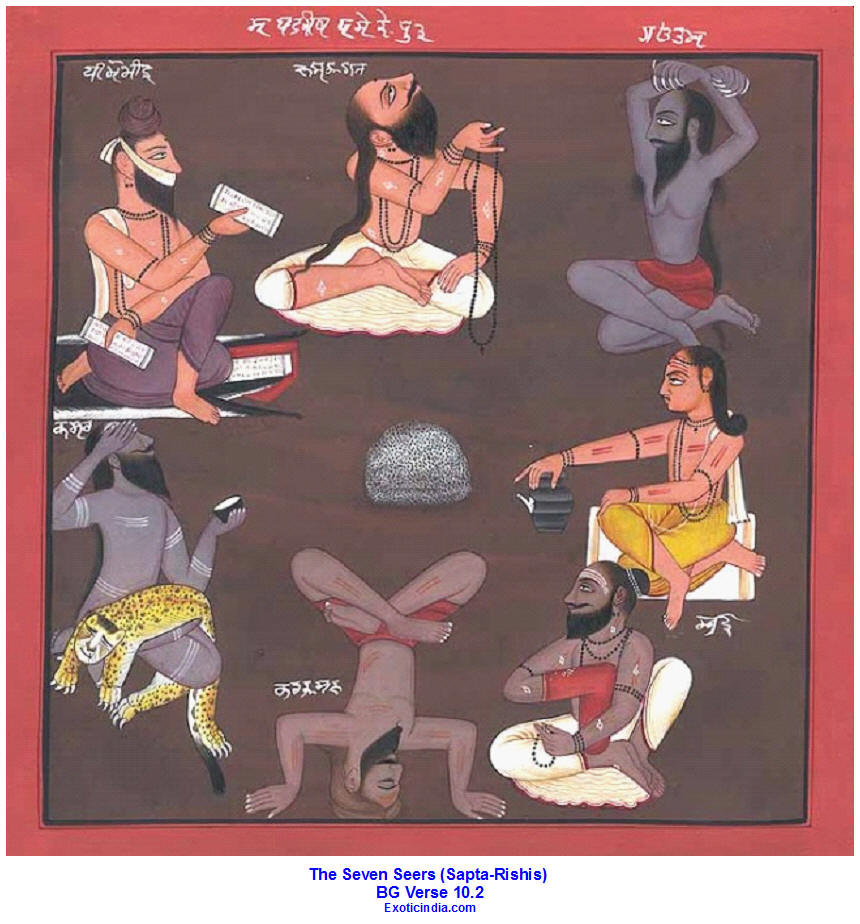
10.2: Neither the
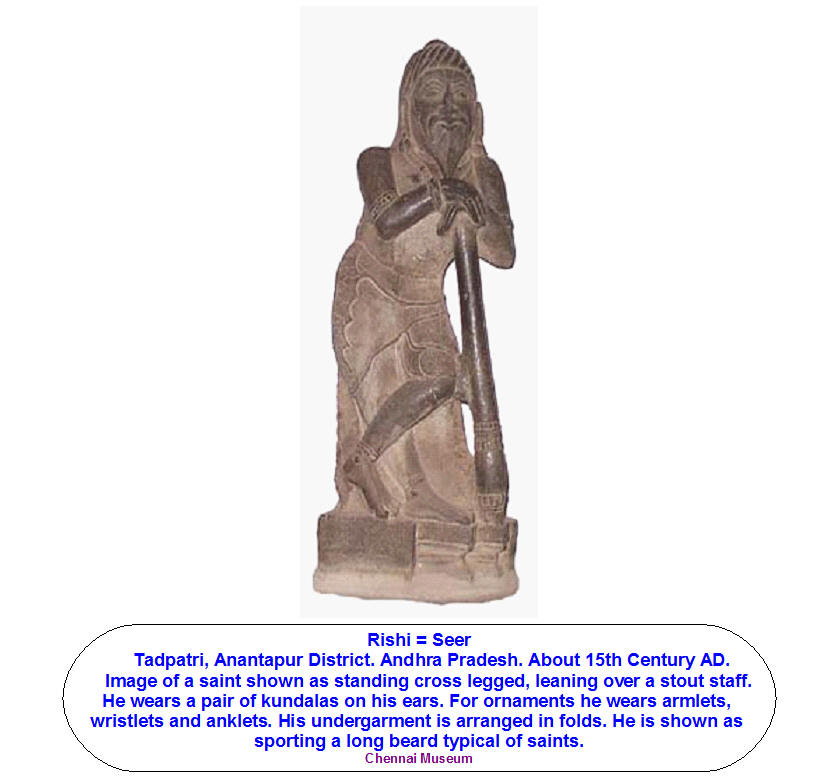
bevy of gods, nor the great sages (Rishis)
know My Majesty (origin). I am also the origin of the gods and great rishis in
every way.
Brahmanas claim descent from Saptarishis.
In the Book of Revelation by St. John,
Bible Revelation 1:16 (New International Version)
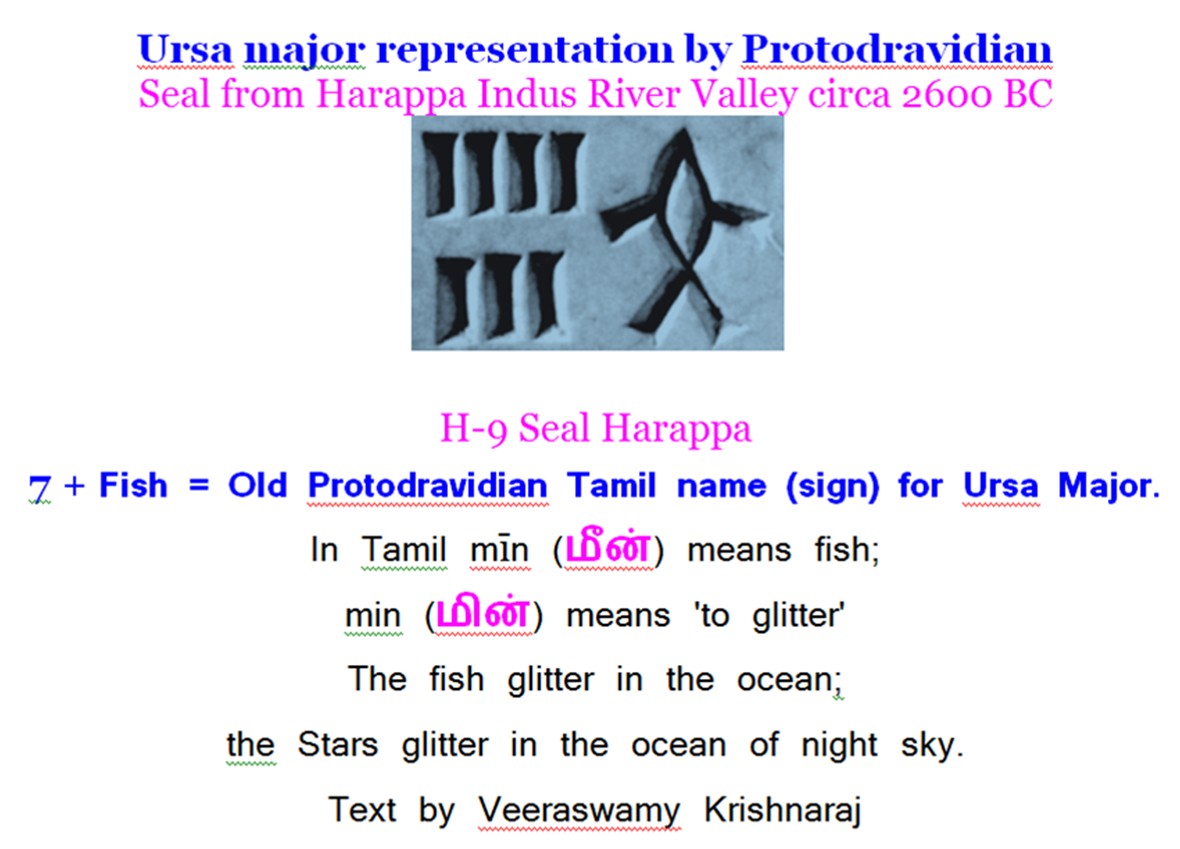
Dravidian Rebus for Ursa Major 2600 BC Indus River Valley Harappa seal H-9
|
|
Pleiades: The seven daughters of Atlas and half sisters of the Hyades, placed among the stars to save them from the pursuit of Orion. One of them (the Lost Pleiad) hides, either from grief or shame.
|
Ursa Major, The Seven Sages, Their Seven Wives (Pleiades), Ravishing by fire God or Siva Vedic texts prescribe the kindling of sacred fires under the Pleiades, because the Pleiades now have the Fire-God Agni as their mate. We are told that the Pleiades were the wives of the Seven Sages, but are now precluded from intercourse with their husbands, who divorced them. Therefore the Pleiades now rise in the east, while the Seven Sages (that is, the stars of Ursa Major) are in the north. The Fire God Agni mentioned as the mate of the Pleiades apparently represents the young vernal sun, whose conjunction with the Pleiades started the New Year. Later Sanskrit texts tell the myth in more detail and in several variant forms. According to them, the Fire God Agni (or the great ascetic god Siva) seduced the Pleiades in the absence of their husbands, the Seven Sages. They were divorced. Only Arundhatii, the faithful wife of Sage VasiSTha, could not be seduced. She could remain as the star Alcor with her husband, the star Mizar of Ursa Major (see fig. 13). http://www.thehindu.com/multimedia/archive/00133/_A_Dravidian_Soluti_133901a.pdf |
10.3: He who knows Me
as unborn, beginningless, and the
Great Controller
of the worlds, is undeluded among
mortals and freed from all sins.
Our body is made of insentient matter (= IM = Prakriti), when it is reduced to its parts; IM is subject to modification, transformation or mutation. Life on earth comes about when the soul unites with IM (body). Thus, we are made of soul and IM. Life is soul and body. Karma is the agent which brings the soul and matter (body) together. This body has a beginning, a middle, and an end. Soul is eternal. Thus Karma imprisons the eternal soul in the non-eternal body. Bringing Karma to a Null entity releases the soul from the body, so it can merge with Brahman. Bhagavan is not subject to birth, beginning, middle, end or Karma as we the people are. God is 'Unborn' because He is eternal. The Lord is described as 'beginningless' (AnAdi) because the liberated self or soul, becoming birthless upon resolution of Karma, had a beginning. The Lord is not subject to the Karmic agent that brings the soul and matter in a living body such as ours. Bhagavan and all Matter in Srivaishnava Heaven (Vaikuntam) are made of a-prakritic and parakritic (divine) substance known as Suddha Sattvam (Pure Goodness). Pra-kṛiti = material world made of Sattva, Rajas and Tamas (Virtue or goodness, motion and passion, and darkness). Suddha Sattvam is Sattva [pure goodness] not vitiated by the other two, Rajas and Tamas: Pure Empyreal substance.
| Aug
31, 2011. The divine form or Bhagavan is also achit. But it is
parakrutam ie. not a
product or
prakruti
(the primodial nature). So it is not a mixture of satva rajas and tamas
(as our body is) but pure satva (suddha
satva).
--Sri U.Ve. Krishnan Swamy Definitions: Achit = insentient. Parakrutam = Supreme Nature, made of pure Virtue; also known as A-Prakrti. Prakrti = Nature, made of Sattva, Rajas and Tamas -Virtue, passion and darkness. --Krishnaraj |
People devoid of delusion, doubt and dither are released from sin. Delusion is to equate God with other living entities of the same kind. Dissolution of delusion releases man from all sins, which prevent in him ascent of Bhakti (devotion) to the Lord.
The Lord is the Supreme Ruler, because He is the Controller beyond all external controls, unsurpassed and incomparable, distinct from mutable matter, the bound and freed souls, and possesses auspicious qualities. Meditation on Him and His auspicious qualities destroys all evil which prevents rise of devotion. (This is Ramanuja's View.)
According to Srivaishnavism, we (our body) are made of Prakriti or matter which by nature is insentient, mutable and impure. In Vaishnava heaven, the beings and matter are made of Suddha Sattvam (Pure goodness) totally removed from and opposite of Asuddha Tattvam (impure matter).
Suddha Sattvam is Pure Sattva not contaminated with Rajas and Tamas. Pure Sattva is pure Gold; Prakrti is Slurry with traces of gold. Appearance or disappearance is not its nature. It is eternal. It is self-effulgent. Its other name is Māyā. It is transcendent Sattvic aprakriti not contaminated with Rajas and Tamas. The opposite of Māyā is Avidya Prakriti (Malina Sattva = Impure Sattva) which is short (absent) on Sattva, and long on Rajas and Tamas. Malina Tattva = Avidya = Misra Tattva (mixed principle). Suddha Sattva is the Highest Empyreal Form or substance and Malina or Misra Tattva is the lower form. Diamond is the Highest Form and charcoal (or lignite) is the low form, though they are made of carbon. All souls caught in material energy are Misra Tattva. One who gives up the material Tattva and considers himself an infinitesimal part of the Lord, the Supreme Personality of Godhead, is suddha-anucit (pure atomic sentient fragment of the Lord). Transcendental substance is suddha-sattva. We the people, made of Prakriti and shedding it along with the sins after accepting Bhagavan as the only refuge, would wade through the River of Purification (Vraja River) on the way to heaven (Vaikuntam), and acquire the body like that of Bhagavan made of Suddha Sattvam.
The Lord and all of His cohorts have transcendental bodies, have qualities identical with those of the Lord; are beyond the ravages of Time, of Suddha-Sattva nature, eternal and immutable, of auspicious qualities, effulgent with Vedic knowledge; and engage in fivefold worship of the Lord. --Gaudiya Cosmotheism. Sankarsana (Brother of Bhagavan Krishna) radiates Suddha Sattva energy. (It is all in the Family!) This energy sustains Vaikuntam with auspicious qualities. Krishna's Tirumeni (திருமேனி = Sacred Body, heavenly Body unlike our physical body) is aprakritic Suddha Sattva and unlike the five great elements Ether, Air, Fire, Water and Earth) that make the body of His creation.
Great Controller of the worlds: Bhagavan is the Lord of many universes and worlds thereof. There is only one Sriman Narayana or KaranaDakasayi Vishnu (Causal Ocean Vishnu); pores of His body exude universes. He delegated a Brahma, a Vishnu and a Rudra-Siva to each universe; there are zillion universes with their own Trinities. This is the Srivaishnava view.
Here is the Saivite interpretation of the verse.
The Saivites believe that Supreme Siva is the Controller of all universes run by the Trinities delegated by Supreme Siva. The Saivite poet Tirunavukkarasar (திருநாவுக்கரசர்) sang a song illustrating this point.
நூறுகோடி பிரமர்கள் நொந்தினார் (நூறுகோடி = 100 X 10 million) = countless numbers
ஆறுகோடி நாராயணர் அங்ஙனே (ஆறுகோடி = 6 X 10 million) = countless numbers)
ஏறு கங்கை மணல் எண்ணில் இந்திரர்
ஈறு இலாதவன் ஈசன் ஒருவனே.
Many (= Countless; One hundred Kodi; Kodi = 10 million) Brahmas died; many (countless; six Kodi) Narayanas [Vishnu] did likewise. Indras of the count exceeding the number of sand particles in the raging Ganges River met with the same fate. Siva is the only incomparable shining One with no end.
Each universe has its own Brahma, Vishnu, and Siva under the aegis of Supreme Siva. Each universe has its own Indra, chief of lower gods. There are as many universes as Sand Particles in the Ganges River.
10.4: Intelligence,
knowledge, freedom from delusion, patience,
truth (Satyam), self-restraint,
calmness, happiness, sadness, birth, death, fear, fearlessness,
buddhiḥ1 jñānam2 asaṁmohaḥ3 kṣamā4
satyam5 damaḥ6
śamaḥ7
sukham8 duḥkham9 bhavaḥ10 abhāvaḥ11
bhayam12 ca13 abhayam14 eva15 ca16
10.4
|
What is Satyam or Truth. September 21, 2013 |
|
बुद्धिर्ज्ञानमसंमोहः क्षमा सत्यं दमः शमः । |
|
सुखं दुःखं भवोऽभावो भयं चाभयमेव च ॥१०- ४॥ |
|
buddhir jñānam asaṁmohaḥ kṣamā satyaṁ damaḥ śamaḥ |
|
buddhiḥ1 jñānam2 asaṁmohaḥ3 kṣamā4
satyam5
damaḥ6 śamaḥ7 |
|
|
|
buddhiḥ1
= Intelligence; jñānam2 = knowledge; asaṁmohaḥ3
= freedom from delusion; kṣamā4 = patience;
satyam5 =
truth; damaḥ6 = self-restraint; śamaḥ7=
calmness; sukham8 = happiness; duḥkham9
= sadness; bhavaḥ10 = birth; abhāvaḥ11
= death; bhayam12 = fear; ca13 =
and; abhayam14 = fearlessness; ca16
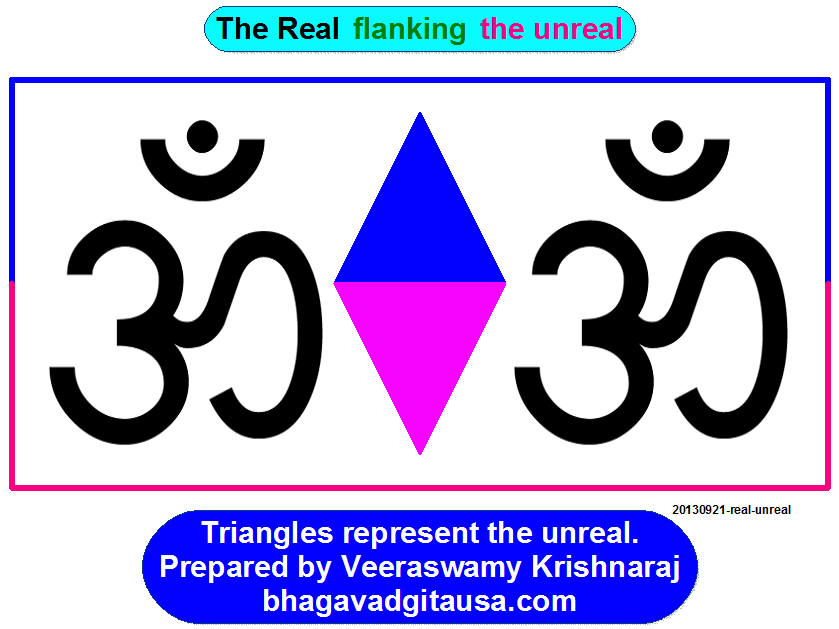
= and; eva15 = also; 10.4 10.4: Intelligence, knowledge, freedom from delusion, patience, truth, self-restraint, calmness, happiness, sadness, birth, death, fear, fearlessness, Definition of Satyam: Sa + ti + Yam = Real + Unreal + Real. What is Satyam? Brahman is Real; Universe and beings are unreal (not permanent). The Bṛhad-Āraṇyaka Upaniṣad argues that satyam consists of three syllables, sa, ti.yam, the first and the last being real and the second unreal, madhyato anṛtam. The fleeting is enclosed on both sides by an eternity which is real.2 The world comes from Brahman and returns to Brahman. Whatever exists owes its being to Brahman 3 The different metaphors are used to indicate how the universe rises from its central root, how the emanation takes place while the Brahman remains ever-complete, undiminished. 4 'As a spider sends forth and draws in (its thread), as herbs grow on the earth, as the hair (grows) on the head and the body of a living person, so from the Imperishable arises here the universe'5 --The Principal Upanisads--Dr. Radhakrishnan damaḥ6 is self-control. We should reduce our wants and be prepared to suffer in the interests of truth. Austerity, chastity, solitude and silence are the ways to attain self-control. The Principal Upanisads--Dr. Radhakrishnan
ॐstॐ
|
Dharmasutra of Vasistha:
Verse/aphorism 3.60: The body is purified by water, the mind by truth, the spirit by knowledge and austerity, and the intellect by knowledge. --Translation from Sanskrit by Patrick Olivelle, page 260 Dharmasutras.
Intelligence is determinative faculty of the mind. Knowledge is to know the difference between insentient matter and individual self. Freedom from delusion is to know the difference between the real and the apparent: Knowing is 'silver is different from mother-of-pearl.' Patience or forbearance is remaining in a tranquil state, when there is an inductive cause for disturbance or agitation. Truth is what you see and what is meant to do good for all beings. Restraint is to reign in the tendency of the senses to lock on to their respective objects and generate evil or bad Karma. These are technical terms in Hindu sacred texts and thus definitions do not conform to English dictionary.
10.5: and
ahimsa (nonviolence), equanimity, contentment,
austerity, charity, fame and infamy: these
different natures of living beings come from Me only.
Ahimsa is avoidance of sorrow and injury to others by thought, word and deed. Equanimity is to remain level-headed, when things, rosy or thorny, happen to you, your family, your friends or your enemies. Contentment is to be happy with what you have, what you do not have, what you will never have, and what others have. Austerity is denying pleasures to the body, according to scriptural injunctions. Charity or beneficence is to do or give to others what causes enjoyment to oneself. Fame is to embrace good qualities. Infamy is to embrace bad qualities. These qualities proceed from Bhagavan Himself, resulting in activity or inactivity. Let me explain. The students take exam. The teacher awards grades, not out of favor or spite. The grade is yours, based on your performance but (grading) comes from the teacher.
|
Morality is a relative term. Is there anything like absolute morality in this world? The idea is a superstition. We have no right to judge every man in every age by the same standard. Every man, in every age, in every country is under peculiar circumstances. If the circumstances change, ideas also must change. Beef-eating was once moral. The climate was cold, and the cereals were not much known. Meat was the chief food available. So in that age and clime, beef was in a manner indispensable. But beef-eating is held to be immoral now. --Swami Vivekananda (January 12, 1863–July 4, 1902) The Complete Works of Swami Vivekananda Volume 6 [ Page : 109 ] NOTES TAKEN DOWN IN MADRAS, 1892-93 |
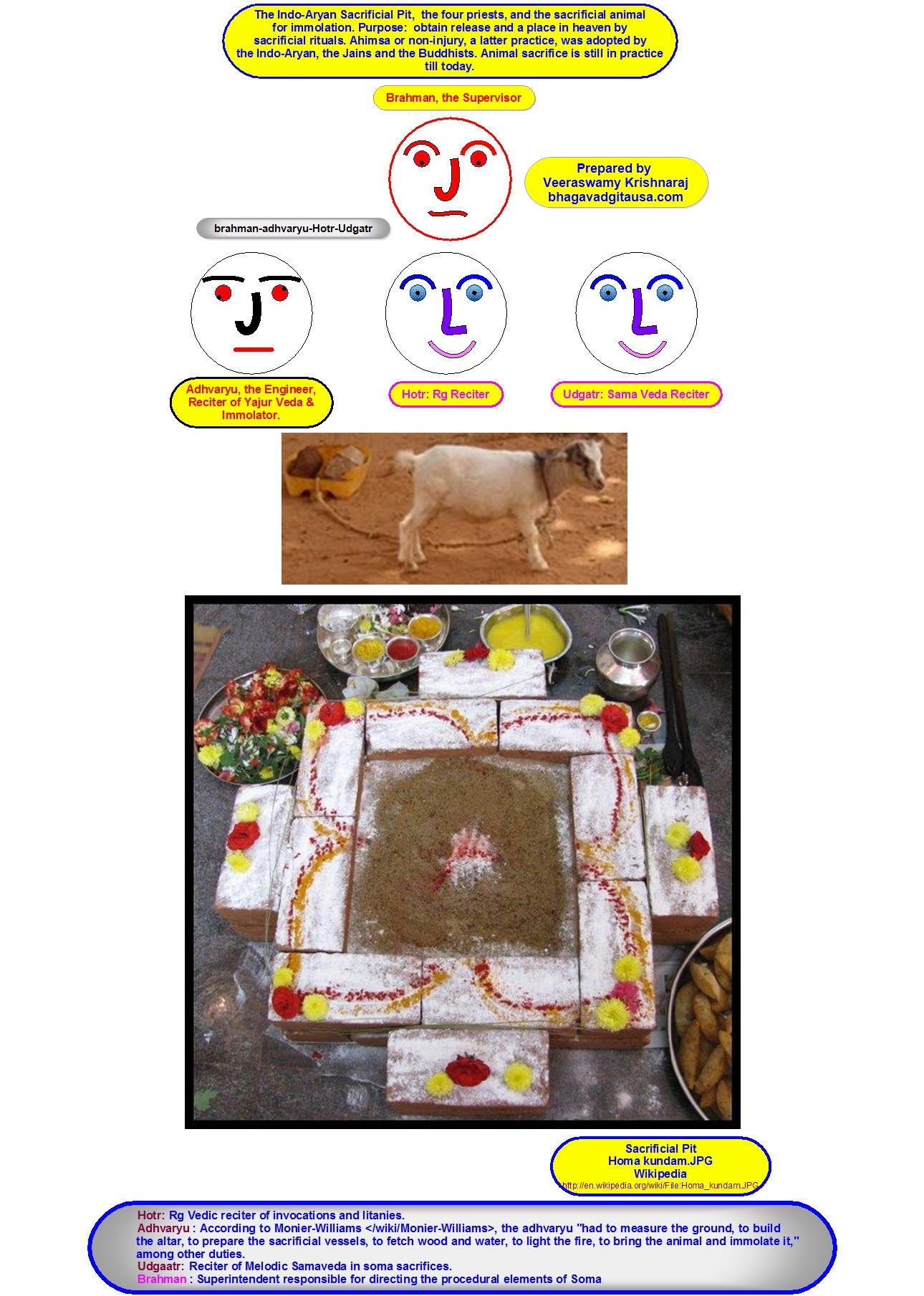
Ahimsa: A + Himsa = No + Injury or non + Injury. Ahimsa (non-injury to living things) is not a strong trait among many peoples. Ritual killing of animals and eating of animal flesh: How is it different from killing an animal for food? Animal sacrifice in the name of deities is a weak excuse. The Abrahamic religions are of the belief that the animals (and plants) do not have souls and thus do not have rights. What they do not realize is that animals do suffer pain. When Brahmanism was a dominant force in India, animal sacrifice was prevalent.
| Animal Sacrifice in India. Soma was the Bacchus of
India. Soma juice was the grape juice of ancient Romans and Greeks. --
Monier-Williams.
And in these public rites usually called Śrauta-karman, to distinguish them from Smārta-karman or domestic rites — two entirely new elements were introduced; first the flesh of slaughtered animals, and secondly the juice of the Soma plant mentioned before (pp.12; 13; 22; 332). At one time all kinds of animals were sacrificed, as, for example, horses (see p. 329), but in the end a goat was usually selected. Parts of the flesh were burned as offerings to the gods, and parts were eaten by the priests. But the great central act of the whole ceremony was the presentation of the exhilarating Soma-juice to the gods, some of it being poured out for the deities and some being drunk by the performers and institutors of the sacrifice. This was done on the fifth day at the morning, midday, and evening libations (savana). In fact the animal sacrifice, though it preceded the Soma-libation, was really subordinate to it. The idea seems to have been that the sacrificer killed the animal instead of sacrificing himself; and as the body of the animal when sacrificed in the fire was borne upwards to the gods, so did the sacrificer — represented by the animal — ascend to the skies. It was only after he had been thus admitted to the society of the gods in heaven that he became fit to quaff the divine beverage, and to become one with the heavenly king Soma himself. Indeed this purifying and invigorating juice, supposed to confer physical strength and to make the heart of men and gods glad, came to be regarded as the water of life — the nectar which purified body and soul and conferred immortality. It was then itself personified and deified. The god Soma was the Bacchus of India, and the fermented juice of the Soma plant was in ancient times to the Indian community very much what the juice of the grape was to the Greeks and Romans (compare p. 12). Happily for Indian households, the drinking of stimulating liquor has never been permitted except at special religious ceremonials. October 04, 2014 Notes.
Monier Monier-Williams, Brahmanism and Hinduism. page 369 (405 OF 644) |
|
Abrogation of animal rights abridges one's lifespan. The animal seems to say, " You eat me; I eat you (from inside you.)." N ational Cancer Institute reports a study of 500,000 people revealed that the ones who ate 4 oz of red meat or more daily are 30% more likely to die over a ten year period. Sausages, luncheon and processed meats belong to the above category. Poultry or fish consumers faced lower risk of death.A typical average American diet has a plethora of proteins and fats from various sources. A person needs 50 to 175 Gms of protein in a 2000 calorie diet. Meat protein is expensive gram for gram when compared to that derived from egg white, milk, cottage cheese, tofu.... Meat eating comes with a price: Cardiovascular diseases, colon cancer.... The dead animals on the plate and palate eat a person from inside. ------------------------------------------------------------------------------------------------------------------------------------ Brahma Purana 6.20.17-19 talks about three pegs of sin (त्रिशङ्कु). Triśaṅku: Prince Satyavrata, son of king Trayyāruṇa was called Triśaṅku because he committed three sins: 1) he made his father angry by going astray. 2) he abducted wives of others. 3) he ate beef. Swami Vivekananda on Buddha and animal sacrifice in the name of deities He (The Buddha) was the only man who was ever ready to give up his life for animals to stop a sacrifice. He once said to a king, "If the sacrifice of a lamb helps you to go to heaven, sacrificing a man will help you better; so sacrifice me." The king was astonished. And yet this man was without any motive power. He stands as the perfection of the active type, and the very height to which he attained shows that through the power of work we can also attain to the highest spirituality. Animals are sacrificed to gods, so gods are pleased and reward the sacrificers bounteous life on earth and heaven upon death. This is commerce.--Krishnaraj |
|
The Complete Works of Swami Vivekananda Volume 3 [ Page : 522 ] BUDDHISTIC INDIA That has, of course, something in it, but mostly, as to the Brahmins, work means to perform these elaborate ceremonials: killing of cows and killing of bulls, killing of goats and all sorts of animals, that are taken fresh and thrown into the fire, and so on. "Now" declared the Jains, "that is no work at all, because injuring others can never be any good work"; and they said, "This is the proof that your Vedas are false Vedas, manufactured by the priests, because you do not mean to say that any good book will order us [to be] killing animals and doing these things. You do not believe it. So all this killing of animals and other things that you see in the Vedas, they have been written by the Brahmins, because they alone are benefited. It is the priest only [who] pockets the money and goes home. So, therefore, it is all priestcraft."
The Complete Works of Swami Vivekananda Volume 3 [ Page : 523 ] BUDDHISTIC INDIA These [same] ascetic ideas prevailed at that time. These Jains were the first great ascetics; but they did some great work. "Don't injure any and do good to all that you can, and that is all the morality and ethics, and that is all the work there is, and the rest is all nonsense -- the Brahmins created that. Throw it all away." And then they went to work and elaborated this one principle all through, and it is a most wonderful ideal: how all that we call ethics they simply bring out from that one great principle of non-injury and doing good. (Jains, a thousand years before Christ.) This sect was at least five hundred years before Buddha, and he was five hundred and fifty years before Christ*. |
| (Swami Vivekananda's opinion: Supreme tenets of Hinduism originated from the ruling kings of different eras. The ritual Hinduism is the product of Brahmins. The kings freely gave away and popularized their teachings. The Brahmins (priests) kept their rituals and their purported meaning under wraps and practiced them for a livelihood. The Hindu is burdened with these mindless rituals. Take Bhagavadgita: It came from the mouth of Krishna, a king and an incarnation of Vishnu, the God. Take Buddha: He was a prince. He gave away all his teachings free of charge. The Complete Works of Swami Vivekananda Volume 1 [ Page : 452- 453 ] THE GITA I The other point of divergence is: the Upanishads condemn all rituals, especially those that involve the killing of animals. They declare those all nonsense. One school of old philosophers says that you must kill such an animal at a certain time if the effect (benefit) is to be produced. [You may reply], "But [there is] also the sin of taking the life of the animal; you will have to suffer for that." They say that is all nonsense. How do you know what is right and what is wrong? Your mind says so? Who cares what your mind says? What nonsense are you talking? You are setting your mind against the scriptures (Vedas). If your mind says something and the Vedas say something else, stop your mind and believe in the Vedas. If they say, killing a man is right, that is right. If you say, "No, my conscience says [otherwise," it won't do"]. The moment you believe in any book as the eternal word, as sacred, no more can you question. I do not see how you people here believe in the Bible whenever you say about [it], "How wonderful those words are, how right and how good!" Because, if you believe in the Bible as the word of God, you have no right to judge at all. The moment you judge, you think you are higher than the Bible. [Then] what is the use of the Bible to you? The priests say, "We refuse to make the comparison with your Bible or anybody's. It is no use comparing, because -- what is the authority? There it ends. If you think something is not right, go and get it right according to the Vedas." The Upanishads believe in that, [but they have a higher standard too]. On the one hand, they do not want to overthrow the Vedas, and on the other they see these animal sacrifices and the priests stealing everybody's money. But in the psychology they are all alike. All the differences have been in the philosophy, [regarding] the nature of the soul. Has it a body and a mind? And is the mind only a bundle of nerves, the motor nerves and the sensory nerves? Psychology, they all take for granted, is a perfect science. There cannot be any difference there. All the fight has been regarding philosophy -- the nature of the soul, and God, and all that. Swami Vivekananda. Jan 12, 1863---July 4, 1902. |
| The Jainas quote the verse from Mathara: If by cutting
trees for sacrificial posts and by killing animals one can go to heaven,
what else is the way to hell? There is a story about Vishnu assuming the forms of a Buddhist teacher Punyakirti and Lakshmi vijnanakaumudi. Just like Vishnu, Brahma, Rudra and other embodied beings (humans) are afraid of death. That being so, one should have mercy on all livings beings, that being the highest Dharma. Vijnana (Spiritual wisdom) is the highest heaven, which is here on earth along with hell. Thus, one should not do animal sacrifice involving Himsa (injury). Vijnanakaumudi attacked the practice of Caturvarnya-- the system of four Varnas, colors or castes. Source: Skanda Purana part1, page xxxi Introduction Skanda Purana, Motilal Banarsidass publishers. A true SriVaishnava is liberated from Caste encumbrances. Without the burden of caste, he serves the Vishnu devotees of all castes; this sets the way for him to serve mankind. --Krishnaraj |
The View from the West
The West is of the opinion that Ahimsa came about as a protest movement in India against blood sacrifices, capital punishment, wars... The Indo-Aryans wanted to spread their rule, and acquire more territory; this desire collided with the protest movement. The West points to the use of poisoned arrows and harsh and cruel treatment of prisoners, who were bound and killed. The women were taken as slaves and or concubines. The indigenous people were blamed for not honoring treaties and pacts. The West says that the Indigenes tormented the Indo-Aryan by Hit and Run and Scorched-Earth Tactics. The Vedic High Priests had a contempt for the Indigenes for lack of Indo-Aryan rituals, and observance of un-Aryan ordinances. The West surmises this ordinance may refer to phallic worship of the Indigenes: the worship of Lingam (Siva in His aniconic [an-iconic] form). They were labeled Deva-Piyu (revilers of gods). The West says the Indo-Aryans did not impose any slavery in Mauryan times according to Greek observers. Thibaut observes that the Indigenes had names for numbers like a million and a billion while the Indo-Aryan knew only up to 1000. (Source: Harper's Dictionary of Hinduism.) They were branded as A-Mitra. Mitra = Aryaman = bosom friend. Amitra = not a friend. When the Upanishads were composed (example: Chandogya Upanishad) ahimsa was considered inseparable from austerity, charity, truthfulness. Jains and Buddhists along with Emperor Asoka (304 BC --232 BC) put Ahimsa to practice; the Jains were the originators of the moral code a thousand years before Jesus Christ. Asoka was the extraordinary Emperor of India, his empire extending to parts of Persia.
"The great king Asoka was at first called Chandashoka, i.e., Fierce Asoka, because of his ascending the throne by killing his brother and his other cruel deeds. After nine years of reign he became a convert to Buddhism, and his persona underwent a complete transformation; he was thenceforth known for his good deeds by the name of Dharmashoka, Virtuous Asoka." --- The Complete Works of Swami Vivekananda Volume 4 [ Page : 441 ]
After many wars, victories, deaths and deprivations came Kalinga campaign into what is now modern Orissa. The destruction and death changed his mind. He wrote the Buddhist inscriptions in Pali. He became a vegetarian, prohibited game hunting, and built hospitals for people and animals, universities, canals and irrigation systems.
The Complete Works of Swami Vivekananda Volume 3 [ Page : 531-532 ] BUDDHISTIC INDIA And then Asoka writes this inscription, describing the terror and the misery of war; and then he became converted to Buddhist religion. Then said he: "Henceforth let none of my descendants think of acquiring glory by conquering other races. If they want glory, let them help other races; let them send teachers of sciences and teachers of religion. A glory won by the sword is no glory at all." [Obviously, Hitler never read Ashoka.] And next you find how he is sending missionaries even to Alexandria. . . . You wonder that you find all over that part of the country sects rising immediately, called Theraputae, Essenes, and all those -- extreme vegetarians, and so on. Now this great Emperor Asoka built hospitals for men and for animals. The inscriptions show they are ordering hospitals, building hospitals for men and for animals. That is to say, when an animal gets old, if I am poor and cannot keep it any longer, I do not shoot it down for mercy. These hospitals are maintained by public charity. The coasting traders pay so much upon every hundredweight they sell, and all that goes to the hospital; so nobody is touched. If you have a cow that is old -- anything -- and do not want to keep it, send it to the hospital; they keep it, even down to rats and mice and anything you send. Only, our ladies try to kill these animals sometimes, you know. They go in large numbers to see them and they bring all sorts of cakes; the animals are killed many times by this [sic] food. He claimed that the animals should be as much under the protection of the government as man. Why should animals be allowed to be killed? [There] is no reason. But he (Asoka) says, before prohibiting the killing of animals for food even, [people] must be provided with all sorts of vegetables. So he sent and collected all kinds of vegetables and planted them in India; and then, as soon as these were introduced, the order was: henceforth, whosoever kills an animal will be punished. A government is to be a government; the animals must be protected also. What business has a man to kill a cow, a goat, or any other animal for food?
In Vamana Purana, Ahimsa is personified as the wife of Dharma (righteousness) whose children Nara and Narayana acquire spiritual enlightenment. Acaranga Sutra states that a wise man should know and consider the happiness of all things, nothing is inaccessible to death, all beings love themselves, they avoid destruction and hang on to life, and life is dear to all beings.
Bhagavatam (Canto 11, Chapter 5, Verses 11-13) states the following: 11) Man is naturally inclined towards enjoyment of sexual pleasure, flesh and wine. No rules enjoin them to indulge in them. A certain check is provided over these tendencies (by the Sastra) by permitting sexual commerce with one's wedded wife, meat-eating at the end of animal sacrifice, drinking of wine during SautrAmani (சவுத்திராமணி) sacrifice; the intention is to turn man away from them. 12) They do not understand the pure essence of their religion. Only the smelling of wine is sanctioned and animal sacrifice is allowed for the adoration of the deities and it is not permissible to kill them for meat. 13) Those who are ignorant of this Dharma, and though wicked and haughty, account themselves virtuous kill animals without any feeling of remorse or fear of punishment, and are devoured by those very animals in their next birth. Translation from Sanskrit by C.L.Goswami Shastri.
Anustaraṇī: अनुस्तर्णी. Rg and Atharva Vedas describe the sacrifice of a cow at the funeral ceremony so as to ensure the dead had an adequate supply of essence of the beef for their after-life journey. Ravana, the abductor of Mother Sita had Anustaraṇī ceremony at his funeral. (अनुस्तर्णी ; Anu = after; starana = scattering) = sacrifice of a cow at the funeral. A cow that has not calved or female goat are the animals sacrificed in this ceremony.
|
1 The sacrifice of a cow (called Anustaraṇī) at ancient funeral ceremonies proves, according to Dr. Rājendralāla Mitra, that in early times there was no law against the eating of flesh, and even of beef. A cow was killed, that the dead might have a supply of the essence of beef for their journey; and when the spirits of the departed had feasted on the aroma of the immolated animal, the actual flesh was left for the living. Monier Monier-Williams. Brahmanism and Hinduism page 282 (318 of 644) |
SautrAmana = relating to Sutraman or Indra, the chief of gods; relating to Sura (= wine, gods who drink wine). It is a wine and bull sacrifice in honor of Indra. Suras are gods. Asuras are not gods but demons. Suras and Asuras are half-brothers born of the same father and different mothers--sisters. The father is Kasyapa and the mothers are sisters: Diti of Asuras (demons) and Aditi of Suras (gods). Alternately Suras are called Adityas, and Asuras Dityas or Daityas after their respective mothers. Suras drink wine and Asuras are teetotalers. The gods imbibe not only wine, but also Soma, a combo of hallucinogen and inebriant-- a double whammy. Yes, you might say that all winos walking the beat in 'Bowery Skid Row' [1920s to 1970s] were gods in disguise, pejoratively called Bowery Bums.
The Suras and Asuras are always at loggerheads. Humans are part Sura and part Asura; in humans, one or the other is dominant at one time, other time or all the time. Vishnu (a Superstrict true blue Lacto-vegetarian) is God of gods, God of men and the Lord of the universe. It makes sense Vishnu is a vegetarian. He created the animals and man. He cannot set a bad example by eating animals, He created. In Christian and Islamic traditions, God creates animals so man can eat them. God gave souls to humans and denied souls to animals according to Abrahamic religions.
When men earn merit on earth, they become gods. They are dime a dozen. When their merit runs out, the gods descend to earth and live like humans. When men fail to be men, they become animals in their next birth. Once man, turned animal, lives and dies, he is given another chance to excel as man. He can go up, be god, remain man or go down and live the life of an animal. The gods' heaven (Indra) is a lower heaven; they who pray to Indra (chief of gods) go to Indra's heaven; they who pray to Vishnu (God of gods) and obtain liberation to go to Vaikuntam where they live eternally without any trip back to earth. Thus Vaikuntam is superior to Indra's heaven. In the heaven, people do not sport bodies, move around by thought, walk without legs, see without eyes and do live in close proximity to God. Another version says the gods have humanoid forms with more limbs, more eyes....The gods can move incognito, assume any form they please.... In Vaishnava heaven (Vaikuntam), the liberated soul sports the form of Sriman Narayana or Krishna with bodies which are aprakrtic Suddha sattvam (divine substance- Pure Goodness devoid of human passion and darkness [Rajas and Tamas]).
The view from the West.
The Suras and Asuras (gods and demons) inherited speech, true and false. Speech is an exclusive human or godly function. That is to say, that only god (and demon) and man have the capacity to speak; animals don't. The animals try to talk; in the process, they bray, moo, neigh, bark, screech, chirp.... The gods adopted true speech, while the Asuras the false speech, which led to their downfall. The West says all this is humbug. The real thing according to the West is that the Indo-Aryan anointed himself as Sura and branded the hostile native rulers and tribes as Asuras. The West discounts and pooh-poohs the rest as mere mythology, fit for consumption by the Brahmana-dominated society of gullible underlings, and a nation of dupes and rejection by the all-knowing wise west. Filliozot surmises that the Asuras are lesser gods, charged with expounding the teachings of the gods themselves. Remember the gods and anti-gods are cousins. The Vedic Asuras of India are the Iranian Ahuras. Consider the Egyptian War god Anhur and the Greek War god Ares. The Mother of Krishna, the main persona of Bhagavad Gita and the Lord of the Universe was born in the family of Adityas; the mother (Aditi) started the lineage of gods. His mother, Devaki was an incarnation of Aditi. Vasudeva, the father of Bhagavan Krishna was the incarnation of Kasyapa. Vāsudeva (with the long ā as opposed to short a of Vasudeva) is patronymic of Krishna, son of Vasudeva (Vāsudeva, son of Vasudeva ) and a Ksatriya of warrior caste, one notch below the Brahmanas. How is it that warriors (gods in some instances) are a notch below Brahmanas, who are human beings? The west claims all these cockamamie castes were created by Brahmanas (Manu, the author of Laws of Manu, is the culprit-in-chief.), so they always stay at the top, deny education, knowledge to the lesser castes, and enjoy privileges from the rulers and also immunity from prosecution for major and minor crimes perpetrated on other caste members. Dr. Ambedkar, the Dalit (= the Oppressed caste, Uncategorized group a notch below the Varna system called Harijan = Children of God according to Gandhi) studied in Columbia University and London School of Economics, burned a copy of the Laws of Manu as a parting gift to the Hindu orthodoxy and inane caste system and converted to Buddhism. Curiously enough, a Brahmin lady with a doctorate married him, and obviously did not find a suitable Brahmana intellectually worthy of consortium. Even more strangely and as a slap on the face of caste system, burning the book of Laws of Manu, he wrote the Constitution of India.
December 24, 2012. India has redeeming qualities. It is a democracy. India never invaded a foreign country. Many invasions later from outside, India absorbed all of them, made them its own and remained true to itself. India is the birth place of Jainism, Buddhism, Sikhism... with their roots in Hinduism. Hinduism is dynamic, not stale and not stultified. Indian-ness is its tolerance for "Outer Religions". A Dalit writes the constitution under the aegis of a Brahmin prime minister, Jawaharlal Nehru. The presidents of India of both genders have come from communities such as Sikh, Kayastha, Lingayat Banajiga, Dalit, Muslim, Brahmana, Vaisya, Sudra... Polyglot India has Sanskrit and Tamil the two Classical Languages of the world and made English as one of the official languages besides the state-specific language for each state. There is a deep and abiding hope for India.
Wine and dine the gods and by extension the politicians.
Historians say the Indo-Aryan's Sautramani sacrifice and the Greek's Souvetaurilla have commonality. Souvetaurilla is a portmanteau (composite word) formed from Sus (the pig), Ovis (the sheep—Ram) and Taurus (the bull). Joseph Campbell points out that in his opinion the Indo-Aryans and the Greeks are blood-brothers and performed similar kind of rituals. The geneticists say the Europeans, the Persians and Indo-Aryans share a common genetic stock, whose locus was Central Asia from where they fanned out to their respective places. Historians and archeologists refute the claim that Indo-Aryans originated in Central Asia but were indigenous to north-west India. Brown Indo-Aryans are closer to Europeans genetically than the Persians though the Persians are closer to Europeans geographically. Africans migrated to Europe along the coastal areas of Europe. As you may know there were many waves of human migration out of Africa. The migrants, starting from Africa 75 thousand years ago, stopped at Mesopotamia region, from where they departed to Russia, Siberia, Bering land, Alaska and the Americas; all of Europe; China and Japan; Southeast Asia; South Asia. The Africans took a coastal journey along the west and east coasts of India and ended down under in Australia and are the progenitors of the Native Australian. Each pedigree has dominance of similar features; the African has all the basic features of all the pedigrees except the white color, which is an acquired phenomenon. Carbon is the common and basic element among the (carbon) allotropes: graphite, diamond, soot, charcoal, nanotubes, nanofoam, and buckyballs (Buckminster Fullerines). (Diamond is extremely hard allotrope of carbon naturally crystallized in the isometric system.) Likewise the African genes are our common heritage; we are the allotropes; we have the African lurking in each one of us; the race-conscious dote on and gloat over how much, how far and how fast they have mutated, moved, and changed from the African Black Adam and Eve. Remember the master painters of Europe painted Adam and Eve in their mutated form, which is more of a self-love, self image than a true image. It is the diamond that gloats over its superior status and flouts charcoal's alleged low status. If there was no charcoal, there is no diamond. (I see this coming: Hey Bozo, you talk like a hotshot. What the heck is in your gene bag? I say, " I was waiting for you, Mr. Highbrow. My DNA is Indo-European, my genealogy shows my DNA origin from Central Asia. I gloat not and pout not. It ain't my making. I wear my genes and carry my bag unobtrusively.")
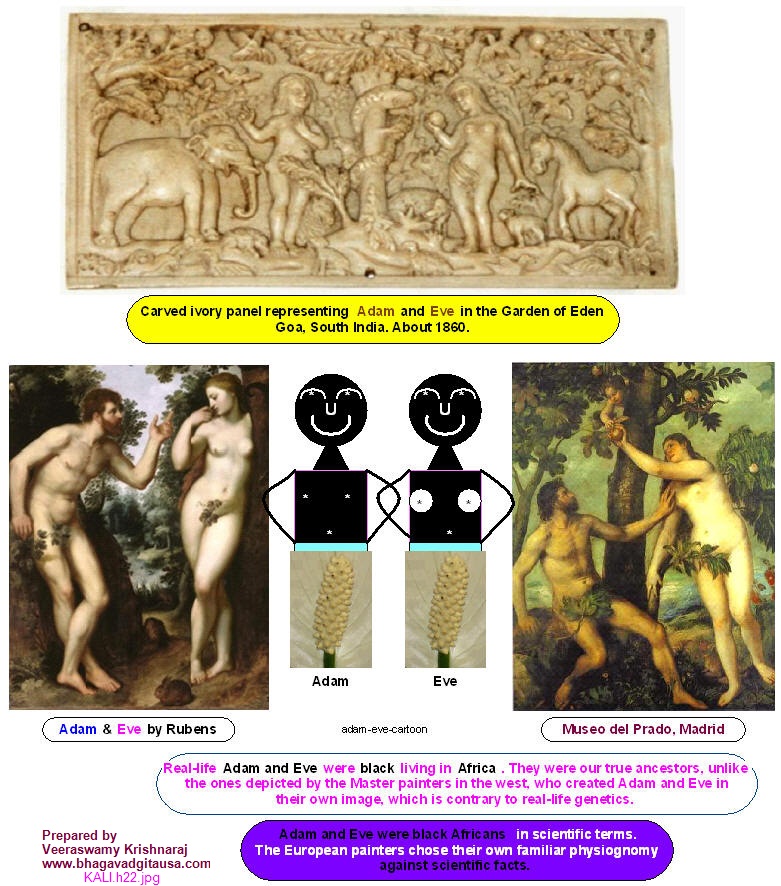
The oral and written tradition of Indo-Aryans (one such African-derived Pedigree) does not suggest any origin outside India, though the African is the First Progenitor of all races. The Indian historians suggest that the (Indo-)Aryans (the mutated African) originated in India, fanned out to Persia, and Europe and some made a return trip back to India. The Europeans, far removed from the progenitor African by mutations of genes, wear our genes and speak many derivatives of Sanskrit. That is why they are called Indo-Europeans and their language is Indo-European. We are all Africans first and all other races later. The human speech originated in India only, according to Mark Twain. The Human race was making lifeless consonantal cockamamie sounds (if you call it human speech) until Sanskrit gave them the life-giving vowels. Brr, grr, hmm, mm, psst, tsk are some of the dead (lacking life-giving vowels) consonantal English words (atavistic onomatopoetic interjections) without life-giving vowels. Let us take the word Zebra. It was most likely called zbr; then came along the Sanskrit vowels; zbr acquired the sound of zebra; the vowels show their stripes.
|
The English words father,
mother,
brother and sister are
(derived from) cognate with Sanskrit:
pitri/pitar,
mātar,
bhrātr, and
svasar (पितृ,
माता/मातृ,
भ्रात्र,
स्वस्रृ--in
Sanskrit). Sanskrit was the First Spoken and Written Language in this
world. The universe of alphabets, words and languages originated from
Mother Goddess, Kali. What is P in one language is F in another language. Ref: Part of it from Random House English Dictionary. ------------------------------------------------------------------------------------------- August 30, 2012 http://www.thehindu.com/sci-tech/science/article3836320.ece?homepage=true In linguistics we start with root words — actually ‘proto-words’, or cognates. These are the original words from which variations arise. For example the proto-Indo European word ‘mehter’ metamorphosed into ‘maa’ or ‘maata’ in Hindi, ‘ mutter’ in German, ‘mater’ in Latin, ‘mat’ in Russian or ‘mader’ in Persian. Basic vocabulary data from 103 ancient and contemporary Indo-European languages were used to trace their origin or the root from where they diversified. His result: the proto-Indo-European language started in Anatolia, or ‘Asia Minor’, comprising much of Turkey. Atkinson’s team writes in their Science paper: “we found decisive support for an Anatolian origin over a steppe origin. Both the inferred timing and root location of the Indo-European language trees fit with an agricultural expansion from Anatolia beginning 8000-9500 years ago.” Not everyone accepts this interpretation. Within hours of the Atkinson paper appearing online, a war of words started through emails and blogs. The other theory is that proto-Indo-European language originated in the Caspian region of West Asia, also termed the “steppe”. This is the treeless, grass-covered regions in South Eastern Europe and Asia. |
Language of man, animals, birds... and Speech of man.
Text in black is the excerpt; Text in blue is my comment.
A researcher analyzing the sounds in languages spoken around the world has detected an ancient signal that points to southern Africa as the place where modern human language originated.
(Signals and phonemes do not constitute speech: language yes, speech no. Of course, that was the beginning.)
The oldest language tree so far reconstructed, that of the Indo-European family, which fits well with the evidence from fossil skulls and DNA that modern humans originated in Africa. It also implies, though does not prove, that modern language originated only once, an issue of considerable controversy among linguists, which includes English, goes back 9,000 years at most. The last sentence makes sense.
Quentin D. Atkinson, a biologist at the University of Auckland in New Zealand, has shattered this time barrier, if his claim is correct, by looking not at words but at phonemes — the consonants, vowels and tones that are the simplest elements of language. Dr. Atkinson, an expert at applying mathematical methods to linguistics, has found a simple but striking pattern in some 500 languages spoken throughout the world: A language area uses fewer phonemes the farther that early humans had to travel from Africa to reach it.
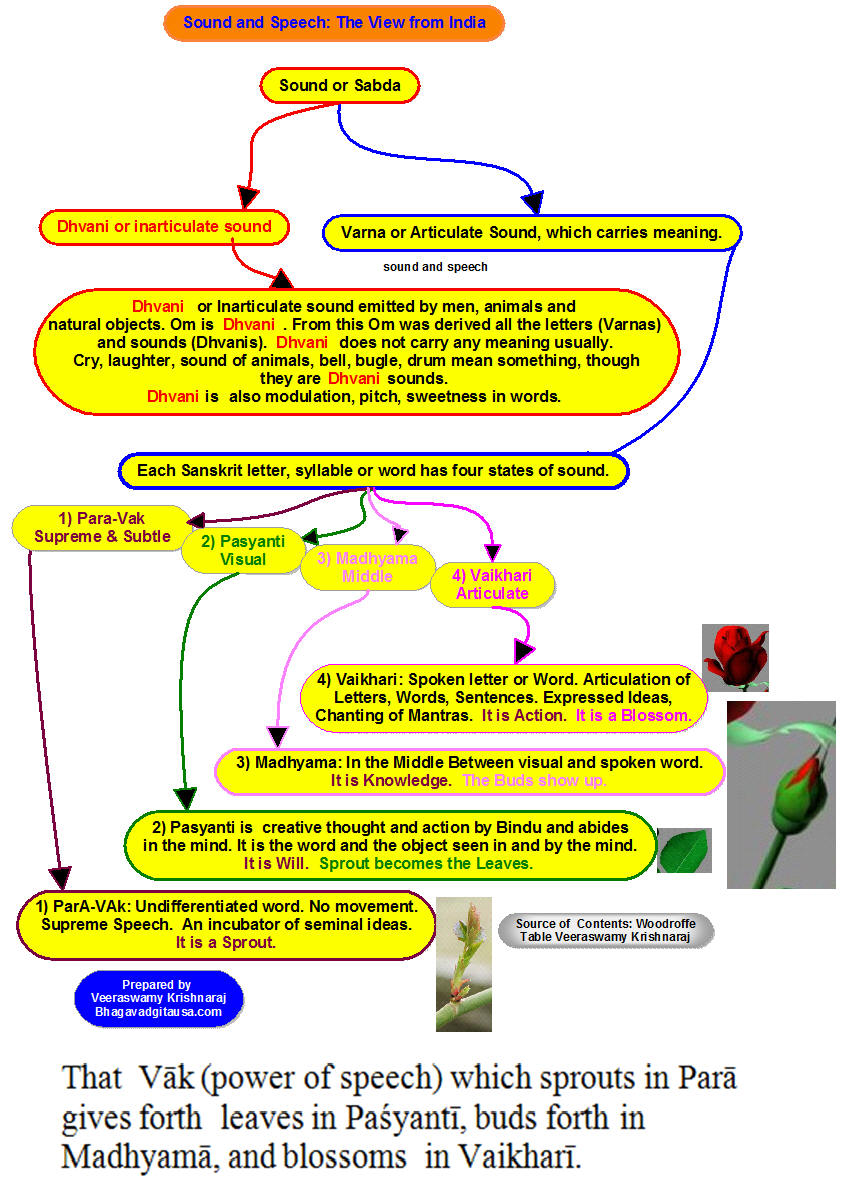
Nature makes, sounds and 'speaks' all the phonemes and more, which man emulated and articulated to communicate. Phoneme is Phonetic Variation of a letter as follows. Man made guttural sounds to begin with: K, Kh, G, Gh, Ṅ (= Ka-Varna or Ka series in Sanskrit). Man was speaking in gutural, palatal, dental, labial and sibilant generic consonantal sounds alone or in combination, before the vowels came along (Zbr before Zebra). Man should have listened to his baby to discern the vowel in ma. He clicked his tongue, smacked his lips, thumped on feet, tapped on and touched wood, slapped his thighs, knocked on the head. This is language but not speech. Animals communicate among themselves and others in language but not in speech. Yes, the birds do sing and dance: courtship songs and dance.
If nature made a click, as when the stick snaps, man emulated it. That is inarticulate Dhvani or sound. When Cuckoo made the cuckoo sound, man called the bird after its (onomatopoeic) sound. He did not even realize that the bird was using vowels in cuckoo sound. In fact, the first vowels (and consonants) came from babes, birds and beasts like the cooing baby, cawing crow, mooing cow, .... Scratching monkeys screeched at the sight of an alpha male and submitted with obsequiousness for the encounter measured in nanoseconds. An astute observer discovered the animal-made Vowels, which softened the guttural cockamamie lifeless consonantal sounds. Early man used more phonemes and combinations because he listened to the nature, which is the prolific producer of phonemes and phoneme plus vowel sounds. Like children, the early man experimented with many sounds with his voice box and strings drawn tight. How do you think generic and instrumental music originated? Man found out that he could not communicate with fellow man by phonemes and clicks alone. Life was becoming more complicated. The man could not click his way out of a blood feud. His brain and the larynx had thought and equipment but not the sophisticated sounding facility. He started speaking in lifeless generic consonants for a long time, before Sanskritist discovered from nature, birds, beasts and babes the vowels (aeiou), broke the nature-spoken words (Dhvani) into phonemes, vowels, syllables... and gave them to the fellow man; they spread from India to the rest of the world. He stopped forcing the diaphragm up and down trying to expel sound /k/; the vowel 'a' added to the generic /k/ gave the soft sound 'Ka.' When the generic /k/ sound was made repeatedly, his fellow man did not know whether to emulate him or give him a Heimlich Maneuver. That made man to seek a mellifluous articulation with the addition of vowels. --Veeraswamy Krishnaraj
It is implied that the origin of modern human language is in the region of southwestern Africa.
Some of the click-using languages of Africa have more than 100 phonemes, whereas Hawaiian, toward the far end of the human migration route out of Africa, has only 13. English has about 45 phonemes.
Language is at least 50,000 years old, the date that modern humans dispersed from Africa, and some experts say it is at least 100,000 years old. Dr. Atkinson, if his work is correct, is picking up a distant echo from this far back in time.
Body language is as old as fauna and flora; the birds and beasts use vocal language of sound (Dhvani), and body language of dance, aggression, tenderness...:
His study was prompted by a recent finding that the number of phonemes in a language increases with the number of people who speak it. This gave him the idea that phoneme diversity would increase as a population grew, but would fall again when a small group split off and migrated away from the parent group.
http://www.nytimes.com/2011/04/15/science/15language.html?_r=1&scp=2&sq=language&st=cse
From Wikipedia:
A phoneme is a group of slightly different sounds which are all perceived to have the same function by speakers of the language or dialect in question.
/k/ [kh] in kit is the same phoneme as /k/ in skill. /kh/ in kit is aspirated, meaning articulation of /k/ with an audible puff of sound. An audible breath is expelled in /kh/ of kit. /k/ in skill is unaspirated, because there is no expelled audible breath with /k/ in skill. Descriptive term is Phonetic Variation of a letter.
Go to the end of this article to see the English phonemes.
http://www.auburn.edu/academic/education/reading_genie/spellings.html
|
|
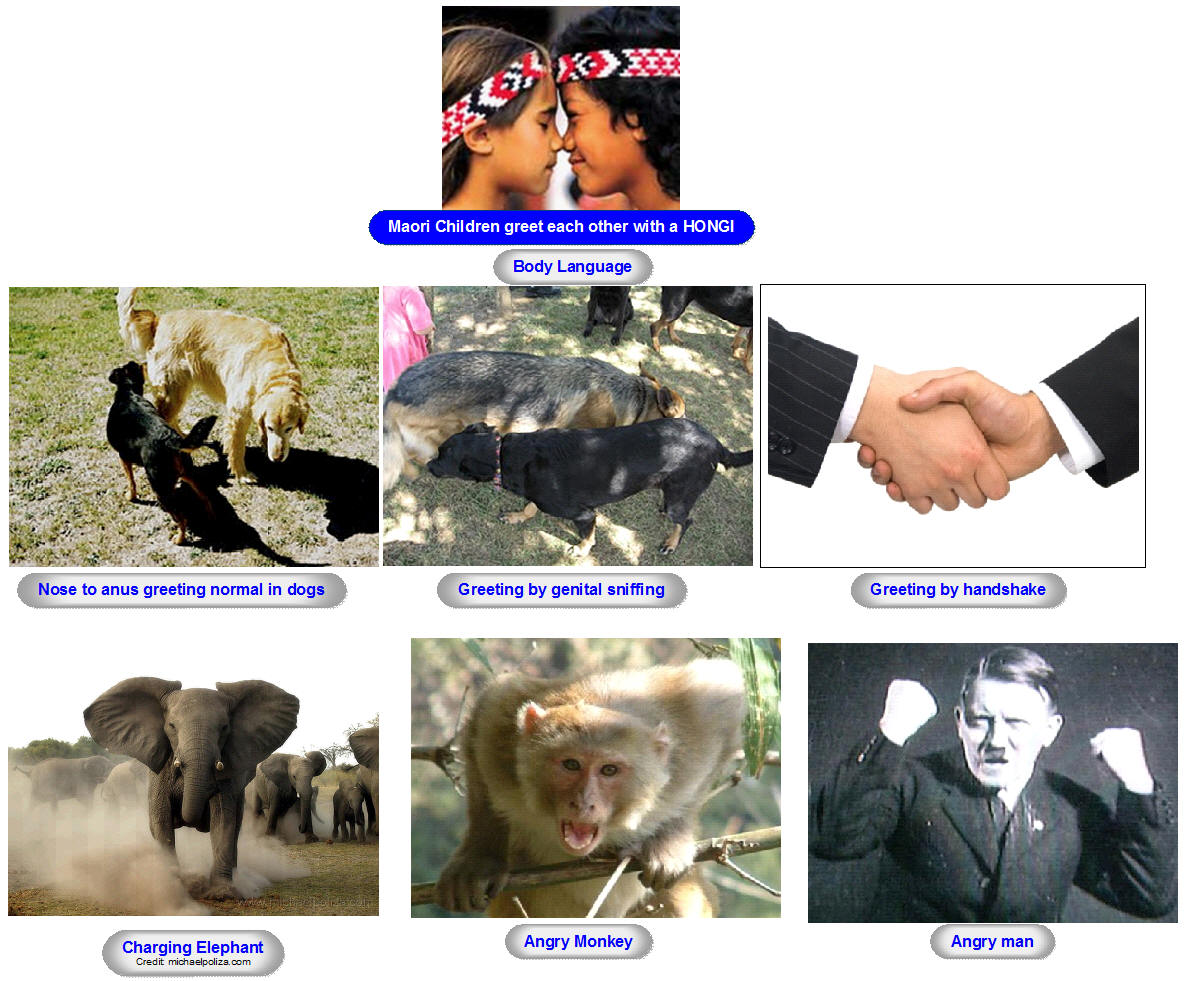
As you may know, the Tantrics and Indo-Aryans sacrificed male animals only, as the Greeks did. The Indo-Aryans had many other animals at their disposal for sacrifice. Take the horse for instance. Human sacrifice was not unheard of. Donald A. Mackenzie makes it a point to call the Indo-Aryans Brown Aryans in his book Legends and Myths of India.
Sautra refers to Indra, the chief of gods and also Sura, wine or god. The sacrifice is offered to Indra, Ashvins, Sarasvati…. It is a purification ceremony for man and god as deemed by the Greeks and Indo-Aryans. Sacrifice of a castrated bull or draught mare guarantees prosperity, progeny, annihilation of the donor's foes, realization of all desires and attainment of heaven. This sacrifice wipes off the sin of excess consumption of Soma by Indra and the priest. Indra stole Soma from Tvastr (think of hijacking of a truck-load of liquor); this resulted in violent dismemberment of his limbs; they were restored to Indra, when Asvins and Sarasvati performed Sautramani sacrifice. It appears there are surgeons in heaven, who specialize in reattaching limbs to their original condition. This sacrifice has similarities with Abraham’s sacrifice. A prominent Indian saint says that Sautramani sacrifice is offered to appeal to the lower forces of deities so that the sacrifices bring benefits to the sacrificer. What many cannot accept is that an animal has to die to be food, and bring prosperity to man or restoration of body parts to god. (Think of this: Man artificially inseminates the cows; many calves are born; man claims he gave life where there would not have been life; the life he gave is the life snuffed out by killing of the animal for food; the cycle goes on; man milks the cows as long as they lactate plenteously; when their life of lactation is coming to a close, man kills the cow and eats it; man takes the hide to make useful products; man takes the rest of the animal, grinds it up and feeds it to other cows and other animals; that is how the cows got the mad cow disease; man eats the flesh of the mad cow and suffered from variant Creutzfeldt-Jakob disease. There is no free lunch here; there is always a payback--this is what Hindus call Karma.) Whole Foods Market has started selling meat from well-treated and compassionately slaughtered animals (the cow says: "killing me softly"). That is progress in the right direction.
For gods, it is the wine, and the meat. Yes, Soma, butter, grains and more. Soma gives a double whammy: inebriation and hallucinations. I bet some of today's teenagers want to imbibe or experiment with soma. Too bad, the recipe is lost for ever. If you want some Soma, you have to go to Indra's heaven and raid his cellar. They are heavily guarded. At the entrance, there are spinning wheels with razor-sharp spokes. You will get a close shave first before you are fine-sliced like luncheon meat. Sautramani is like fundraising dinners where it is a win-win situation for donors, lobbyists and politicians. Hey you lobbyists, you haven’t invented anything new. (Madya [wine], Mamsa [meat], Matsya [Fish], Mudra [grains] and Mithuna [sexual union]--wine, woman and venison, MMMMM, that is good!): Tantrics* and Indo-Aryans perfected this art of social lubrication many eons ago. They devised ways to influence man and god for their mutual benefit. They knew gods would suffer famine without their sacrifices; gods trembled at the prospect of going hungry for want of sacrifices. (The politicians tremble if there are no lobbyists knocking on their doors or when they take phone calls from the fat cats; they conveniently dismiss the calls from loyal voters.)
They got the gods by the gonads (family jewels, cojones, huevos (eggs), pelotas (balls, Testicles). Talking about gonads, here is a little story how the justice system in England was perverted and later corrected. Hey man, what has gonad got to do with justice system?
In bad old days, a woman cannot be a witness in the court. They could
not vote either. The men vociferously put down woman
as not having testes
and therefore, incompetent
to testify in the court. Men said women were
hysterical
and incapable of even moods because they had the wacky burdensome
hyster
or womb.
The men coined the word hysteria to cast women in a bad light because
women by nature had the hyster or the womb.
One needed testis to testify in a
court. Absence of Testes and possession of hyster were a double disadvantage
for a woman to be a competent witness. Woman went into the court
before judge and lawyers with stinking traditional horsehair headpieces (Bar
wigs, Bench wigs or Full-bottom wigs with long curls) sitting on top of sweaty
bald pates or bushy heads and came out belittled by the imperious-sounding,
bombast-laden admonitions with received pronunciation and upper-crust
inflection. The women were made to feel like @#$%. The men were gloating on
the accidental fact god made them men. Men didn't even know they were
responsible for the gender of the newborn. Testes became the Moniker for
Justice. Testi(s) = witness. In long forgotten olden days, the judges and the
lawyers were sitting around like male honey possums with humongous testes,
which are about 4% of the body weight. How the heck the Honey Possums were
lugging the gargantuan testes between the hind legs up the tree is a wonder.
It is like a 170 pound man carrying seven-pound testicles. Quite ugly; quite
impressive; quite inconvenient.
Gradually, things appeared to change. Men super-charged with family jewels
(which they wear and safeguard in a rugose bag between the legs) found out
that women were as competent as men were and sometimes more. At present, some
lawyers are clamoring to have the wigs knocked off their heads permanently
because their children are making fun of their silly look in the court room in
the UK and men and maids giggle and cackle privately at the dining table in
the servant quarters (assuming the judge or the lawyer is wealthy enough to
have that kind of luxury today). My suggestion is they keep the flashing
jewels, the rugose bags, the jaunty wigs and the flourishing business, but
give up bashing women with the family jewels.

|
Tantra and Tantrics: Tantra of transformation. Tantra is a psychosocial experiment on man in an attempt to morph him from Pasu to Vira to Divya (animal, Hero [man-man], and virtuous god-like man). People are people and change does not come in a hurry. Man moves in three spheres of existence: animal, Hero and Divine; the state or nature is Bhava: Pasu Bhava, Vira Bhava and Divya Bhava. Pasu is animal in human form. Pasu Bhava is the natural state where ingestion, digestion, evacuation, procreation, and excretion in the awake state, (sleep state and dream state) are the basic functions. The divine man (call him vicar, rectar, Guru, Yogi, the Most Reverend, ....) having been a Pasu earlier in life sees the transformational potential in other Pasus (flock in Christian tradition), who do not tolerate sudden changes in lifestyle. So the Divine man--god-man--devises an instrument of codes, rules, regulations, and prescribed behavior, which will carry the Pasu through the heroic phase and eventually to Divya Bhava; all this (seamless) transition and transformation take place without pain, pause, passivity, postponement, procrastination or resistance in the inclined few. Most of the time, the aspirants remain Pasu or Vira. Vira is hero or man-man. (People do not like to be called Pasu (Flock); the kinder way of calling them is man not spiritually enlightened. Vira is man. It is cognate with Vir as in Virile and also Virtue.)
Who wants to give up drinking wine
suddenly and suffer delirium tremens? Who wants to give up eating meat
suddenly? Who wants to give up the pelvic passados (thrusts), pleasures,
and pastimes? The Divine man establishes certain rules and says that one
can eat meat and drink wine on certain occasions and not other times.
That is progress. Sex is a powerful force next to hunger and sleep. (A
famished dog thinks sex, when he has to choose between food and a
bitch.) The Divine man recommends that it is alright to engage in sex in
wedlock, and out of wedlock under strict rules. Out of wedlock
encounters are permitted if the spouse is physically and or mentally
incapable of such relationship. Now the wild Pasu has a leash on him and
his behavior. When the controlled behavior becomes a daily routine, a
palpable and discernable transformation takes place in the life of
Pasu; he is
now a Vira (Hero; Sanskrit Vīra
[वीर], Tamil வீரன்
[Vīran]and Latin Vir, English 'virtue' and
'virile' are cognate and refer to man. As you see, Virility and Virtue
are the natural companions.) Exercise of Virility
without Virtue is deplorable and against injunctions. He is a
soldier taking orders without questions, doubt or dither. By nature,
Vira is Rajasic or excitable (Uddhata =
उद्धत), ready for
action. He meditates, leads a life of rituals and seeks oneness with
Brahman. He is ready for the next step: becoming a Divine man (Gandhi).
He eats to live; he gives up eating meat or indulging in sex; his spirit
rises and the flesh droops and falls (No, it does not drop but it
droops.) He meditates, performs breath control and attains oneness with
Brahman and enjoys the Ultimate Bliss of union with his deity. The next
step beyond Divya Bhava is giving up the rituals and meditate on Para
Brahman, a formless Brahman or Nirguna
Brahman. The divine man merges with god and
becomes one with Him and enjoys ecstasy. Between orgasm of Pasu and Vira
and ecstasy of Divya, ecstasy is superior, more intense and felt in
every pore of his hair follicles and body. When was the last time you
heard that a pilosebaceous unit is a sexual
organ? Every pore is an orgasmic unit. One may die of multi-pore
orgasms. You heard it here first. Horripilation
with erector pili must have transformed into ecstasy in god-man. (The pilosebaceous unit consists of the hair shaft, the hair follicle, the sebaceous gland which makes sebum, and the erector pili muscle which causes the hair to stand up when it contracts. goose bump.) At this juncture he becomes THAT (God, Universal Consciousness). That Thou Art (Tat Tvam Asi = तत् त्वम् असि or तत्त्वमसि). THAT you are. There is no difference between Him or Her (God = That = Sanskrit Tat = तत् = English 'That') on one hand and the Yogi on the other hand. This is in essence Tantra of Transformation (from animal-man to man-man to Divine Man). |
There is a new pristine honor code in place, enacted into law. The lobbyists can sponsor and pay for Stand-and-Eat meals for the glutting politicians with ravenous appetite for the five MMMMMs). (Madya [wine], Mamsa [meat], Matsya [Fish], Mudra [grains] and Mithuna [sexual union]--wine, woman and venison, MMMMM, that is good!) No sit-down-and-eat please: It smacks of hanky-panky. I estimate that politicians wolf down more while they eat standing up. There are many Congressional Receptions everyday. One can eat as much as one wants as long as he is standing up, and go down the vomitorium to another reception to bite another snack.
Politicos with penchant and finesse for family values and a longing for spiritual levitation go to the Bible Study located in C Street SE. It is a sanctified house of refuge for the spiritually levitating politicos who beat a beeline retreat for savory succor. The media claims it is a house of mystery cloaked in silence and infested with profligates. The patrons claim that the media unfairly targeted them as C Street cheaters. http://www.nytimes.com/2009/07/19/opinion/19dowd.html?_r=1&hpw The sports celebrities have always been loyal and penitent cohorts (Kobe Bryant, Tiger Woods, --Gossip, Scandal or what? Dec 2009) of the profligate politicos.
Italy's former Prime Minister Silvio Berlusconi has been convicted in a sex-for-hire trial, the Associated Press reports on Monday. According to Reuters, Berlusconi was sentenced to seven years in jail and the Milan court banned the 76-year-old politician from holding public office. http://www.huffingtonpost.com/2013/06/24/berlusconi-sex-trial-verdict-convicted_n_3490210.html News dated 06/24/2013.
I like Silvio for his pizzazz and razzmatazz. I want him released from jail and sent to a Tantric school for proper education and rehabilitation. Wait and see what the Tantric School can do for him. There is a saint waiting to emerge from him. No man is beyond reclamation of the soul. His spirit will rise and his flesh will fall. That is Tantra of Transformation.
Madya and Madhu (Honey [honey-liquor]) in Sanskrit, Methy in Greek and Mead in English mean alcoholic beverage; now you see Sanskrit is the origin of the European words. The Europeans ignore the obvious and look for a language more ancient than Sanskrit and European languages to be the progenitor language (of Sanskrit and the European languages).
Who is this Tvastar? Tvastr: The divine artisan. Tvak is to form or fashion; Tvastr or Tvastar is the artisan. Egyptian Ptah, Babylonian Mummu, Phoenician Chusor, and Greek Hephaistos are the divine artisans of their respective mythologies. Tvastar can not only fashion and create forms but also transform or morph himself into various forms. (Guess what: the Transformer toy maker stole the idea from Tvastar. Prove me wrong.) He applies his generative energy and skills to the embryo; that is how he transforms a one-cell embryo into a full-grown infant at delivery; naturally he earned the name, Garbhapathi (the Lord of the womb). He fashioned the ladle for the sacrifice, wine cup, thunderbolt (Vajra) for Indra, heaven and earth....
|
Call no man your father on earth; for one is your Father, which is in heaven --John VI.6.3. You thought that man and woman alone participate in the formation of the embryo and fetus. Not sufficient; Not so, according to Brhad Upanishad VI.4.21.: "Then he spreads apart her thighs, saying 'Spread yourselves apart, Heaven and Earth. After having inserted the member in her, after having joined mouth to mouth, he strokes her three times as the hair lies, saying 'Let Vishnu make the womb prepared. Let Tvastr shape the various forms. Let Prajapati pour in. Let Dhatr place the germ, the seed for you. I Sinivali, give the seed; give the seed, O broad-tressed dame. Let the two Asvins crowned with lotus wreaths place the seed.' -Translation from Sanskrit by Dr. Radhakrishnan, the Philosopher Statesman. Now you know every human act is a Samskara (ceremonial purificatory ceremony, one of the five Ms)--Krishnaraj 'When the human father thus emits him as seed into the womb, it is really the sun that emits him as seed into the womb ... thence is he born, after that seed, that breath.' In Buddhist canonical literature three things are said to be necessary for conception: the union of father and mother, the mother's period (menses, the ovum) and the presence of the Gandharva who corresponds to the divine nature which is the primary cause of generation; the parents are only the concomitant causes. For Aristotle, 'Man and the Sun generate man.' Rumi says: 'When the time comes for the 'embryo' to receive vital spirit, at that time the sun becomes its helper. This embryo is brought into movement by the sun, for the sun is quickly endowing it with spirit. From the other stars this embryo received an impression, until the sun shone upon it. By which way did it become connected in the womb with the beauteous sun? By the hidden way that is remote from our sense-perception. In a very real sense, the commandment is significant, ' Call no man your father on earth; for one is your Father, which is in heaven --John VI.6.3. --Comment by Dr. Radhakrishnan |
There are deities involved in impregnation, and formation of the embryo. It makes sense; they seem to work like the female hormones that prepare the womb for implantation and a host of other physiological processes involved in the continuation of pregnancy. Vishnu prepares the womb for the implantation of the embryo; Tvastar (read: the genes and DNA) shapes the embryo and fetus; Prajapathi (Lord of creation), DhAtr (arranger or establisher of pregnancy), and Sinivali (Lunar goddess fashions the embryo) and the Asvins (physicians of heavens--protector of the womb) along with Vishnu and Tvastar are the primary cause of impregnation and embryo and fetus formation. The parents are only a contributing cause of pregnancy. A woman makes a facsimile of her husband in her son and so is called Dhātrī. Dhātra = धात्र = receptacle, vessel. धात्री = Dhātrī = mother. As you see, ancient seers and sages of India thought about the physiology of pregnancy and Fax Machines too. Vishnu's role in human impregnation extends backwards to the creation of the universe and beings. He penetrates Brahmanda (Brahma's egg) and deposits Amsa (a fragment) of Himself and thus the universe and beings come out of the egg. Does it not sound like the penetration of the ovum by the sperm in the process of fertilization? Does it not sound like cloning? Now you may note that pregnancy and its progress to term is under the divine aegis. In India pregnancy, formation of fetus, delivery and human birth, life and sojourn on earth are divine events; that being so, no one has a right to take that divine-sent life; that is part of the basis of Ahimsa or non-injury. These events are celebrated even to this day in India and go under the term Samskara. There are Prenatal Samskaras, Pumsavana (Seeking a male child), Simantonnayana (hair-parting of wife during the 6th or 8th month of pregnancy to prevent evil blood-sucking spirits to exsanguinate the fetus), Jatakarma (Birth Ceremony), Namakarana (Name-Giving ceremony from 10th month up to the 1st day of 2nd year), Niskramana (First Outing of the child), Anna-Prāśana (Annaprāśana: 1st feeding of solids : 6, 8, 9, 10th month, later or when the teeth appear.), Chuda-karana or Ćūḍā-karma (1st tonsure between the end of 1st year and before expiration of 3rd year), Karṇavedha (boring of the earlobes as a preventive against hernia or hydrocele; My parents got my ears pierced as a child; It worked; Yes, I did not suffer from hernia or hydrocele.), Vidyarambha (beginning of education at 5th year of life), Upanayana (Initiation--think of Baptism), Kesanta (shaving of the first beard), Samavartana (end of studies), Vivaha (marriage), Antyesti (funeral ceremony).
|
Tonsure practiced in Hinduism and Roman Catholic Church By Monier Monier-Williams - 12 November 1819 – 11 April 1899 ( Brahmanism and Hinduism) Tonsure and Shaving. Page 359 (395 OF 644) The next important Saṉskāras were those of ‘Tonsure,’ ‘Shaving,’ and ‘Cutting off the hair’ (Ćaula, Ćūḍā-karma, Keśānta, Kshaura). These were kindred operations, and may be explained together1. When performed for the first time they were held to have a purificatory effect on the whole character. In the case of a Brahman the ceremony of tonsure was performed in the third year, but was often delayed, and sometimes did not take place till the seventh or eighth year. According to Ᾱśvalayana the child was to be placed on the lap of its mother to the west of the sacred fire. The father was to take up his station to the south of the mother, holding in his hand twenty-one stalks of Kuśa grass. He was to sprinkle the head of the child three times with a mixture of warm water, butter and curds. He was to insert three stalks of Kuśa grass seven times into the child’s hair on the right side, saying: ‘O divine grass, protect him!’ Then he was to cut off a portion of the hair and give it to the mother, with recitation of various texts, leaving one lock [śikhā or Ćūḍā) on the top of the head, or occasionally three or five locks, according to the custom of the family. The operation of shaving was sometimes regarded as a different ceremony from that of cutting. It had to be continued after the age of puberty at regular intervals throughout Life.
|
Sinivali = The day when the moon rises is AmAvAsya; the day when first seen , SinivAli; the first day of disappearance is KuhU.
Bhagavan Krishna has in Him the whole spectrum of human emotions, character, qualities, achievements, and knowledge, known, unknown and yet to be known. He has in Him the best, the worst, and everything in-between. There is nothing that He has not fathomed that we know now or will ever know in our thoughts, speech and deed. But they do not affect him; this quality is like the heat in the sun; the sun does not feel it, but we do. Such is His nature, power and Māyā.
Charity
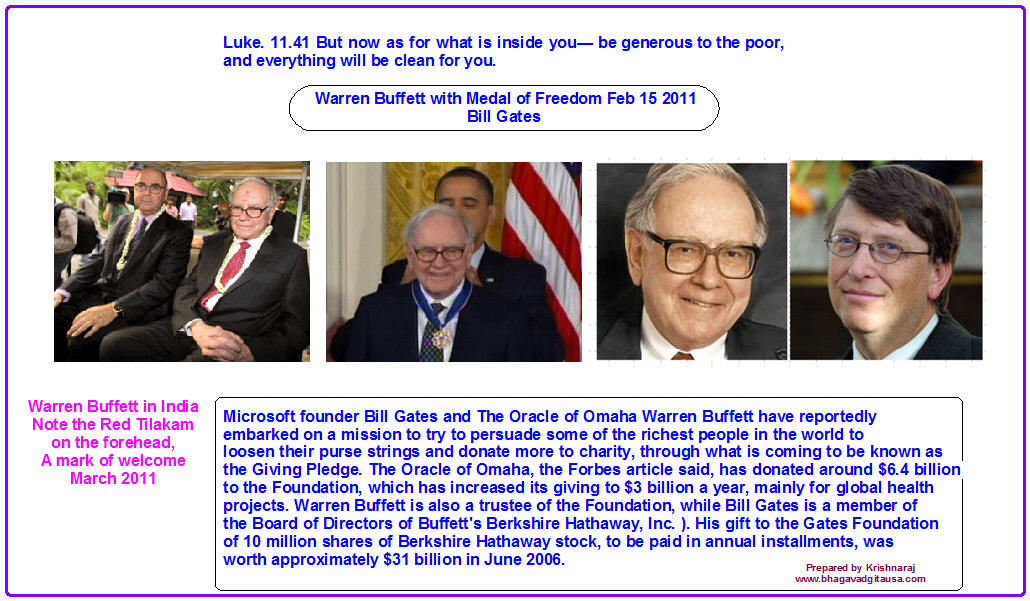
Sattvika charity is giving with faith to those who deserve such gift. Garuda Purana (1.51.1-34) gives us many interesting details on Dāna (charity). It is of four types: Nitya (daily or obligatory), Naimittika (episodic or occasional), Kāmya (wanting something in return- a special result), and Vimala (free from filth). In Nityadāna, the recipient is a Brahmin who returns nothing for the charity. In modern days, you may or may not find a Brahmin to receive your gift or charity. Under those circumstances, feeding the poor is a worthy alternative. All good people perform Naimitikadāna and offer gift to a scholar to expunge one's own sins. This kind of gift is of selfish nature and thus its worth and merit are not laudable and yet necessary for the welfare of the recipient. In Kāmyadāna, charity is given with the expectation of something in return: progeny, prosperity, success in all endeavors, and eventually heaven. This is trading with man or god. Political contributions, Legacy Contributions from Alumni ...come under Kamyadana under some (and not all) circumstances.
Charity
given to a person with the knowledge of Brahman in a sattvika mood (of the
donor) is Vimaladāna (no-stain charity). It is
auspicious and has no stain, because the recipient possesses knowledge of the
Self (Brahman). A person who blocks a donor from giving charity to a deserving
person is reborn in the body of an animal.
|
Charity in Christian tradition Bible NIV Luke 14:12:Then Jesus said to his host, "When you give a luncheon or dinner, do not invite your friends, your brothers or relatives, or your rich neighbors; if you do, they may invite you back and so you will be repaid. Luke 14:13: But when you give a banquet, invite the poor, the crippled, the lame, the blind, Luke 14:14: and you will be blessed. Although they cannot repay you, you will be repaid at the resurrection of the righteous." Mt 5:46 If you love those who love you, what reward will you get? Are not even the tax collectors doing that? Mt 5:47 And if you greet only your brothers, what are you doing more than others? Do not even pagans do that? L 6:34 And if you lend to those from whom you expect repayment, what credit is that to you? Even 'sinners' lend to 'sinners,' expecting to be repaid in full. L 6:35 But love your enemies, do good to them, and lend to them without expecting to get anything back. Then your reward will be great, and you will be sons of the Most High, because he is kind to the ungrateful and wicked. L 6:36 Be merciful, just as your Father is merciful. Mt 6:2 "So when you give to the needy, do not announce it with trumpets, as the hypocrites do in the synagogues and on the streets, to be honored by men. I tell you the truth, they have received their reward in full. Mt 6:3 But when you give to the needy, do not let your left hand know what your right hand is doing, Mt 6:4 so that your giving may be in secret. Then your Father, who sees what is done in secret, will reward you. Jesus_7.jpg
|
|
|
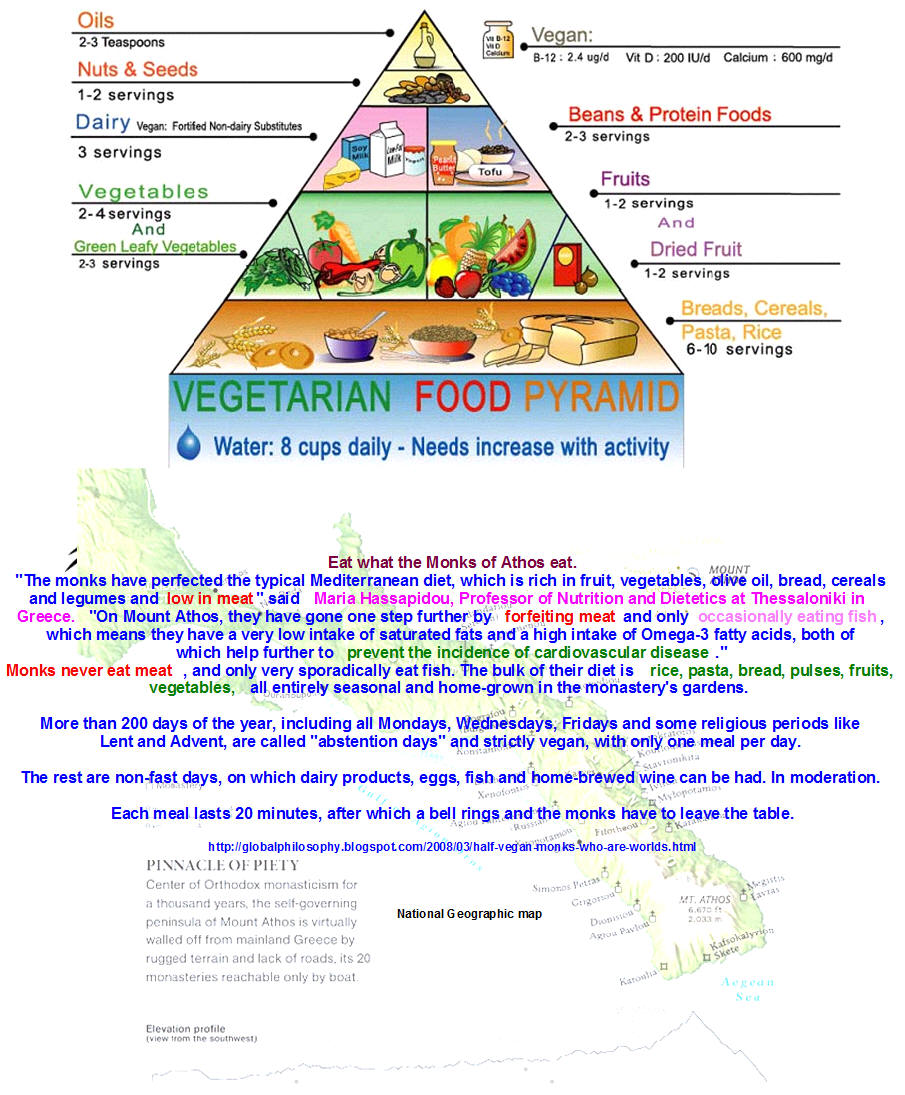
Buddhist concept of Ahimsa is special. Targeted killing of an animal for food is not allowed, but meat and fish may be bought from a commercial outlet where animal was not killed specially for one person. Meat and fish consumption is allowed under those circumstances. Killing of game animals, and elephants are prohibited. I have read reports of exclusive restaurants serving lion meat in the US.
More on Buddhist view of eating meat. Non-Destruction of life. pânâtipâthâ veramanî sikkhâ pada samâdiyâmi (I agree to follow the precept of abstaining from taking of life). This involves not contributing to the death of any living being. This means not only the actual killing but also "causing to kill". However this rule does not require one to be a vegetarian, only that meat consumed should not have been "specially killed" for direct, personal consumption. Meat purchased in the market does not come under the "specially killed" category. Strict vegetarians all over the world do not agree with this view because direct killing of animals for food or obtaining them from slaughter houses makes no difference. They opine hand that kills and mouth that eats are causing death of the animal and are non-different. If it is not for the latter, the former would not exist. This does not mean that all vegetarians are worthy of praise and exaltation. Take Adolph Hitler, the most prolific killer: he was a vegetarian. He actually cried over the death of a bird, and got upset over injury caused from cutting the stems of flowers. We will accept non-vegetarians who are kind and non-violent to fellow human beings and reject killer-vegetarians.
Was Jesus Christ a vegetarian? Probably so, except on two occasions when he might have eaten fish.
In certain parts
of India, people consider themselves as vegetarians, euphemistically call
fish, Jala Pushpa (water flower) and eat it as if it is a vegetable.
From the Toronto Vegetarian Association:
While it is true that Hitler's doctors put him on a vegetarian diet to cure him of flatulence and a chronic stomach disorder, his biographers such as Albert Speer, Robert Payne, John Toland, et al, have attested to his liking for ham sausages and other cured meats. Even Spencer says that Hitler was a vegetarian from only 1931 on: "It would be true to say that up to 1931, he preferred a vegetarian diet, but on some occasions would deviate from it." He committed suicide in the bunker when he was 56 in 1945; that would have given him 14 years as a vegetarian, but we have the testimony to the contrary of the woman chef who was his personal cook in Hamburg during the late 1930s - Dione Lucas. In her "Gourmet Cooking School Cookbook," she records that his favorite dish - the one that he customarily requested - was stuffed squab (pigeon). "I do not mean to spoil your appetite for stuffed squab, but you might be interested to know that it was a great favorite with Mr. Hitler, who dined in the hotel often."
By possessing a higher intelligence, man not only ascends over animals but has an undeniable responsibility for them. Underlying the animal rights movement is the belief that we must treat fairly those creatures placed in our care by nature. By not fulfilling this obligation, we have sunk very low. Kathryn McCullough, Ithaca, N. Y.
10.6: The seven Great Rishis and the four Manus of ancient days are of My Nature and born of My mind. In this world, these creatures are born of them (Rishis and Manus).
Rishi is derived from drs meaning “to
see.” The seven rishis or Saptarishis are the Maharishis (the primary
progenitors); Rajarishis are of royal lineage, while Brahmarishis are the
priestly rishis. Narada is Devarishi or divine Rishi. (There are Rishis in
every religion.) These Rishis wrote the Vedas, but they are not the authors.
As our body and mind are sensitive to external objects and stimuli, the rishis
are sensitive in matters of religion; that intuitive consciousness in a rishi
is ārsa-jnāna– knowledge of a rishi. As a dog has supersensitive olfactory
sense (take the K-9 unit of NYPD), the rishis have a supersensitive spiritual
sense. The rishis have gone beyond or transcended limits of reason and senses
to comprehend the Truth; their consciousness is transcendental. These truths
are in the abstract and not concrete as in science. Here (as in science) one
is trying to measure, define, and characterize the Infinite with the finite
faculties (mind and senses). That is impossible. Finding God is not science.
If God were a science test subject, the human intellect and reason would not
be adequate and would not measure up to study It. One has to transcend the
limits of human consciousness and go to the fourth plane: Turiya. (The other
planes of consciousness are wakefulness, dream sleep and deep sleep; still
deeper than Turiya is Turiyatita--end of Turiya. Turiya, according to Ramana
Maharishi is Wakeful Sleep, when one is plugged into the divine grid for flow
of divine knowledge and bliss.) Ramana Maharishi received spiritual wisdom in
this manner.
During dreamless deep sleep, our body
and mind are at rest except for physiological cell functions. This is the
state where the individual self embraces the Greater Self. It is bliss because
that state knows no evils, no fears, or no desires. In this pristine deep
sleep state, we lose our identity; we are not fathers, mothers, sons,
brothers, daughters, husbands, uncles, aunts, thieves, or murderers. The
sorrows of the phenomenal world drown during deep sleep, which is bliss.
Everyone in deep sleep is in communion with the Greater Self; that is
sacrifice to God; and during sleep, his world is at peace. During this state,
the Self is the Seer and the Self shines. When the individual self communes
with the Greater Self in deep sleep, bliss is the result. He knows not that he
is a seer; the seer, the Seen and the Sought are One. This is only temporary
empirical consciousness without manifestation. Transcendental consciousness
beyond deep sleep is Turiya, which is not liable to interruptions as in deep
sleep. The rishi and the Brahman are one. In this fourth state namely Turiya
(wakefulness, dream sleep, deep sleep and Turiya are the four states), there
is a permanent union with Brahman. Nonduality or metaphysical unity with the
Greater Self is realized. Rishis, Munis, and yogis experience this state.
Ramana Maharishi was one among the Rishis to experience Turiya.
Raising human consciousness to the transcendent Turiya Consciousness is like raising the humongous ship from sea level to Gatun Lake in Panama. Please click the link to see the actual passage of ships in the canal with gates.
http://www.youtube.com/watch?v=RfoTVvhiGzE
| Turiya (4th state) Consciousness is Higher
Consciousness apart from the usual wakefulness, dream sleep and deep
sleep. Turiya state is when the Yogis are in touch with the Maker, God,
Brahman, Self, Universal Soul or whatever you want to call It. Deep
Sleep is when we do keep in touch with our Maker. The difference between
the Yogi and us (we the people) is Yogi is intensely aware of his
relationship, proximity, and union with IT. We in deep sleep just
blissfully sleep through without the awareness of the Yogi. We
experience only three states; Yogi experiences the 4th and the 5th
state: Turiya and Turiyatita. Actually Turiyatita is the extension of
the 4th state. Deep Sleep is the natural rhythm of life. It is not so
with Turiya. Deep Sleep is not Deluxe but Turiya is. One has to work on
it to attain it. Yogi goes from wakefulness to Turiya by Yogic effort.
Ramakrishna Parmahamsa calls it Wakeful Sleep. In Turiya the Yogi is
aware of or awake to his experience of God. He is so absorbed in this
union (that) you cannot wake him up from his Yogic slumber. Turiya is
elevation of consciousness; it is like raising the ship from sea level
to the Gatun lake of the Panama canal and getting out of Turiya is
lowering the ship back to sea level. It takes effort both ways.
BG12.
Click the link for more details.
Just like the ship is elevated by canals, lakes and locks, one has to elevate oneself from human consciousness to transcendental consciousness (Turiya state) to commune with Brahman. |
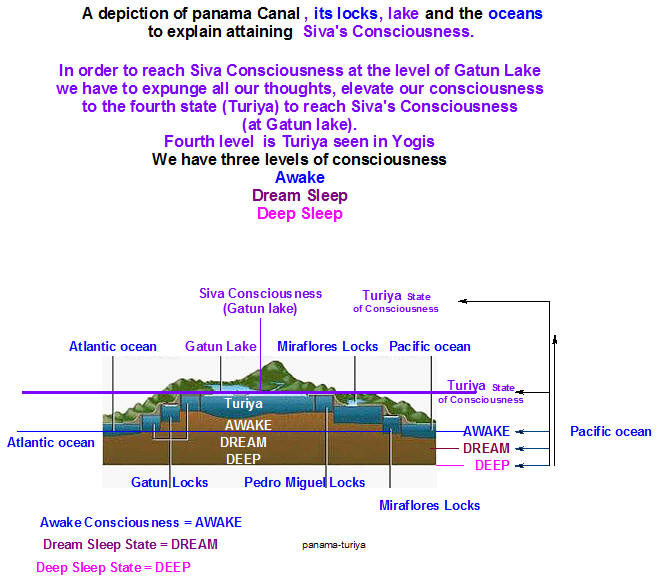
10.7:
He who knows in truth My Pervasive Manifestation and power of
Yoga (Vibhutim and Yogam) is steadfast in yoga. Never is there any doubt.
10.8:
I am the origin of all. From Me everything emanates. Thus knowing, the
wise ones worship Me with conviction.
10.9: With their mind (Citta)
focused on Me and their lives (prānas)
dedicated or surrendered to Me, enlightening one another by always talking
about Me, they enjoy happiness and delight.
Citta consists of Mahat or buddhi,
ahankāra, and manas. Mahat is the Great principle; buddhi comes from Mahat;
ahankāra, I-ness or individuation comes from buddhi. Mahat and buddhi are the
cosmic and individual aspects of intellect born
of prakriti; and citta, a product of Prakriti, is an unconscious entity.
Buddhi or intellect (Citta) gets its discerning capacity by its proximity to
the self-effulgent Self. Buddhi is an unthinking prakriti (matter)
without the advantage of reflection from Self. Buddhi is like the moon; moon
appears effulgent in the night and it is only a reflected glory. Moonlight is
sun-dependent: No sun, no moonlight; and no Self, no intellect or Buddhi.
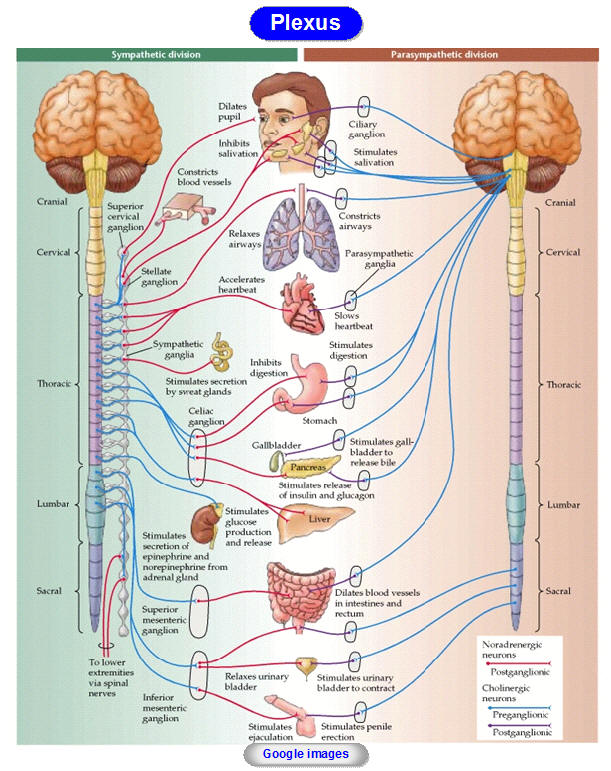
|
In the diagram above, you will notice that the Soul occupies the center; Mind, Ego, and Intellect serve Chitta or Determinative Faculty, which serves the central Soul. Sense organs report to the Mind, which submits the mental impressions to Ego, which analyses them from selfish point of view of the experiencer and forwards ego-colored impressions to Buddhi (Intellect). Manas = Mind. Buddhi = Intellect. Chitta = Citta = Determinative faculty. When Buddhi is churning, you call the function Buddhi-Vritti. Same is true of Manas-Vritti and Chitta-Vritti. Manas-Vritti, Buddhi-Vritti and Chitta-Vritti are controlled by a three-way switch, a case of reciprocal inhibition; only one is functional at a time. When Manas (mind) is churning, Buddhi (Intellect) and Chitta (DF) stop churning. Manas is a gatherer of information; Buddhi is a sifter, a sorter, an analyzer, a collator, and a processor of knowledge. It is like gathering intell (intelligence) by Manas, the field agents, and the analyzer of 'intell' is the Buddhi. Buddhi is intelligence, reason, power of discernment or judgment. Its intrinsic memory is evanescent (has only short-term memory like RAM.). Antahkarana is the inner organ or the repository of Manas, Ego, Buddhi and Chitta clustered around the soul or self. Chitta is a shuttle that moves knowledge back and forth from the front burner of consciousness or Buddhi to back burner and vice versa. When knowledge shuttles via the shuttle-express (Chitta) to the front of consciousness, you call it Smrti or remembrance; when knowledge is put in storage and not remembered, it is called Apohana (loss or forgetting); but it is available upon demand. Impressions; analytical interpretation; and storage and recall are the respective functions of Manas, Buddhi and Chitta, which work like gears in the car; when one gear is on, the other two gears are disabled. Ego or Ahamkaram is the 'I-doer', which looks at its own important self from the self of others and the world and is a mediator between the id and the world of objects and beings. Vrtti (वृत्ति) in this context is churning of the mind, Buddhi and Chitta, meaning they are engaged in their respective activities. Yoga is to turn off this churning of the restless entities, so that he can abide in his self (स्वरूप = svarupa) with ablation of mind, Ego and Buddhi and subside in Tranquil Chitta-Atma. Only Chitta communes with the effulgent Soul. Mind, Buddhi, and Chitta are one entity with three different functions and so named individually based on its function at that moment in time; Chitta is hierarchically the most superior element of the three and has the privilege of communicating with the Self or the Soul which occupies the center of a human being (and the diagram). When Chitta communes with the Soul, Mind, Ego and Buddhi vanish (autolysis); peace and quiet prevail; communion with the Soul is effective. The soul (King) presides over, directs, and benefits from Mind, Buddhi, Ego and Chitta. When they all go to battle for the king, they all die (except Chitta) with Chitta merging with the Soul. What it means is mind the mechanical meditator, Buddhi the fickle meditator and Ego the I-maker have to die for the Chittam to meditate and find oneness with the soul. Manas-Nāsa = destruction of mind; Buddhi-Nāsa = destruction of Buddhi; Ahamkara-Nāsa = destruction of Ahankara. When there is destruction of ego, mind, and intellect, there is tranquility, there is no egotistical 'I' factor, there is no propagation of thought waves from the mind, and there is no intellection giving rise to extraneous concepts and notions. Under theses circumstances there is only one EGO, that of God. Under these ideal conditions, Chittam can go to work and meditate on the Indivisible Oneness (soul) and merge with it. tranquility = the Bhāgavata defines the state of tranquility as one in which there is not grief nor happiness, nor worry, nor hatred, nor longing, not even any desire. It is indicated that Inner Organ is endowed with functional polymorphism, the constituent names based on their functions. When it emotes (Manasa-Vrtti) it is called Manas or mind; when it thinks (Buddhi-Vrrti) it is Buddhi; When it is in memory mode (Chitta Vrrti), it is Chittam. Thus Manas-Buddhi-Ahamkara-Chitta are one entity, Anatah-karana or inner Organ with multiple functions. Each function in the active mode inhibits the other functions. Chittam (சித்தம் = चित्त): Citta in Sanskrit. Chittam is a chronicler and repository of mental impressions and experiences. It is said to be a seat of consciousness, sub-consciousness and superconsciousness. Since there is no equivalent word in English, Chittam is variously called Consciousness, Soul, Memory Bank, Contemplative faculty, Inner man, Repository of Experiences, Storehouse of Vasanas, Samskaras and Gunas. One source tells when Sattva, Rajas and Tamas (Virtue, Motion and passion, and darkness) are in equilibrium, it is Chittam; when they are in disequilibrium it is Buddhi. Equilibrium is bereft of action; disequilibrium is a raft of actions. Chittam is the corporeal equivalent of Cosmic Witness. Vasana means fragrance, that clings to the clothes; Vasanas are the impression of anything remaining unconsciously in the mind, the present consciousness of past perceptions, and knowledge derived from memory. It is the fragrance left from the past life that clings on to our psychic apparatus (subtle body) in this birth. Samskaras are impression on the mind of acts done in a former existence. At present, we are made of Vasanas and Samskaras meaning that our present life and behavior are a continuum from the past life remaining true to our past-life behavior. Our body, mind, soul and psyche follow the script written by Vasanas and Samskaras. Consider your DNA inherited from your parents; likewise you inherit your Vasanas, Samskaras and Gunas from your past life. In the dream sleep, Buddhi, Ego and Mind are in abeyance because there is no external world but Chittam is functional and draws images and experiences from its own memory bank; it is a subjective world; the senses do not perceive; the motor organs (and the body) do not respond; Buddhi does not churn; that is dream. (Sleepwalking or somnambulism is a sign of CNS immaturity in children.) If one experiences a dream that is not of this world, it is the memory from previous life ( Pūrva Janma Smaranam). Chittam is man in his essence. Chittam makes the Inner Man. It is said that one should keep one's Chittam squeaky clean. Chittam is the radiating light of the soul of man. Chittam is Sum of man. You are what Chittam is. When you see an apple, your Inner Organ (Chittam) has to morph itself to the shape, size, color, odor, taste... of an apple; then only you see an apple in its completeness. You see an apple; you (your Chittam) become an apple; you hear music, you become the music. All that happens in your Chittam. Chittam is the seat of deep contemplation. Whatever is contemplated in depth in Chittam, that it becomes; that a man becomes. Chittam becomes the repository of Sattva, Rajas and or Tamas (virtue/goodness, motion and passion, darkness) in one mode or any of its combinations, one becoming more dominant than others. Chittam is a sage, a warrior, a killer.... If Chittam becomes the repository of malignant behavior such as murder, extreme greed etc, they leave a permanent imprint and never leave a person. Chittam is what makes a man a Buddha, a Jesus Christ, a Sankaracharya, a Lincoln, a Gandhi, a Hitler, a Madoff.... (Jan 18, 2009). Sattva (Virtue) is in the dominant mode in the first five people; Tamas or darkness is in the dominant mode in the last two persons. If you don't give in to the onslaught of distracting thoughts and keep Siva constantly in your Chittam, Sivam you become. Thence all your actions are His. Chittam is Sukshma Sarira or subtle body. Chittam is not listed as one of the Tattvas TATTVAS-36 along with Buddhi14, Ahamkara15, Manas16. It is said that Chittam is part of Prakrti Tattva13 . Vedanta considers Anatahkarana as fourfold, while Sankhya and and Yoga Sastras consider it as threefold; Siddha Siddhanta, one of the Inner Religions in Saivism considers Antahkarana (Inner Organ) as fivefold: Chaitanya (Higher Consciousness), Chitta, Buddhi, Ahamkara, and Manas. There are deities who preside over these faculties: Vishnu-Achuta over Chitta; Brahman over Buddhi; Siva over Ahamkara; Moon over the Manas. According to Hinduism. Terrorist says: I will destroy He, She, It, and That, which make the world and the Universe. If you take the terrorists of today, it is the chittam that has undergone transformation for worse in them. Sattva (virtue, goodness) is lost for ever. The other two (Rajas and Tamas = Motion and passion and darkness of the soul) are the two prevailing Gunas (qualities) that are dominant in them. Tamas is the begetter of destructive ideas; Rajas is the begetter of destructive energy and strategy. There is darkness of the soul; there is no radiating light of Sattva in their souls. The Inner Organ (Antahkarana (= अन्तःकरण) has undergone destructive mutation. The sense organs and the mind perceive and entertain mutant images and thoughts. The Buddhi has gone bad and cannot process the mutant images. The Chittam has taken the color of Tamas and Rajas (destructive blackness and murderous redness). The whole universe (sentient and insentient universe) is pervaded by Universal Consciousness, which is present in She, He, it and That. Universal Consciousness (UC) is variously called God, It, That, the Force.... Consciousness sleeps in the stone, feels in the flora, senses in the fauna and thinks in man. Sentience runs parallel with consciousness. This UC is the thread that runs through the whole universe; thus, He, She, It and That are one with One (UC). We are all one. We are one organism. If one is hurt all are hurt; UC is hurt; the perpetrator is hurt; his near and dear and his compatriots are hurt. If man does mindless destruction of forests, gouging of the earth, pollution of water... that amounts to injury of UC and thus injury to He, She, It and That. If the terrorist plants destructive devices to kill others and destroy property, he (or she) thinks he (or she) destroys other people and other property. Not really according to Hinduism. He is hurting himself (which he or she does not care), the constituent part of UC which is his god and god of all and thus he is hurting his family, his near and dear, his country, his universe, She, He, It, That.... He does not see Brahman in all. He does not err on the side of the Universal Consciousness that runs like a thread in all of us. The history glorifies the most destructive of the wanton warriors. Take Alexander the Great (Alexander the violent Cretin). I hear present shameless generals praise Alexander's military tactics. He wantonly destroyed countries and people for his own glory. Why are history books and the historians glorify such a terrorist? The countries he conquered and the people he killed did not do any harm to him or his country. Why did he kill all those people and conquer the countries? After all these, He earns the name, Alexander the Great. The moronic historians validate, endorse, encourage and collude with the likes of the worst terrorists, Alexander the violent Cretin. Not only the terrorists attain heaven in their opinion, but also a few hundred years from now, moronic historians may even glorify them as somebody superhuman or mosaic. War colleges study the Cretin's strategies and teach the students how to prosecute the wars! |
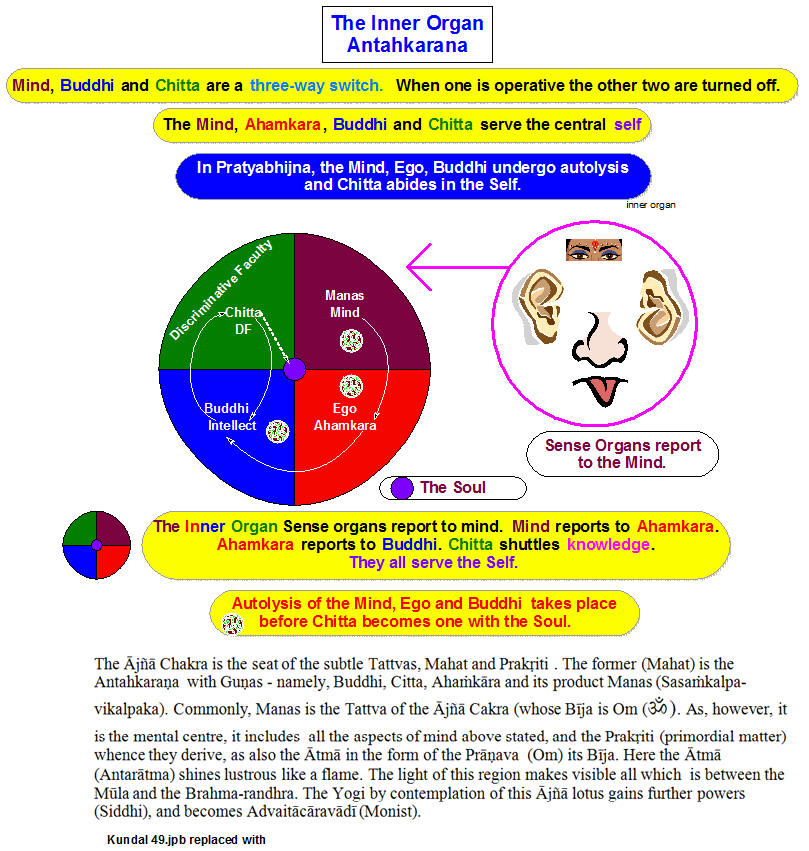
10.10:
To them who are continuously devoted, and
worship Me with eternal love, I give Buddhi Yogam (Yoga of wisdom),
by which they come to Me.
तेषां सततयुक्तानां भजतां प्रीतिपूर्वकम् ।
ददामि बुद्धियोगं तं येन मामुपयान्ति ते ॥१०- १०॥
teṣāṁ
satatayuktānāṁ bhajatāṁ prītipūrvakam
dadāmi buddhiyogaṁ
taṁ yena mām upayānti te 10.10

Buddhiyogam is the kind of intelligence, wisdom, facility, intuition, and
understanding a person needs, in order to see the Brahman in all, all in the
Brahman; unity in existence, and universe in Him; and the Atman beyond avidya
and māyā (ignorance and illusion). Buddhi and yogam act in combination and
collaboration: without Yogam [possession], Buddhi [wisdom] is inert. Once
Buddhi is close to the Self, Buddhi acquires the light and the energy to
function.
Buddhiyogam: Monier Williams Sanskrit-English Dictionary, page 734. devotion of the intellect, the intellectual union with the Supreme Spirit. Budh = to be awake, to understand, to become aware of. A mind higher than rational, intuitive mind. Yoga: acquisition, gain, profit.
Buddhiyogam = Buddhi + Yogam. Buddhi = derived from budh, meaning to be awake, to understand, to know. Buddhi is feminine and Buddha is masculine. Buddhi is a mind higher than the rational and thus intuitive. When you transcend the materialistic rational mind, you arrive at intuitive mind, which is not limited as the rational mind.
Buddhiyogam: Sankaracharya's definition--Possession of enlightened wisdom. Buddhi = full enlightenment with regard to His real nature. Yogam = Coming into possession.
Buddhiyogam: Ramanuja's definition--devotional attitude of a mature state.
Buddhiyogam: Swami Ramsukhdas. Yoga of wisdom. Wisdom = Equanimity in favor and disfavor, profit and loss, honor and dishonor, praise and blame. Equanimity is Bhagavan's gift (that you come to possess).
Buddhiyogam: Dr. Radhakrishnan. The devotion of mind by which the disciple gains the wisdom which see the One in all the forms which change and pass.
10.11: Out of compassion (anukampā-artham)
for them alone, I destroy their ignorance and darkness by abiding in their
self (Ātmabhāvasthah) with the shining lamp of wisdom.
Anukampā-artham: the purpose of compassion.
Ātma-bhāvasthah: by abiding in their self.
By
waving the lightning rod of wisdom and compassion and abiding in our self, he
removes the ignorance and darkness in our personality. This Light is
Self-knowledge and Self-realization (Jnāna and Vijnāna). The cloud of
ignorance and the veil of māyā, which interpose between the jivātman and
Paramatman, lift and the self-effulgent Light of Atman (Paramatman) shines on
the jivātman.
10.12:
Arjuna said:
You are the Supreme Brahman, the
Supreme abode, the Supreme purifier, the Eternal, the Divine, the First Primal
God, the Unborn, and all-pervading.
|
September 19, 2013. Who is God? A supposition. The Principal Upanisads. Radhakrishnan. Pages 65-66. |
|
God exists in four states: (1) the Absolute, (2) God as Creative power, (3) God immanent in this world, (4). the World. = (1).The Absolute, Brahman, (2). the Creative Spirit, Īśvara , (3) the World-Spirit, Hiranya-garbha (Golden Womb), and (4) the World. = Brahman, Īśvara , Hiranya-garbha and Viraj. In English: 1) One alone, 2) Nous or Mind, 3) One and Many, 4) The Many alone. |
|
The personality of God is not to be conceived on the human lines. He is not to be thought of as a greatly magnified person. We should not attribute to the Divine human qualities as we know them.' Wc have (1) the Absolute, (2) God as Creative power, (3) God immanent in this world. These are not to be regarded as separate entities. They are arranged in this order because there is a logical priority. The Absolute must be there with all its possibilities before the Divine Creativity can choose one. The divine choice must be there before there can be the Divine immanent in this world. This is a logical succession and not a temporal one. The world-spirit must be there before there can be the world. We thus get the four poises or statuses of reality,1 (1) the Absolute, Brahman, (2) the Creative Spirit, Iśvara, (3) the World-Spirit, Hnanya-gatbha, and (4) the World. This is the way in which the Hindu thinkers interpret the integral nature of the Supreme Reality. Mandiikya Upam$ad says that Btahman is catus-pat, four-footed, and its four principles are Brahman, Isvara, Hranya-garbha and Viraj 2 four poises or statuses of reality,1 1.In Plotinus we have a similar scheme (i) The One alone, the simple, the unconditioned God beyond being of Basilides, the godhead of Eckhart which can only be indicated by negative terms. We cannot even affirm existence of it, though it is not non-existent. It cannot be thought of as either subject or object of experience, as in it subject and object are identical. It is pure impersonal experience or perhaps the ground of all experience, it is pure consciousness, ineffable supra-existence. It is not the first cause, not the creator god. It is cause only in the sense that it is everywhere, and without it nothing could be. (ii) The Nous. The Intelligible world which Plotinus calls One-- Many, the world of platonic forms or archetypes. Not mere Ideas or things ought by the Divine Thinker, not mere passive archetypical pictures. They are active powers within the Divine mind. It is personal God. Unity cannot be separated from diversity. The most perfect form of expressive act is thought or intellection, vijñāna, Divine Intellect, First thinker and thought, the personal Lord, Universal Intelligence, The unknowable Absolute is mediated to us through the Divine Intelligence. This Intellectual principle of Plotinus is the Īśvara of the Upaniṣads. This universal intelligence makes possible the multiple universe. For Plotinus this principle is the totality of divine thoughts or Ideas in Plato's sense. These Ideas or Thoughts are real beings, powers. They are the originals, archetypes, intellectual forms of all that exists in the lower spheres. All the phases of existence down to the lowest ultimate of material being or the lowest forms of being in the visible universe are ideally present in this realm of divine thoughts. This divine intellectual principle has both being and non-being. It has, for Plotinus, two acts, the upward contemplation of the One and generation towards the lower. (iii) One and Many. The soul of the All is the third, which fashions the material universe on the model of divine thoughts, the Ideas laid up within the Divine Mind. It is the eternal cause of the cosmos, the creator and therefore the vital principle of the world God is envisaged as something apart from the world, its creator or artificer Human ideas of God are centred round him. Plotinus does not make the sensible world a direct emanation from the Intelligible World. It is the product or the creation of the World-soul, the third person of the Neo-Platonic trinity, herself an emanation from the intelligible World, the Nous. Our souls are parts or emanations of the World-soul. The three hypostases form collectively, for Plotinus, the one transcendent being. The All-Soul is the expression of the energy of the Divine, even as the Intellectual principle is the expression of the thought or vision of the godhead. (iv) The many alone. It is the world-body, the world of matter without form. It is the possibility of manifested form. |
Beings are born of Him, live by Him, and go back to Him. He is the Light above the heaven. He is the Light of lights. That Light shines on the meditator, removes the darkness and purifies him. Evil does not cling to him, as the water does not cling to the lotus petal. His sins are destroyed by the fire of knowledge as the tinder reed burns with a spark of fire. He (the Lord) pervades as space pervades the universe. In SriVaishnavism, Govinda (Krishna) is the Supreme Sanctifier or Purifier. Govinda is the final shelter of all including Brahma, Vishnu and Siva. Govinda is adhipurusam (the gigantic universal form). Govinda is like the Original Great Flame from which the secondary flames of Sri Narayana and the other linear elements are derived in a linear manner. Govinda is the Essence (Rasa); Narayana, Brahma, and Siva operate at material modes of Sattva, Rajas and Tamas. Mahavishnu is Govinda's / Narayana's Avatara; but there is no difference between them.
Click here:
10.13:
All Rishis (sages) say this of you. The deva-rishis like Narada, also
Asita, Devala, Vyasa, and You Yourself are telling me.
Deva Rishis are divine sages or seers. Narada was the foremost among Deva-Rishis or Divine Seers or Sages and was one of the Prajapatis, the progenitors. He was born from Brahma’s throat or forehead, and gained his eminent standing among Saptarishis by observing vrata (pious observance) for twelve years with the blessings of Lords Skanda and Ganesa. One may get wrapped up in literal meaning, wonder, question and cast doubts about a person being born of the throat or forehead. One who is born of the throat is excellent in the art of words; one born of forehead is excellent in mind and knowledge. Just think of modern miracles. The stem cells in the skin can be programmed to become Totipotent Stem cells which with addition of proper genes can be made into heart muscle, pancreas etc. So the heart or the pancreas is born of the skin. With this analogy, one would hesitate to dismiss such births as mere phantasma. Think of cloned calves, which do not have a contribution from a bull. What would you say, when I say that Dolly the sheep came from the mammary gland (the breast)?
The Seers see things which we fail to see. They know the Higher Truth and the lower truth, the former is the Supreme Brahman and the latter is the individual soul (we the people).
They, who are familiar with Kundalini
Yoga, are also quick to understand the euphemism in this statement: Born of
the throat (Visuddha Chakra) means perfect articulation, ideation,
wisdom, knowledge... Forehead is Ajna Chakra, the seat of dawning of spiritual
Consciousness. Visuddha Chakra is the zone which separates the material man
from spiritual man. Narada has the knack of stepping into and out of the lives
of mortals and immortals over centuries across continents and different
worlds. Sankaracharya explains this travel in time and space: Such perfect
sages, free from ignorance and delusion, appear from time to time, to carry
out their mission to completeness. Narada has foreseen the death of Kamsa at
the hands of Lord Krishna. See Supplement to read on Vyasa, the author of
Mahabharata, and Lord Ganesh, the scribe.
There is a debate among the students of Hindu religion and Mythology whether Deva Rishis like Narada and Vyasa really existed and whether the Mahabharata war did really happen. Here is an excerpt from Devi Mahatmya, page 46 by Thomas B. Coburn.
An unknown Hindu is supposed to have made the following observation.
"One of the characteristics of ancient Hindu thought is its indifference to history."139 A host of reasons for this indifference has been suggested--ranging from alleged psychological peculiarities of Indians, absence of national sentiment, lack of scientific attitude of mind, inclination to mythologize, and lack of horizons beyond one's caste, to climactic determinism but they are not of concern to us here. What is important is that whatever insight we gain through various methodological ingenuities not be gained at the expense of the integrity of what it is we are trying to understand, viz., the vision of the Goddess in the DM, or, more precisely, the reality which is reflected in the vision or that text. We have tried in the above discussion to suggest the potential distinctiveness of matters of faith from matters of academic inquiry. That, however, was primarily a process of setting boundaries to the academic task, of suggesting what academic inquiry cannot do vis-a-vis religious matters. It also has a positive, constructive obligation. As Pathak has remarked, "there is a marked difference between the attitude of the modern historian with his exuberance of historical consciousness and of the ancient writer living in an ideal world and steeped in the tradition of the Vedico-agamic culture, based upon the intrinsic authority of the revealed word.”141 If the history that the "modern historian" writes does not adequately convey the attitude of that "ancient writer," then it is, in fact, no history at all. It is merely an intellectual autobiography of the "modern historian." To avoid such conceptual imperialism, and to delineate constructive alternatives is, of course, the central task of hermeneutics. Pathak has suggested that the particular problem with which we are faced is a function, not of India's lack of historical concern, but of her different understanding of history: "To the writers of itihasa [and, we might add, purana] tradition, history was not just a meaningless succession of events [but mundane events] below which lay the fascinating drama of man's fulfillment of the sovereign purpose of human existence. ltihasa [and purana] tried to grasp this inner story...," and, therefore, "what is needed [for the modern historian to accomplish his task] is to grasp the idea of the author which gave meaning to the whole narrative." We have identified several of the "idealizing agents" operative in our, material. Sanskritization is one of them. As another we have suggested a process of "Puranicization," where "the only [salient] characteristic of a Purana is that it should be old. Anything old may be the subject of a Purana, and it covers all the aspects of life."
10.14: I hold all that you told me
as true, O Kesava (Krishna). O Bhagavan (Lord), neither the gods nor the
demons know your manifestation.
10.15:
You alone know Yourself by You, O Supreme person (Purusa-Uttama),
Creator of all beings, Lord of everything, God of all gods, and Lord of the
universe.
|
Sri U. Ve Velukkudi Krishnan Swamy Sriman Narayana is the supreme Brahmam and the cause for creation as confirmed by Upanishads. His another epithet is Maha Vishnu. He is the Isvara. Krishna is one of His incarnations. Nara Narayana is also one of the incarnations of Sriman Narayana (do not confuse the like name in this avatara) for a specific purpose of preaching tirumantram. Srivaikunthanatha is the first form, ksheerabdhinatha (= Ksirodakasayi Visnu = milk ocean Vishnu) is the second form and vibhava (Krishna is one of vibhava avataras) is the third form. Let there not be any confusion. --------------------------------------------------------------------------------------------------------------------------------------------------Depiction by Swami Prabhupada below of ontological hierarchy is different from what is depicted above. Govinda/Krishna--->Vishnu, the controller of Maya. Krishna is endowed with Aisvarya (opulence) and Madhurya (sweetness). Krishna is the fountainhead of Rasa (Sap, Essence); He is Rasa Himself. Sri Narayana, Brahma and Siva operate at material modes of Sattva, Rajas and Tamas. -----------------------------------------------------------------------------------------------------------------------------Sri Krishna/Govinda--->Sri Narayana--> Mahavishnu (First Purusha---> Second Purusha---> Third Purusha). These are the linear elements, the latter expanding from the former. Govinda is like the Original Great Flame from which the secondary flame of Sri Narayana, and the other linear elements are derived in a linear manner. ----------------------------------------------------------------------------------------------------------------------------- Mahavishnu is Govinda's / Narayana's Avatara; but there is no difference between them. CAUSAL VISHNU Karanarnavasayi Vishnu (Karana-arnava = Causal ocean) is a fragment of the fragment of Govinda. He is MAHAVISHNU, the First Purusa. Karanodakasayi MahaVisnu, in the Causal Ocean, is the creator of the 24 tattvas or elements, and is an expansion or emanation of Sankarsana. Go to TATTVAS-36 Karanodakasayi Vishnu uses Maya to create and is the Supersoul of all universes. Causal ocean is where he abides. Zillion unlimited universes are present in the hair pores of His body. When He exhales, universes emerge; with inhalation, myriad universes enter Him. Sesa being the servant of Sri Krishna, becomes His bed; Mahavishnu enjoys Yogamaya. MAya Devi Durga is Karanodakasayi Vishnu's potency.
- ==================================================================================== Garbhodakasayi Vishnu (Second Purusa) Supersoul of Total living beings is the expansion of Maha-Vishnu, the creator of Brahma living in the Garbho ocean. Four-handed form with a lotus stem sprouting from his navel. Brahma is born in the lotus flower. Garbhodakasayi Visnu, is an expansion of Pradyumna. He is all-pervasive, living in the hearts and atoms of the universe. Garbhodakasayi is commonly known as Brahmaa, the womb of the universe. Supreme Mahavishnu is in charge of countless universes like ours. One Brahma and one Siva are assigned to one universe. They all enter into Mahavishnu upon his inhalation. They are alive for the duration of one breath of Mahavishnu, who is a portion of a portion of Sri Govinda's plenary portion. --Sri Brahma Samhita Verse 48. Verse 14: explanation: In simple terms, Maha-Vishnu makes many copies (facsimilies) of Himself and one copy here known as Vishnu enters one of the zillion universes; Upon his entry He assumes the name of Garbhodakasayi (Womb) Vishnu.
==================================================================================== Ksirodakasayi Visnu, the expansion of Garbhodakasayi Vishnu, is the Supersoul of all individual living entities including demigods. Associated with Maya, He is the maintainer of the universe. He abides in Ksira (milk) ocean. The third purusa, Ksirodakasayi Visnu, is an expansion from Aniruddha. He is of goodness –Savatanu. All incarnations are rooted in Ksirodakasayi Vishnu (Vishnu who lives in Milk ocean)
==================================================================================== Creation, maintenance, and destruction Once Destruction is complete, Vishnu takes Yoganidra (Yogic Sleep with awareness) on Serpent bed. He is then called Sesasaayi Vishnu. Padma Purana says (part 10, C8, V43b-45) When the Lord is in Yoga Nidra (sleep), the entire earth was immersed in gazillion amount of water. In Yogis, Yoganidra is light sleep characterized by withdrawal from the external stimuli of the outer world, meditation in peace, tranquility and bliss and yet preservation of the full spectrum of mental faculties. H.H.Wilson in his translation of Vishnu Purana says the following. "Yoganidra is the sleep of devotion and abstraction, the active principle of illusion, personified, and also termed Maya and the Mahamaya, also Avidya or ignorance. She is Durga, Sakti or bride of Siva." She is also the sister of Vishnu/Krishna. Sacred literature says that Parvati (and her many manifestations) is the sister of Vishnu. Incarnation of Krishna is endowed with aggregate powers of Vishnu and Krishna expansions. Vishnu expansions as listed above. Krishna expansions: Narayana, (the foursome) Vasudeva, Sankarsana, Pradyumna and Aniruddha. Partial expansion such as Matsya, plus yuga avatars and Manvantara avatar. |


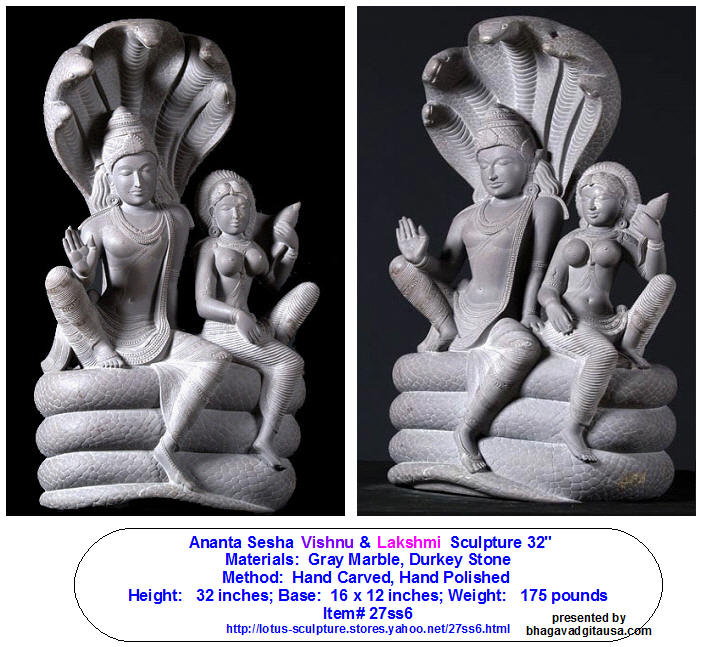
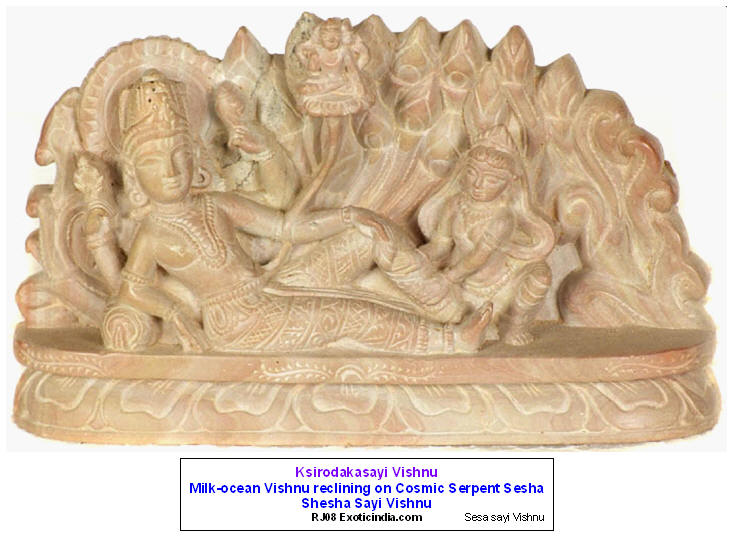
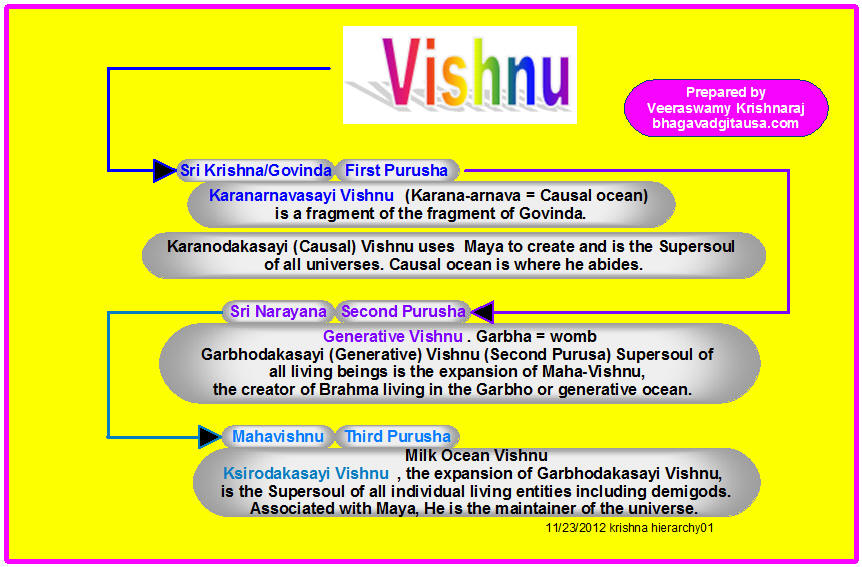
Karanarnavasayi Vishnu is the first incarnation of the Supreme Lord, and He is the master of eternal time, space, cause and effects, mind, the elements, the material ego, the modes of nature, the senses, the universal form of the Lord, Garbhodakasayi Vishnu, and the sum total of all living beings, both moving and nonmoving.
The gigantic universal form is the second incarnation Garbhodakasayi Vishnu, and all living beings, both moving and standing, which come out of the second incarnation, all became manifested.
http://srimadbhagavatam.com/2/6/42/en1
Kṣīrodakaśāyī-Viṣṇu resides in the heart of every living creature as a four hand expansion similar to that of Mahā-Viṣṇu. He is also referred to as Paramātmā or super soul. His abode is the Vaikuṇṭha. Wikipedia
10.16:
You alone can give me details of your divine manifestations, and by
such manifestations, you pervade all the worlds and abide (in them).
10.17:
How may I know you O Yogin, by always thinking of you? Moreover, in
what aspects, am I to think of you O Bhagavan?
You
are on my mind all the time. You are everything to me. You have so many forms.
What form of yours should I focus on, in my mind?
10.18:
O Janardhana (Krishna) tell me again
in detail your yogam and vibhutim (power of yoga and manifestation). There is
no satiation or satisfaction in me to hear your nectar-like words.
O Janardhana, Please give me all the
details of your yogam and manifestations for I will never ever be satiated to
hear your sweet words.
Sri Bhagavan said:
10.19:
O Kurusreshta, My manifestations are divine; I will now tell you only
the most important of the manifestations, because there is no end to My
expansion.
Vistara: Expansion
Monist View: He is only ONE, the Supreme Self but has many manifestations.
Brahma, Vishnu, and Siva are the manifestations of ONE SUPREME SELF. The
Supreme Self or Brahman can be Sabda-Brahman and Param-Brahman, Nirguna
Brahman and Saguna Brahman, Formed and Formless Brahman. Sabda Brahman is
Brahman associated with AUM. There are two kinds of knowledge: Sabda-Brahman
and Param-Brahman. Param-Brahman is superior and Sabda-Brahman is only a means
to Param-Brahman. Knowledge of Upanishads and Vedas, sacrifices, and rituals
are essential for growth and development of the soul or atman to a finite
stage; after that stage, they have to end in the same spirit of detachment
from desires at early stages of development. Here you stand by your own self:
No props, no cheers, and no support are available to the self. You are
dead to the world, figuratively: You give up everything that you owned, be it
material or knowledge. Names and forms do not matter anymore. You ride the OM
sound waves of Sabda-Brahman until you reach the Param-Brahman, when the
sound-syllable OM falls into silence. Sabda-Brahman or Brahman of Sounds
consists of all book knowledge including rituals, sacrifices, and Vedas.
(Soundless Brahman is superior to Sound Brahman.) But the latter is the
preliminary step before attainment of Soundless Brahman. When Soundless
Brahman is attained, the names, forms, books, rituals, sacrifices, prayers,
and hymns fall or should be abandoned. It is like saying that the raft should
be abandoned once you reach the shore. It is like saying that the chaff should
be abandoned or thrown away, when one has the rice.
Then
there is Nirguna Brahman and Saguna Brahman. Sankaracharya has talked on this
subject. He calls Nirguna Brahman as IT or THAT. We do not know WHAT IT is. If
you know WHAT IT is, IT is no more Nirguna Brahman. The idea is that IT has no
limits; and that IT is colorless, odorless, formless, tasteless, nameless, and
stainless; and that IT is free from all impurities and unknowable. Then we
have Saguna Brahman. This is a little easier to understand. He has a mind; His
Body is Life; His Form is Light; and He is Truth. His Soul is Space. When the
absent parts of Nirguna Brahman as said earlier are added, transformation to
Saguna Brahman takes place and He is all colors, all odors, and all tastes. He
is the Universe. Saguna Brahman is Nirguna Brahman with māyā factor coloring
It.
Sankaracharya dwells on the cause and
the effect: The cause is Nirguna Brahman and the effect is Saguna Brahman.
According to Sankara, the cause is real and the effect is a superimposition
and therefore unreal. Samkhya philosophers hold a different view. A clod of
clay is the cause and the pot is the effect. The argument goes the pot was in
the clay, meaning the effect was already in the cause and the skill of the
potter made the difference.
Siddhantists say that Maya is the clay (material cause, upādāna kārana), Sakti is the potter’s wheel (instrumental cause, Sahakāri kārana), and God (the efficient cause, nimitta kārana) is the maker of world and beings.
Vaishnava view:
He is the instrumental or efficient cause (Nimitta Karana); his sakti is the cooperating cause (Sahakāri Karana); His body is the material cause (Upadana Karana). He is also Akārana, meaning that there is no cause other than Him.
upādāna kārana = material or proximate cause; Sahakari kārana = concurrent, expedient, cooperating cause; Nimitta kārana = instrumental or efficient cause. In terms of potter, pot, clay and wheel, His Sakti is the Instrumental cause (Nimitta Karana); Sakti, earth, wheel, and staff are the cooperating causes (Sahakāri Karana); the clay is material cause (Upadana Karana). He is the potter, the clay, the Sakti, the wheel, and the staff. He is One and becomes many.
When clay becomes a pot that is Parinama (transformation). Paramatman is also called Vivarta karana (inducting cause).
10.20:
I am the Atma O Gudakesa (Arjuna) seated in the hearts of all living
beings. I am the beginning, also the middle, and certainly the end of all
beings.
|
At
death, the individual soul going up the artery from the heart, and leaves
(egress) the body from the top of the head, anterior fontanel area or
brahma-randhra, which is the point of ingress for the soul. It is common
knowledge the Greater and the lesser souls live in the spiritual heart, which
is on the right chest. (The individual soul's point of entry and exit are on
the crown.) The soul climbs up the shaft of sun's rays and reaches the sun,
when the ascending soul is in the “know.” The one not in the “know” takes
other paths and reenters another body by the anterior fontanel. Katha UP2.3.16
He is the Lord, whom the body does not know, whose body are all beings, who is the Soul of all souls, who exercises control over the bodies from within, who is the Inner Abider, whose body is the selves or the souls of all beings, who is the eternal immortal Self, and who is the cause of origin, maintenance and dissolution of beings and matter. Since all abide in Him and He abides in all, they are He Himself (Coordinate predication = समान अधिकरण्य). All are inseparable from Him. This inseparability guarantees exercise of His control over them all.
Osiris is the Egyptian god of birth and death.
I am
the “Self” seated in the heart of all living creatures. I am the beginning,
the middle and the end of all beings.
10.21:
Of the Adityas, I am Vishnu. Of the
lights, I am the radiant sun. Of the Maruts, I am the Marici. Of the stars, I
am the moon.
|
Brhad-aranyaka Upanisad. Page 237. The Principal Upanisads. III.9.5. Dr. Radhakrishnan. October 6, 2013. |
|
'Which are the Adityas?' 'verily, the twelve months of the year, these are Adityas, for they move carrying along all this. Since they move carrying along all this, therefore they are called Adityas.' ------------------------------------------------------------------------------------------------------------------------------------------------------------- Maitri Upanisad. translation by Dr. Radhakrishnan. December 9, 2013. VII.7. And he, verily, is the self within the heart, very subtile, kindled like fire, endowed with all forms. Of him all this is food. In him are woven creatures here. He is the self which is free from evil, ageless, deathless, sorrowless, free from uncertainty, free from fetters, whose conception is the real, whose desire is the real. He is the supreme lord, he is the ruler of beings, he is the protector of beings. He is the determining bridge. This self, verily, is the lord, the beneficent, the existent, the terrible, the lord of creation, creator of all, the golden germ, truth, life, spirit, the ruler, the unshaken, the pervader, Nārāyaṇa. He who is in the fire, he who is here in the heart, he who is yonder in the sun, he is one. To thee who art this, endowed with all forms hidden in the real space, be adoration. |
Moon: The Moon is believed to be the storehouse of nectar (Ambrosia, Amrita [अमृत], nectar of Immortality) which the manes (Pitris = dear departed forefathers) imbibe.
Krishna says, "I am Vishnu." This has so much significance in that it covers eight qualities of Vishnu. Tamil words are obtained from the books குறையொன்றுமில்லை (= Kruraiyonrumillai Book 3 by Mukkur LaskmiNarsimachariyar, Madras [Chennai]).
1. Jagath-kArana Vastu = ஜகத்காரண வஸ்து: world-cause substance meaning that he is the causal agent of the universe.
2. Sarva Raksakan = சர்வ ரக்ஷகன்: All-Savior. He is the savior of all.
3. Sarva-VyApi = ஸர்வ வியாபி: All-Pervader. He pervades all, Cit and Acit (beings and mater = animate and inanimate).
4. Sarva-Sesi = சர்வசேஷி: All-Master or Lord. Lord, Master, owner of all. He is the Master and we are His slaves.
5. Sarva-anthar-yAmi = ஸர்வாந்தர்யாமி: SarvAntharyAmi: All-inside-abider. The One who abides inside all of us. This includes abiding inside inanimate things. Example: Narasimha emerged from a palace Pillar.
That is why Narasimha (Vishnu) is Sarva-antar-yAmi of SarAsaram. He abides in all and all abide in Him. Sarva-antar-yAmi = all -inner-abider; SarAsaram = Saram + Asaram = mobile things + immobile things. Vishnu is the inner abider of all mobile and immobile things.
6. VEda VEthyan = வேத வேத்யன்: Veda Vethyan: The One who is knowable through Vedas.
7. VEdAnta VEthyan = வேதாந்த வேத்யன்: Vedanta Vethyan: Veda-end-the-Knowable. The end of Veda (Vedanta) is the essence of Vedas. He is knowable by the essence of Vedas.
8. SriyahPathithvam = ஸ்ரீய:பதித்வம்: The One (husband) who is close to Sri or Lakshmi.
The twelve Adityas are Aryama, Bhaga, Dhata, Mitra, Pusa, Rudra, Savita, Surya, Tvasta, Varuna, Vivasvan and Vishnu.
Adityas are the
sons of Aditi and the Vedic gods. Aditi is antithetical to Diti, “limited.”
Aditi is female and a female principle with no limits and represents the
unmanifest nonexistence. Since Adityas are sons of Aditi, it is reasonable to
assume that they are limitless. One of the Adityas is
the Savita or the Solar Vishnu. The sun is one of the six doors to
Nirguna Brahman, while the other doors are fire, wind, water, moon, and
lightning. There are twelve Adityas, one for each
solar month; Vishnu is the last, the twelfth and the most important. Marici is
the son of Brahma and one of the secondary prajapatis, the progenitors or
creators. To read about Maruts, go to commentary on verse 23, Chapter 10.
Aditi and Kasyapa desired to attain Yoga Siddhi and hence performed Tapas. Responding to their deep faith, Bhagavan appeared before them. Once they took a look at the heavenly beauty of Bhagavan, they changed their mind and begged him to become their son. Bhagavan blessed them with the anugraha (favor or support) of becoming their son. Thus Vamana was born as Upendra-Vamana: Vamana, the younger brother of Indra. He is also known as Prachnigarbhan, product of pregnancy from entreating (of Bhagavan). Krishna always keeps his parents same (though of different names and places) in his many man-avatars: Kasyappa and Aditi. Aditi was Devaki, the mother of Krishna.
One may notice here that the Vedic gods are part of the Hindu pantheon of gods. Indra is the tutelary of god of Indo-Aryans. Indra is the 'kindler' of thoughts and deeds. He deploys his thunderbolt Vajra (hence the name Vajrapani) to destroy the demons of drought and eclipse. His gonadal glory is that of stallion (Vaajin) and that of bull. Man provides Soma, the drink of gods to augment the power and vigor of Indra and gods; Indra in return provides cattle, rain and other benefits to man. The Indo-Aryan priests of yore, while offering libations of Soma to Indra, beg him to beat up on the dark Dasyus (the natives) to preserve Indo-Aryan Purity, and the cheapskates for failure to make gifts to them in return for the rituals and rites. As time passed by, Indra gave up on punishing the Dasyus and the atmospheric demons and switched to punishing breakers of law and order of Varuna, Aryaman and Mitra (the god of sky, the Keeper of the path of sun, a friendly god who awakens men at dawn and sends them to work). His birth history varies from text to text. Rg Veda says he and Agni (Fire god) were born of Cosmic Purusa. Another text says he was born of Ekastaka, the daughter of Prajapati. Another version says he was born of Kasyapa and Aditi. The last one puts him on par with Krishna, whose parents were incarnations of Kasyapa and Aditi. The Avyakta Upanishad declares he was the god fashioned out of all gods. One legend glorifies him as a serial groom with serial wives with an active nursery. One such wife is Indrani, who gave him three sons: Jayanta (Victory), Rsabha (Bull), Midhusa (Liberality).
Indra went downhill from then on. Krishna steals the Wish-tree from Indra's heavenly gardens at the behest of His Wife, Satyabhama, goes to war with Indra, defeats him and lets him live. Indra, the god of thunder, lightning and rains sends torrential rains, because the cowherds worshipped Krishna instead of Indra. Krishna held up a mountain, under whose cover the cows, animals, the cowherds and children took refuge. That brought sense into Indra, who sought Krishna's forgiveness. The west is quick to point out that Vishnu and Siva came into their own and eclipsed Indra and the elemental gods.
To make matters worse, Indra seduced Ahalya the wife of Rishi Gautama by impersonating the Rishi. Gautama cursed him so that a thousand vaginas are tattooed on his body. The Rishi cursed Ahalya for no fault of hers to become a stone. Indra the poster boy of a thousand vaginas in the heaven went to Siva, who taking pity on him morphed the Vaginas into a thousand eyes, thus earning the name by Indra sahasraksha or Netrayoni, one with a thousand eyes or eye-genitals. Ahalya was cured of her curse when Rama put His foot on the rock.
He kills a Brahmana. He broke truce with Drought Demon and thus his splendor was transferred to Vayu, the wind-god. He seduced Ahalya and lost his beauty to the Asvins.
Things appear to improve. The Tantrics came to his rescue. Vajra, the thunderbolt, is identified with penis and thus became Sakta, the potent one.
Good gods and evil gods are not unique to Hinduism. Adityas are good gods and Dityas (Daityas) are demons or bad gods; both were fathered by Kasyapa, the mothers being Aditi and Diti (sisters). They are half-brothers: gods and demons. In Zoroastrianism, there are two primary gods, one good and one evil; One is Light and the other is Darkness; other gods chose to join one or the other group; in Hindu terms, one side of Zoroastrianism consists of gods and the other side demons. Cyrus of Persia believed that the good should triumph over evil and he set to conquer the world. Yahweh, the Jewish God, visited him in his vision and asked him to rebuild the temple and establish worship in Jerusalem. Some and not all Jews went from Babylon to Jersusalem to worship Yahweh in the temple of Solomon, which was earlier put to the torch by Nebuchadnezzar in 586 B.C.
When the Christians came along, they took the one God, the Almighty as the Real One and the evil god of Zoroastrianism antithetical to Yahweh as the devil, the Hindu equivalent of Dityas or Asuras. Hebrew tradition believes that Satan belongs to Yahweh's circle in its periphery, thus agreeing with the Hindu concept that good and evil (god and satan) are two sides of the same coin. Krishna says, "I am all-devouring death" (10.34) and I am the absolute virtue of the virtuous. (10.36). The Vedic Asura of India are the Iranian Ahura.
10.22:
Of the Vedas, I am the Samaveda. Of all the gods, I am the Vasavah. Of
all the Indriyas (senses), I am the mind. I am consciousness in living beings.
Vasava is Indira.
10.23:
Of the (eleven) Rudras, I am Sankara (Lord
Siva). (I am) Vitteso (Kubera) of the Yaksas and Raksasas. Of the (eight)
Vasus, I am Fire. I am Meru of all mountaintops
or peaks.
Scholars from West regard Rudra as a Dravidian god of thunder and lightning,
and Indra as the Aryan counterpart. Rudra means “Red, crying and flashing
One.” Rudras or Maruts are the sons of Rudra. When Maruts enter, they raise a
ruckus, flash the lightning, roar like a lion, unleash their thunder, and wear
robes of rain. Rudra wields 100 weapons and is Pasupati, the Lord of the
cattle. Rudra is later known as Siva, who was born of Brahma and is in charge
of dissolution of the universe. Lord Siva is part of the Hindu Holy Trinity of
Brahma, Vishnu, and Siva. Siva’s image appears usually (in the temples) in the
form of Liṅga
(लिङ्ग),
which has at least two meanings:
1.
Li,
to dissolve; and gam, to go out
2.
Sign
The meaning has significance in that
what leaves the body after death or dissolution and is involved in
transmigration of the soul is Lingasarira or subtle body. Linga also means
“Sign.” The sign stands for transcendental power and generative principle.
MERU is a mountain, considered as the epicenter of the universe and the abode
and playground of the gods. Ganga River gracefully falls on its high point and
runs down in four directions. Brahma's city of gold graces the summit,
surrounding which there are eight satellite cities; Krishna and Vishnu have
abodes on Mount Meru. Deep below the base of the mountain are the seven
netherworlds, and the mountain is supported by and balanced on the seven
manifold heads of snake Vāsuki, whose movement causes tremor of the mountain.
At Pralaya or dissolution, his fiery breath consumes the whole creation and
universe. (Mount Meru is the Himalayas and the tremor felt is from the
manifold head of the snake [of a South Asian subcontinent thrusting] under the
Himalayas.)
Rudras were born to Kaśyapa and Surabhi; their names are synonyms of Lord Siva. They were Ajaikapāda, Ahirbudhnya, Tvaṣṭṛ, Rudra, Hara Bahurūpa, Tryambaka, Aparājita, Vṛṣākapi, Śambhu, Kapardī Raivata, Mṛgavyādha, Śarva, Kapālin.
The eight Vasus are the personifications of natural phenomena: Apa for water, Dhruva for the Pole-star, Soma for moon, Dhava or Dhara for earth, Anila for wind, Anala for fire, Pratyusha for Dawn, and Prabhasa for light.
|
3. 'Which are the Vasus?' 'Fire, the earth, the air, the sky, the sun, the heaven, the moon, the stars, these are the Vasus for in them all this is placed therefore they are called Vasus.' |
|
The Vasus transform themselves into bodies and organs of all beings which serve as the support for their work and its fruition as also into their dwelling-places. They help other beings to live and they themselves live. Because they help others to live they are called Vasus. 4. Which are the Rudras?' 'These ten breaths in a person with the mind as the eleventh. When they depart from this
mortal body, they make us (his relatives) weep. So because they make us weep, therefore they are called Rudras.' ten breaths = the ten sensory and motor organs. Page 235-236. III.9.3-4 Brhad-aranyaka Upanisad, The Principal Upanisads. Dr. Radhakrishnan. October 6, 2013. |
Kubera or Kuvera is the half brother
of the Raksasa, Ravana, who is the infamous abductor of Sita, wife of Lord
Rama of Ramayana. Kubera is the Vedic Bill Gates, Rockefeller, the Queen...
Read supplement section piece titled “Children Eat Free” to find out how Lord
Ganesa gave him the fright of his life. He is the richest being on this
universe and can divine the exact location of precious gems without a divining
rod. He rolls in gems, gold, and anything that is precious. Therefore, he is
the Lord of riches (Dhanapathi), and is the celestial keeper (Celestial Banker
& Treasurer) of wealth of gods. It is said that his father, Pulastya was a
non-Aryan Rishi and his mother, Idavidā, was the daughter of Rishi Bharadvāja.
According to Mahabharata lore, his mother also was a non-Aryan. His half
brother, Ravana is a ten-headed, twenty-handed, and fiery-eyed bad Raksasa. He
went on a rampage defeating the fiercest of all celestial fighters, Yakshas
and Gandharvas. He had an eye on the celestial chariot owned and operated by
his half brother, Kubera. This chariot is a flying city; no flying object is a
match to Pushpaka Vimanam (Pushpaka + Vimanam = flower + plane). The beauty
about Pushpaka Vimanam is that it does not need any fuel:
It runs on thought! We humans have to worry about the price of gas
($3.00 a gallon) to go from here to there (June 2006). Thought was the
energy that gods use to go from one universe to another, no gas tanks, no
gears, no transmission, no breakdown, no exhaust and no pollution. To make
matters worse, Ravana stole Kubera's throne too.
10.24:
Of all the priests, know Me O Partha, to be the most important
priest, Brhaspati.
Of the Army Chiefs, I am Skanda. Of all ponds, I am the ocean.
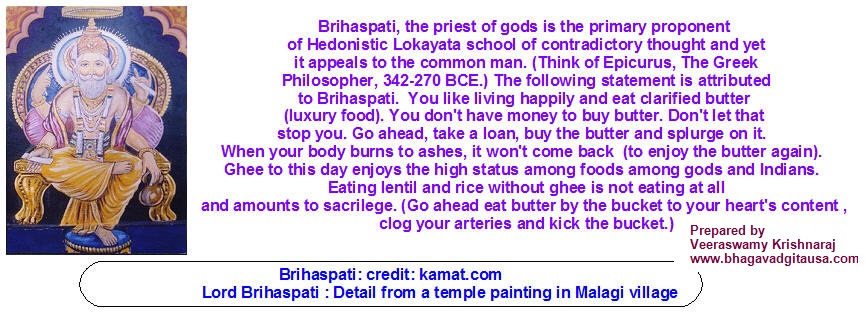
Brhaspati is Lord
of prayer: Brh, prayer; pati,
Lord. He is the priest of the gods, and keeps asuras, demons and raksasas at
bay or destroys them. Skanda, born of the sparks emanating from the third eye
of Lord Siva, is the war god, whose other names especially in South India are
Muruga, Kartikeya, Subramanya, Shanmukha, and who is the son of Siva and
Parvathi, and the younger sibling of Ganesa. Shanmukha's vahana or vehicle is
peacock and the banner is cock; Valli and Deivayani are His divine consorts,
and represent sakti or power. His six heads stand for six attributes: Divine
power, wealth, fame, strength, detachment from passion, and knowledge.
If a person is Janus-faced (Roman deity Janus), ambidextrous, deceitful, double-dealing and double-faced....
| The
Complete Works of Swami Vivekananda Volume 8 [ Page : 93-94-95 ]
BUDDHA'S MESSAGE TO THE WORLD Swami Vivekananda (1863-1902) on priests, prophets and prophet's victory over priests. Swami Vivekananda does not mince words. The words are his and his alone and may not be suitable in the present world of politically correct speech. The view from the East. Priests believe that there is a God, but that this God can be approached and known only through them. People can enter the Holy of Holies only with the permission of the priests. You must pay them, worship them, place everything in their hands. Throughout the history of the world, this priestly tendency has cropped up again and again -- this tremendous thirst for power, this tiger - like thirst, seems a part of human nature. The priests dominate you, lay down a thousand rules for you. They describe simple truths in roundabout ways. They tell you stories to support their own superior position. If you want to thrive in this life or go to heaven after death, you have to pass through their hands. You have to perform all kinds of ceremonies and rituals. All this has made life so complicated and has so confused the brain that if I give you plain words, you will go home unsatisfied. You have become thoroughly befuddled. The less you understand, the better you feel! The prophets have been giving warnings against the priests and their superstitions and machinations; but the vast mass of people have not yet learnt to heed these warnings -- education is yet to come to them. Page 94. Men must have education. They speak of democracy, of the equality of all men, these days. But how will a man know he is equal with all? He must have a strong brain, a clear mind free of nonsensical ideas; he must pierce through the mass of superstitions encrusting his mind to the pure truth that is in his inmost Self. Then he will know that all perfections, all powers are already within himself, that these have not to be given him by others. When he realizes this, he becomes free that moment, he achieves equality. He also realizes that every one else is equally as perfect as he, and he does not have to exercise any power, physical, mental or moral, over his brother men. He abandons the idea that there was ever any man who was lower than himself. Then he can talk of equality; not until then. Now, as I was telling you, among the Jews there was a continuous struggle between the priests and the prophets; and the priests sought to monopolize power and knowledge, till they themselves began to lose them and the chains they had put on the feet of the people were on their own feet. The masters always become slaves before long. The culmination of the struggle was the victory of Jesus of Nazareth. This triumph is the history of Christianity. Christ at last succeeded in overthrowing the mass of witchcraft. This great prophet killed the dragon of priestly selfishness, rescued from its clutches the jewel of truth, and gave it to all the world, so that whosoever desired to possess it would have absolute freedom to do so, and would not have to wait on the pleasure of any priest or priests. Page 95: Swami Vivekananda continues his speech on priests and prophets The Jews were never a very philosophical race: they had not the subtlety of the Indian brain nor did they have the Indian's psychic power. The priests in India, the Brahmins, possessed great intellectual and psychic powers. It was they who began the spiritual development of India, and they accomplished wonderful things. But the time came when the free spirit of development that had at first actuated the Brahmins disappeared. They began to arrogate powers and privileges to themselves. If a Brahmin killed a man, he would not be punished. The Brahmin, by his very birth, is the lord of the universe! Even the most wicked Brahmin must be worshipped! But while the priests were flourishing, there existed also the poet - prophets called Sannyasins. All Hindus, whatever their castes may be, must, for the sake of attaining spirituality, give up their work and prepare for death. No more is the world to be of any interest to them. They must go out and become Sannyasins. The Sannyasins have nothing to do with the two thousand ceremonies that the priests have invented: Pronounce certain words -- ten syllables, twenty syllables, and so on -- all these things are nonsense. (He talks about the mile-long Sanskrit words (and Mantras) which are glued together like a mile-long transport train.) So these poet - prophets of ancient India repudiated the ways of the priest and declared the pure truth. They tried to break the power of the priests, and they succeeded a little. But in two generations their disciples went back to the superstitious, roundabout ways of the priests -- became priests themselves: "You can get truth only through us!" Truth became crystallised again, and again prophets came to break the encrustations and free the truth, and so it went on. Yes, there must be all the time the man, the prophet, or else humanity will die. You wonder why there have to be all these roundabout methods of the priests. Why can you not come directly to the truth? Are you ashamed of God's truth that you have to hide it behind all kinds of intricate ceremonies and formulas? Are you ashamed of God that you cannot confess His truth before the world? Do you call that being religious and spiritual? The priests are the only people fit for the truth! The masses are not fit for it! It must be diluted! Water it down a little!
|
10.25:
Of the great Rishis (sages), I am Bhrgu.
Of sounds, I am Aksaram (monosyllable,
AUM). I am Japa of sacrifices. I am Himalaya of the immovables.
The view from West:
Bhrgu Muni = Burn or roast + observer of silence = Fire-priest who observes silence. The priest who inducts fire in the alter by magic. Bhrgu Muni was the mind-born son of the Creator Brahma. Once the Rishis (Seers) were not sure about the supremacy among Brahma, Siva and Vishnu and whom to worship. Bhrgu Muni was deputed from Rishi headquarters to interview the three gods. It was a mission of subterfuge and subreption. He found Siva doting on Sakti (Parvati) all the time so much so that he cursed Siva to take the form of Lingam, deprived of oblations. He went to Brahma, found him self-absorbed all the time and decided that he was not worthy of worship. Lastly, he went to Vishnu and as was the case, found him in Yoga Nidra (Yogic Sleep) and kicked him awake. Vishnu instead getting mad with the foot-loose Muni announced that he was honored and blessed by being awakened by a Muni of such repute. (This is the case of man kicking God of gods.) Vishnu the confounder and the Mayin of Mayins even offered to massage Bhrgu's kick-foot. Impressed by humility, magnanimity, and even temper of Vishnu, Bhrgu Muni declared that Vishnu alone was worthy of worship. The West regards this incident as the rivalry between Saivas and Vaishnavas (Sects of Siva and Vishnu). Yogic Sleep: A state of Consciousness in a Yogi while in communion with the Divine Energy radiating and pervading the whole universe and beyond. Here Vishnu appears as if He is sleeping on the coiled bed of snake Sesa and yet His diffusing and pervading Energy keeps the Universe in motion and balance. Yoga Nidra is personified as His sister (Durga).
Aksaram: means imperishable, indestructible, Om, a letter, a word, a syllable. Since Aksara is indestructible, it is Brahman and hence the whole world. Here it means Om; Om is Brahman.
AksarA (with a long a) means a personification of speech who upon invocation protects her devotees.
10.26:
Of all trees, I am Asvattah. Of all the divine Rishis, I am
Narada. I am
Chitraratha among Gandharvas. Of all perfected beings, I am
Kapila Muni.
Asvattah is Ficus
religiosa, aka Pipal tree (அரசமரம்).
Ficus religiosa is the symbols of Krishna, Siva and Buddha, worshipped by barren women, and Buddhists. This tree blesses the barren woman with sons. Worship of this tree goes back to Indus Valley Civilization. The Buddha attained enlightenment under this tree (Tree of Enlightenment = Bodhi Vriksha); thus, it is sacred for the Buddhists. Barren woman circumambulates this tree in the morning and hugs the tree by applying the bare midriff to the bark of the tree. All afflictions and evil influences of planets as the cause of barrenness will dissipate. Men also obtain benefits from going around the tree 108 times a day for three years. Incurable diseases bid good bye to the body, failing business will prosper, and office promotion is made certain.
There is a five-leaf ceremony. The five leaves of the King of Trees (arasa-maram = அரசமரம்) signify the following: Tender leaf for birth of a son, unripe leaf for lifelong beauty, ripe leaf for long life of the husband, dry leaf for lasting happiness and undiminished prosperity and fallen leaf for unfailing health and wealth.
It is Asvatta tree, so named because Asva is horse and sta is place; the horses liked to rest under its shade. The tree is populated with Gandharvas, Apsaras (Celestial dancer depicted below)
The Indian men take a Viagra-like concoction to boost their oomph. The concoction is made of boiling milk with the bark of Pipal tree (Ficus religiosa). This milk is laced with cultures and next day, the milk becomes yogurt, which is hand-churned to produce butter or ghee. Rice is cooked with the ghee (laced with the essence of the bark of Pipal tree). This Pipal-Ghee-Rice gives the man the oomph. It is the poor man's Viagra.
On certain days, Lakshmi pays a visit to the tree. It is so sacred that a sacred thread is wound around the trunk as the Brahmins do. People conduct marriage between Pipal and Neem trees by planting them side by side. The leaf is heart-shaped with an acuminate end. When the wind blows the leaves pirouette on their petioles and chatter (as the leaves do the touch-dancing and rub against each other). We as children enjoyed the play and chatter of the leaves. I remember my mother burnt the dry fallen Pipal tree leaves, mixed the char with vegetable oil and applied it on my impetigo. Abracadabra, the impetigo was gone.
|
|
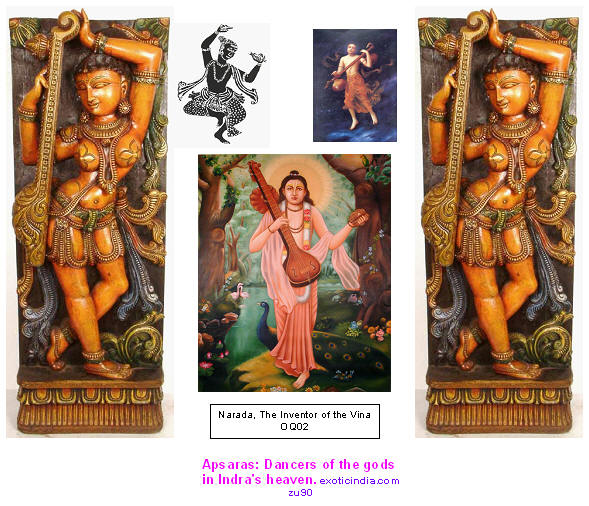
Narada
On Dolly's name, Wilmut stated "Dolly is derived from mammary gland cell and we could not think of a more impressive pair of glands than Dolly Parton's." --Wikipedia.
Chitraratha: is the king of Gandharvas (celestial musicians) and Apsarasas (Seductive celestial nymphs living in Svarga [heaven]). Apsarasas dance for the gods while Gandharvas play musical instruments and sing for the gods. The gods can be incorporeal (without body) or can assume any form or name.
Kapila Muni: Muni is a sage who has taken a vow of silence (mauna = मौन). The West questions the historical validity of Hindu accounts relating to Kapila because they are full of contradictions. The West says that Buddhist's account, being more credible, connects Kapila with Samkhya philosophy and the City of Kapilavastu, the birthplace of Buddha. Dr. Radhakrishnan and Moore say that Kapila lived during the 7th century B.C. The legend says he was born of Brahma or an incarnation of Vishnu. Another legend says that Kapila reduced the 60K sons of Sagara to ashes for calling him a horse thief.
Kapila is a major figure in the story associated with the descent of the Ganga (Ganges) river from heaven. (Does Mississippi River descend from heaven? How about Amazon? Yea Yea, I know it is a flippant question.) King Sagara, an ancestor of Rama, had performed the Aswamedha yagna (Horse-sacrifice) ninety-nine times. On the hundredth time the horse was sent around the earth; Indra, the King of Heaven, grew jealous and kidnapped the horse, hiding it in the hermitage of Kapila. (Now you see even gods get jealous and steal, why talk about man. Bhagavan Krishna stole the celestial tree--Erythrina Indica-- from Indra's garden at the behest of His wife. Bhagavan Krishna steals from Indra the thief, thus qualifying as the Super Thief of thieves. Besides, poets say Bhagavan steals our hearts. He stole just to show that He taketh what He bequeath.)
The 60,000 sons of Sagara found the horse, and believing Kapila to be the abductor assaulted him. (Where was Indra? He never came for Kapila's defence-Krishnaraj). Kapila turned his assailants to ashes. Anshuman, a grandson of King Sagara, came to Kapila begging him to redeem the souls of Sagara's 60,000 sons. Kapila replied that only if the Ganges descended from heaven and touched the ashes of the 60,000 would they be redeemed.[5] The Ganges was eventually brought to earth, redeeming the sons of Sagara, through the tapasya of King Bhagiratha.--Wikipedia.
From the waters of Ganges, ocean (Sagara) was formed. You thought that the oceans formed, when water-bearing asteroids hit the earth mercilessly a very long time ago.
The View from the West
Vow of silence was observed as penance by Pythogoras, the vestal virgins, Saint Benedict, the Cistercian order.... Man belonging to the exclusive species has the specialized apparatus to enunciate speech. Having gained speech, it is hard to maintain silence. Many in all walks of life lost what they had by mere flippant and careless speech. Speech is a cure and a curse. Speech is cure when well-spoken and curse when ill-spoken. Common speech by 'unguarded tongue dissipates the soul' while purposeful silence enhances the soul to commune with god.
The View from the East (India)
Mind, ego, Intellect and discriminative faculty draw their images and impressions from the eyes, ears, tongue... Responding to them by thought, speech, hands, feet, genitals ... are the norm. Shutting down the incoming stimuli and outgoing impulses are the stuff of Mauna or silence. Sensory input and motor output are suspended--that is silence. When that point of pristine silence arrives, Chitta (discriminative faculty) rises and the senses, mind, ego and intellect undergo lysis, meaning that the thought waves do not propagate from the tranquil mind lake. That condition is most suitable for the Chitta to commune with the Universal Consciousness.
10.27: Know Me, to be Ucchaisravas among horses born along with the nectar. Of the elephants, I am Airavata. Of men, I am king.
Nectar or Amrta refers to the ambrosia that floated on the surface of the
cosmic ocean, when the gods and demons churned it. Amrta or A+ mrta means
deprivation of death. Dhanvantari, the physician of the gods, collected Amrta,
considered as the rejuvenator by gods and demons, from the ocean surface. Many
other living and nonliving entities came out of the cosmic causal ocean
including Sri (the consort of Lord Vishnu), the celestial horse, and the
celestial elephants.
Flying white Elephants and long-eared Horses
Ucchaisravas is the long-eared horse,
which came out of the ocean because of the churning. Lord Vishnu claimed
ownership of Ucchaisravas, a white horse with a black tail. Airavata also came
out of the churning of the ocean; the main product was Amrtam or Celestial
nectar. Airavata was a white elephant with four tusks. When Brahma was holding
the two halves of the celestial, primordial, and pluripotential golden egg
(Hiranyagarbha) in His hands, eight male and eight female elephants emerged
from the right and left halves of the eggshells. These paired elephants hold
up the earth at all cardinal and other critical points, and originally had
wings but were deprived of them from a curse laid by a rishi teaching his
students under a tree, when one of them crash-landed by their side breaking a
few branches of the tree.
| Worship of Various Animals (horse). 329 (Page 365 of 644) Monier-Williams. Brahmanism and Hinduism.
Hence in the Śatarudriya hymn of the Yajur-Veda (p. j6) we have ‘Reverence to dogs and to the lords of dogs,’ ‘Reverence to horses and to the lords of horses.’ Hence, too, the name Kṛita-jña, ‘the grateful one,’ is applied equally to Siva and to dogs. In Western India dogs are sometimes fed as a sacred duty once a month. In the Bali-haraṇa (or Kāka-bali) ceremony (see p. 289), offerings of food are placed on the ground for Yama’s two dogs, crows, etc. (see pp. 289, 422). Again, crows are fed at the end of the Śrāddha ceremonies (p. 311). On the other hand, dogs are sometimes described as unclean animals, and crows as birds of ill omen. So also Śva-paća, ‘dog-cooker,’ and Tīrtha-Kāka, ‘crow at a place of pilgrimage,’ Kūpa-manduka, ‘frog in a well,’ or Kūpa-kaććhapa, ‘tortoise in a well,’ are terms of reproach (Panini II. I. 42). There is a natural enmity between cat and mouse, dog and jackal, serpent and mongoose, crow and owl. Horses: As to horses, in some parts of India at the Daṡa-harā (Daṡarā) festival, they are decorated with garlands. The mythical horse, Uććaiḥ-śravas, ‘high-eared’ (p. 108), supposed to be the prototype of all horses, is assigned to the god Indra. The Aśva-medha, ‘horse-sacrifice,’ was a very ancient ceremony (hymns 162 and 163 in Ṛg-Veda I. being used at it). It was the chief animal sacrifice, and a hundred horse-sacrifices entitled the sacrificer to displace Indra from heaven. Indra, therefore, always tried to capture the horse which was allowed to roam about before immolation (see Ramayana I. 13, and Mahā-bhārata XIV, Āśvamedhika-parvan)1.
1 A horse was selected by a prince who aimed at supremacy and was let loose to roam at large for a year. Those who disputed is claim tried to capture the roving horse and to hold it against the original owner and all comers. If no one succeeded the horse was brought back and sacrificed with long ceremonies, and the prince who held it was acknowledged as paramount sovereign. Yudhiṣṭhira in the Mahā-bhārata let loose a horse in this way, which wandered through many countries, having Arjuna for its champion. Among the places to which it came in its rovings was Maṇipur, whose king is described as virtuous, and who gave his daughter, Citrāṅgadā, to Arjuna in marriage. |
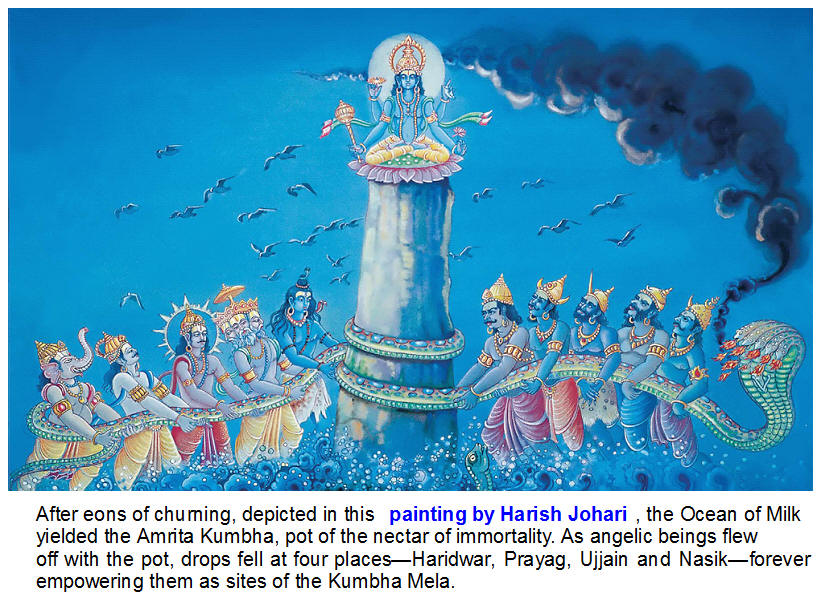
10.28:
Of weapons, I am the thunderbolt. Of the cows,
I am Kāma-dhuk. Of procreators, I am Kandarpa (Cupid). Of serpents, I am
Vasuki.
Kāmadhuk,
Kāmadhenu, or Surabhi is the cow of plenty emerging out of the ocean churned
by suras (gods) and asuras (demons). It is a white cow and a wish-giver. It is
symbolic of motherhood, nature and plenty. America is the Surabhi of modern
times.
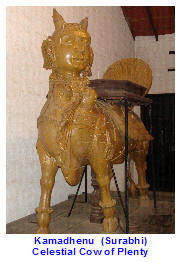
Why is the cow sacred to the Hindus?
According to sacred scriptures, cow’s body is an embodiment of Devas [gods]; Maharishis [Seers]; Trimurtis [three gods: Brahma, Vishnu and Siva]; Mahalakshmi [goddess of wealth]; Sarasvati [goddess of arts]; Parasakti [Supreme Sakti = Mother Goddess]; sacred rivers Ganga, Yamuna, Kaveri, Krishna, Godavari, Tungabhadra, and Sindh; Supreme purifying lakes Manasarovar, Pushkaram, Suryakundam, and Brahmasaras; four Vedas, Rg, Yajur, Sama, and Atharva and Upanishads. It is so sacred that Krishna's abode is named Goloka (the world of cow; go = cow; loka = world. What is Whitehouse for President Obama is Goloka for Krishna--Jan 2009. Goloka is not just a house; it is a world. For Krishna, there are no term limits and quadrennial rituals called presidential elections mandated by the Constitution.)
Pancagavya: the five products of a cow, milk, yogurt, butter, urine and cow dung are purifying. (chuckle if you must; consider ground meat that is contaminated with cow dung and urine, which sometimes give gastroenteritis and Hemolytic Uremic Syndrome and kidney failure in children and the elderly in the U.S.A.) Eating these in various combinations expunges sins according to Puranas (and extinguishes life according to Prativadin--opponent in debate). Most religious people (exclude urine and cow dung and) consume milk, butter and yogurt (curds). --Chapter 48 Padma Purana. It is a very common sight in India's countryside that balls of cow dung mixed with hay are plastered on the wall into round cakes, which when dry and desiccated are used as fuel for cooking, emitting greenhouse gasses (That subject is for another day, another time and another place.)
Astronauts or cosmonauts who stay in space for months process their urine into drinking water. It tastes as good as regular drinking water with a faint hint of iodine, so it is said in published accounts. So don't laugh at Hindus when they prepare Panchagavya. Remember, you were drinking your own urine you passed into the amniotic fluid, when your mother was pregnant with you. We all bathed in and drank our own urine when we were in our mommies' bellies. I bet you have seen 'Bizarre Foods With Andrew Zimmerman' in TV (2008-2009). He was visiting India to taste its prolific cuisine and went to Goa to dine on the sumptuous ethnic food of Goans. Yes, he drank processed blackish and brackish cow urine from a labeled bottle in an Ayurveda Center. It takes spunk and pluck to swill such scrumptiously delicious fluid from bovine cistern. There is reference in Bible (Proverbs 5.15) on drinking urine from one's own cistern.
|
An irreverent acquaintance of mine narrated this story to me. Coffee, Tea or Pee A case of hot Civet coffee, tasty sweet Tea or frothy yellow Pee Proverbs 5:15 (New International Version) Drink water from your own cistern, running water from your own well. Three aficionados were hitting the high-end restaurants in the Big City over a weekend. They wanted to taste the best available beverage after their meals. They went to an expensive high-end restaurant and asked for fresh Civet Coffee. The waiter went to the manager to appraise him of the three gentleman asking for fresh Civet Coffee. The manager told the waiter, "Wait a minute, I will check." He went to the back of the building and came back saying, "No scat today." The waiter passed on the news to the three dandies, who thought he was talking about something you put in the pipe and smoke. Then they asked for Da Hong Pao tea. The waiter went to the manager and told him of the gentlemen asking for Da Hong Pao tea. He went to the storeroom and checked the inventory and told the waiter the delivery was expected in one week. The news was duly passed on to the fops. They asked for three hot empty cups, which they received promptly. They all went to the men's room and drank the hot frothy yellow pee from their own cisterns. The pee mustache was telling. September 19, 2013. Civet Coffee: The cat-like animal (wild or caged) eats the coffee fruits and expels the coffee beans in its scat. People collect the scat, process it, grind the beans and make Civet Coffee. A cup may cost $30-$80. Some rave about its smooth taste. People in the business say that the coffee beans become mellow when they bathe in the digestive juices in the stomach and intestines and the bacteria in the colon. Tim Carman, food writer for the Washington Post reviewed kopi luwak available in the US and concluded "It tasted just like...Folgers. Stale. Lifeless. Petrified dinosaur droppings steeped in bathtub water. I couldn't finish it".[11]--Wikipedia Cuppers pronounced that Civet Coffee was less acidic, had less body and tasted thin.--Wikipedia. |
Padma Purana continues in glorifying the cow. The Vedas reside in the mouth of the cow. Hari and Kesava (Vishnu) reside on the horns. Skanda (warrior god and son of Siva) lives in the abdomen; Brahma (Creator) in the head; Sankara (Siva) in the forehead; Indra (Chief of gods) on the tips of the horn; the deities, Asvins, in the ears; the Moon and the Sun in the eyes; Garuda (the mythical bird resembling Eagle and the Mount of Vishnu) in the teeth; Sarasvati in the tongue, Tirthas (sacred places) in the anus; Ganges in the urine; sages in the pores of the skin; Yama, god of death, in the backside of the face; Kubera (god of love) and Varuna ( god of the sky, of waters and of the celestial ocean, as well as a god of law) in the right side; Yaksas (Benevolent nature-spirits residing in trees, roots and earth) in the left side; Gandharvas (musical husbands of celestial dancing Apsaras) in the center of the face; the serpents in the tip of the nose; the celestial nymphs in the hind parts of the hoofs; auspicious Lakshmi in the cow dung and cow urine; the sky walkers (movers) in the tips of the feet; Prajapati in the bellow of the cow; the oceans in the udder.
Gifting a white cow to a Brahmana makes a man wealthy, gets him a palace and pleasures of daily living; gifting a gray cow eradicates sins and takes the donor to heaven; tawny cow to inexhaustible wealth; black cow keeps him afloat. Yellow cow is difficult to obtain and makes the family happy. If one desires a handsome physique, he should gift a cow with red eyes; a black cow for wealth; tawny cow for expunging sins by thought, word, and deed at various age levels; and for cohabitation, treachery, fraud in business, and animadversions on girls and cows. Killing cows takes the person and his manes to Raurava hell. He who listens to this account is relieved of all sins committed during seven previous births. Cow is goddess and bull is god.
We suffer from fuel shortage. In India, Gobar Gas (Cow dung gas) is produced from anaerobic decay of biomass (cow dung); this bio-gas has methane and carbon dioxide; the latter is removed by filtering it through lime water. The Methane gas is then used to generate electricity in villages and for cooking, automobiles... The residual organic matter is rich in nitrogen and phosphorus and used as manure. Now you see the power of cow dung. The American farmer should use this nature's gift wisely. (They started this already.) We have garbage dumps (they are actually mountains of garbage), which generate methane from their bowels and depths.
Go, Go Cows (Go = Cow in Sanskrit; गो = ox, bull, cow, earth)
Agni Purana, Chapter 292, speaks of the greatness of the cow. The king is the protector and guardian of the cows and Brahmins. Cows being sacred and auspicious sustain the world. (In the west, [without cow milk and] with paucity of breast-feeding, most of the infants will starve to death because most of the infant formulas are based on cow milk.) Its dung and urine mitigate and destroy poverty. Cure for bad dreams is to consume urine, dung, milk, curd, butter, and rocana (yellow pigment from a cow), which is also an antidote for poisons and demons. Feeding a cow belonging to another person facilitates passage to heaven. If you do good to a cow, you go to the world of Brahma. Gifting, praising, and saving a cow uplift a family. The sweet breath of cow purifies the earth; its touch destroys sins. (Modern science discovers that cows and sheep exhale greenhouse gas methane. Grass-eating cows emit less methane than corn-fed cows. Modern dairy farmers are trying to manipulate feed to engender less methane emission by cows. An average cow emits 200 to 400 pounds of methane a year, amounting to 2% of heat-trapping gases.) A vile person can be cured with cow products and water soaked with Kusa grass (Desmostachya bipinnata). Three days of this practice, Mahasantapana fulfills all desires and destroys all inauspicious things. If one lives on milk alone for 21 days, he becomes stainless, has his desires fulfilled and goes to heaven (Do bottle-fed babies qualify for passage to heaven!). Consuming hot items and air for three days destroys sins and takes the consumer to the abode of Brahma. Bathing in cow urine, consuming its milk, moving with cows and eating after their feed (govrata -- cow penance) expunges sins in one month. (The cowboys have it made.) If one chants Gomati Vidya (mantra), he would ascend to the world of cows, "enjoy music, dance and the company of nymphs in celestial car." Cows exude fragrant smell akin to guggulu (oleogum resin from a small tree (Commiphora mukul [Hooker, Stedor] which grows in northwestern India). (The cowboys and milk farmers take that avocation and learn to love the smell of cows.) The food of gods is clarified butter from cows, which are holy and very auspicious. (Don't worry about gods having high cholesterol and LDL levels; they have a very high HDL levels which prevent arteriosclerosis; their (gods) metabolism is different from the human's.) Cows are ladder to heaven. Cows are a chief support of the universe along with gods, Brahmins, holy men and chaste women; thus they are fit for worship.
|
Two Ancient religions and cultures: Differing views on Golden Calf.
July 30, 2013. More on Cows & Calves. From Pasupathi Sivamanjari (பசுபதி சிவமஞ்சரி) Page 162. 2005 In religious life, cow occupies a central position. The cow is regarded as a form of Mahalakshmi (Goddess of Wealth). Saivas celebrate the cow as Parasakti (Supreme Power). They perform ritual ablutions of Sivaperuman with milk. Using butter in a lamp as fuel is an act of merit for the worshiper. For the butter lamp, cows were donated to the temples as seen in rock carvings. The cows are maintained by the temples for their milk and butter. Feeding cows is equal to doing Siva worship. Tirumantiram (Verse 252) says, “Before you sit down to eat, it is easy (for all) to give a mouthful of fodder to a cow. It is easy to say kind words to others.” Tirugnana-Sambandar felicitates the Brahmanas and the cows in one breath. Puranas say that the supporters and worshippers of cows go to Goloka, a world of merit. Harming the cows is one of the serious sins. Godhanam, considered a lofty practice, is to give a cow with expensive clothes and gold coins tied to its horns to a great man of character. This is an act of merit. The kings gave away gifts of silver and gold idols of calf. – By Sivasundhari—சிவசுந்தரி. Translation Krishnaraj Go = cow. Dhanam = gift. Godhanam ------------------------------------------------------------------------------------------------------------------------------------------ http://en.wikipedia.org/wiki/Golden_calf The Golden Calf According to the Hebrew Bible, the golden calf (עֵגֶּל הַזָהָב ‘ēggel hazâhâḇ) was an idol (a cult image) made by Aaron to satisfy the Israelites during Moses' absence, when he went up to Mount Sinai. In Hebrew, the incident is known as ḥēṭ’ ha‘ēggel (חֵטְא הַעֵגֶּל) or "The Sin of the Calf". It is first mentioned in Exodus 32:4. Bull worship was common in many cultures. In Egypt, whence according to the Exodus narrative the Hebrews had recently come, the Apis Bull was a comparable object of worship, which some believe the Hebrews were reviving in the wilderness;[1] alternatively, some believe the God of Israel was associated with or pictured as a calf/bull deity through the process of religious assimilation and syncretism. Among the Egyptians' and Hebrews' neighbors in the Ancient Near East and in the Aegean, the Aurochs, the wild bull, was widely worshipped, often as the Lunar Bull and as the creature of El. When Moses went up into Biblical Mount Sinai to receive the Ten Commandments (Exodus 24:12-18), he left the Israelites for forty days and forty nights. The Israelites feared that he would not return and demanded that Aaron make them "gods" to go before them (Exodus 32:1). Aaron gathered up the Israelites' golden earrings, constructed a "molten calf" and "they" that demanded "gods" declared: "These [be] thy gods, O Israel, which brought thee up out of the land of Egypt." (Exodus 32:4) The plurality of gods depicted or honoured on the ear-rings became a united image of a calf, fashioned by Aaron with a "graving tool", a plurality in unity.[2] |
| Worship of the Cow, 318 (354 of 644) BY Monier Monier-Williams (12 November 1819 – 11 April 1899)
The utility of the cow as a source of nourishment to a people who never kill animals for food, and of the ox and bull to agriculturalists who have no cart-horses for draught, is manifest. The cow is of all animals the most sacred. Every part of its body is inhabited by some deity or other. Every hair on its body is inviolable. All its excreta are hallowed. Not a particle ought to be thrown away as impure. On the contrary, the water it ejects ought to be preserved as the best of all holy waters — a sin-destroying liquid which sanctifies everything it touches, while nothing purifies like cow-dung. Any spot which a cow has condescended to honour with the sacred deposit of her excrement is for ever afterwards consecrated ground, and the filthiest place plastered with it is at once cleansed and freed from pollution, while the ashes produced by burning this hallowed substance are of such a holy nature, that they not only make clean all material things, however previously unclean, but have only to be sprinkled over a sinner to convert him into a saint. Notes on September 4, 2014.
|
|
http://www.thehindu.com/life-and-style/metroplus/article2822988.ece (January 22, 2012) Cow in modern India: the present and the future are in the past. Going organic? Well, the best way to do it might be to go gobar (cow dung). For the last several months, an intriguing cow-centric farming project — the ‘Bharatiya Vedic Krishi Parampara' (Indian Vedic Agricultural Traditions) — has been unfolding just outside the city, in Kayerampedu village, near Guduvancheri. The initiative of Manjulika Jhaver, cultural activist and founder director of Parampara, a city-based NGO (Non-Governmental Organization) which works to revive forgotten traditions, the farm relies solely on the cow for its various requirements. Here, all the manure used is cow dung — collected, dried and sieved — from the cows on the farm; and the pesticides used for the crops is cow urine mixed with herbal extracts. Even the floor cleaning fluids for the indoor spaces comprise distilled cow urine mixed with herbal extracts, a formulation that looks crystal clear and is amazingly devoid of odour. “That's why the cow is worshipped. It is the only creature with the capacity to replenish and rejuvenate the land with its rich, fertilizing dung; nurture life on earth through the milk it yields; and keep pests at bay through the chemical formulation of its urine,” says Jhaver. Cow dung: a potent source of NPK (Nitrogen, Phosphorus and Potassium), making it a rich fertilizer. Traditional wisdom works. In the villages and smaller towns, bovine traditions remain entrenched even today such as sprinkling dung (gobar) mixed with water outside the house and go-ark (distilled cow urine) during a house-warming ceremony,” says Vishwanathan. “Like a seer, the cow does not take much from life, but gives so much. This is why Indian philosophy made cow protection sacrosanct. “Native cows provide more manure, live longer, are less prone to disease, need less feed, and are more productive in the long run than the Jersey cows which are being brought into the country now,” informs Jhaver. For instance, the Gir (native breed of milch cow) holds the world record for yielding the most milk per day. And then using bulls for ploughing, protects soil inhabitants such as earthworms and other friends of the farmer, whereas tractors simply destroy them. |
| Swami Rama Tirtha (1873-1906)
was great Advaitin who was also equally at ease with Persian, Arabic as
well as Sanskrit literature. He happened to be in Lucknow in 1905 when
Muslim Maulanas came to him to get enlightened on Hinduism and their own
religion. The Muslims had a question on the sacredness of cows. In olden days, when the mother died of postpartum sepsis or hemorrhage, the infants were fed cow's milk. So the cow stands for the mother. Rich people rent wet nurses to suckle the motherless infants. The wet nurse becomes the surrogate mother for the baby. Here is a real life story. One Koka was a great Noble in Akbar's Darbar (court). Akbar (Nov 23, 1542- Oct 27 1605; Reign 1556-1605) He rebelled against the King a number of times. But Akbar excused him repeatedly. When his well-wishers enquired, he said that both Koka and he himself were fed on the breast milk of a common Rajput lady. It was the river of this milk which had been preventing him from taking any strong action against Koka. Wonderful! Although Akbar was a Muslim king, he regarded his Rajput Hindu nurse as his mother and paid her the respect and honour due to the mother. Similarly he did not take beef because he used to take cow's milk. Rama wonders why you should have any objection to the Hindus calling and paying respect to the cow as the mother. |
Pancapravahana: five boats (Tulasi [Holy Basil], Brahmanas, cows, Vishnu and Ekadasi transport a soul across the ocean of Samsara (existence).
Goddess loves her devotees and follows them as a cow would follow her calf.
Here is what Gandhi the champion of cows says about cow.
Apotheosis of the Cow and Apoptosis (my word) of the soul. Apotheosis = Glorification to a divine level. Apoptosis = programmed death or deterioration (of the soul).
Cow protection is a measure of man in his identity with all that lives. Cow is a poem of pity; it is a giver of plenty; it made agriculture possible; it is a gentle animal; protection of cow means protection of the whole dumb creation of God. Speechless lower order of creation tests man's humanitarianism. Cow protection is the gift of Hinduism to the world. Hinduism will live as long as there are Hindus to protect the cow. Cow protection has brought the Hindu against the Mussulman (Muslims). Cow protection is love with which one can conquer Mussulman. (Hey, here is an idea, which the Govts. of the world should look into!) Hindus are not good to the cows in the following instances. Hindus bleed them, starve them, deprive the calves of their milk, castrate the oxen cruelly, beat them, and overload them. If the cows, bulls and calves could speak, they will bear witness to our crimes which would stagger the world. Every cruelty to our cattle means disowning God and Hinduism. Causing misery to cattle is criminal negligence. (Industrial slaughter houses, take note!) Hindus are judged NOT by their Tilaks --forehead mark- (¾¢Ä¸õ), not by Mantra chanting, not by pilgrimages, not by observing caste rules but by their ability to protect the cow. (Hello Hindu brothers and sisters, do you follow Gandhi's logic?) I pray to God so he may change the heart of Mussulman and fill them with pity for their Hindu neighbors and the cows. End of Gandhi's opinion on cow.
| I have ventured to place before India the
ancient law of self-sacrifice, the law of suffering. The Rishis who
discovered the law of non-violence in the midst of violence were greater
geniuses than Newton, greater warriors than Wellington. Having themselves
known the use of arms they realized their uselessness and taught a weary
world that
salvation lay not through violence but
Non-violence is
the law of our species as violence is
|
| What is twilight in the West when the cows come home, is the 'hour of cowdust' in the land of sacred cows. That is the word used for twilight in India as observed by sister Nivedita, an Anglo-Irish social worker and Indophile born in Ireland-- (1867-1911), born Margaret Elizabeth Noble. Seeing her dedication and service to humanity, Vivekananda foresaw her future in India and accepted her as his disciple and inducted her into Brahmacharya (life of celibacy) and Indian monastic order. She got involved in Indian Independence Movement and gave up the official connection with Ramakrishna Mission monastic order so that the then British government would not harass the monastic order. |
| Scientists have achieved
what they describe as a major milestone in animal genetics: decoding the
genome of the cow. The project was a six-year effort that involved more
than 300 scientists from 25 countries and cost $53 million. Part of the
work involved comparing genome of the cow, Bos taurus, with that of the
human, dog, mouse, rat, opossum and platypus. Cows have about 22,000 genes, compared with the 20,000 or so estimated for humans, and about 80 percent of their genetic material is the same as humans’. In the way their chromosomes are organized, cows are more like people than are rats or mice. (We the people are 80% cow and 20 % something else. The question comes up: By eating a cow, are we 80% cannibals?) Scientists say the new information may help them find ways to improve meat and milk production and resistance to disease, and to reduce the amount of greenhouse gases released by herds of cows. Source NYTimes April 24, 2009 |
Bhagavan Krishna
|
Serpigo: Word used for serpent in Middle English and Middle Latin of Middle ages. |
|
Offerings to the snake in temple rituals on behalf of devotees. Oct 6, 2012 Sarpabali1 to ward off the bad effects of Sarpa Dosha2, to help mitigate and eradicate the problems of skin diseases, to help people in search of life partners find suitable spouses, for progeny (Putra Bhagyam) and for the overall well being of all. (Sarpa Dosha may be present due to harm done to snakes and other reptiles in the past births and due to other causes. Sarpa Dosha is recognized when all the other grahas1 in one’s horoscope lie between Rahu3 and Ketu4. Sarpa Dosha is often a reason for late marriages). Turmeric powder, rice, milk, coconuts, fruits and flowers are the ingredients generally brought by devotees for Sarpabali. -- Sri Siva Vishnu Temple Lanham Maryland, USA October 2012 issue newsletter.
Sarpabali1 = Offering to snake is the worship of 55 divine snakes (including Siva’s Vasuki and Vishnu’s Adisesha Sarpa Dosha2 = Sin, offence, transgression, heinous crime, guilt on account of causing harm to snakes
|
10.29: Of the Nagas, I am Ananta. Of water-dwellers, I am Varuna. I am Aryama among (the departed) ancestors. I am Yama among subduers.
Samyamatām: those
who subdue or restrain.
NAga = Serpent demon living in the waters having human face and serpent-like lower body. Ananta means the Endless or the Infinite One. When the snake has it tail in the mouth, it depicts a circle, a symbol of the infinite. There is no beginning and no end. Ananta Sesa, the Cosmic Serpent, sports a hood of a thousand heads. Sesa destroys the world by its fiery breath and kalAkula poison at the end of an Era; the resultant ashes sink in the formative ocean, meaning the return of the cosmos to its undifferentiated state, from which a new cosmos will rise in the future. Only Vishnu and Sesa will remain after the terminal cataclysm and start the creative process once again. Vishnu reclines on the bed of coils, which represent the endless coils of Time. Snakes are the soul, meaning that they renew themselves (incarnation) with a body again and again. Sesa the soul emerged from dying Balarama and entered the earth and received a welcome from other snakes.

Serpent and serpent-staff of Aesculapius are the emblem of medicine. Aesculapius is the Greek god of healing. The serpent, a sign of life and death is the messenger between earth’s surface and the netherworld; that is living and dying; the physician is the benevolent interloper between living and dying.
Jewish and Greek traditions spoke of the serpent as the mother of all. Ancient Chinese wisdom regarded the First Parents of the human race as chimera, meaning upper human body and lower serpentine body. The shedding of the skin and the emergence of a new snake are signs of renewal, rebirth…. The Sumerians believed that the serpent shed its old skin after ingesting the herb of New Life (compare it with the Hinduism’s Nectar of Immortality and the use of Serpent Vasuki as the churning rope). The Sumerian serpent stole the Herb of New Life from Sumerian King Gilgamesh.
The Hebrews were blaming God and
Moses for bringing them out of
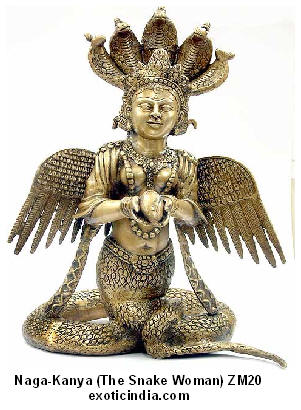
10.30:
Of daityas, I am Prahalada.
I am Time
among timekeepers. Of animals, I am the king of
beasts (the lion). I am also Garuda
(= Vinateya = son of Vinata) among the birds.
Mahabharata by Vyasa, translation by Ganguli. notes date: January 29, 2015
Existence and non-existence, pleasure and pain all have Time for their root. Time createth all things and Time destroyeth all creatures. It is Time that burneth creatures and it is Time that extinguisheth the fire. All states, the good and the evil, in the three worlds, are caused by Time. Time cutteth short all things and createth them anew. Time alone is awake when all things are asleep: indeed, Time is incapable of being overcome. Time passeth over all things without being retarded. Knowing, as thou dost, that all things past and future and all that exist at the present moment, are the offspring of Time, it behoveth thee not to throw away thy reason.' -Page 14 Book One, Adi Parva.
All beings (plant, animals, humans, and celestials) have Paramatman (Supreme Soul) as the Greater Soul, besides the individual soul in each one of them. Animals serve as Mounts (riding animals) for the gods.
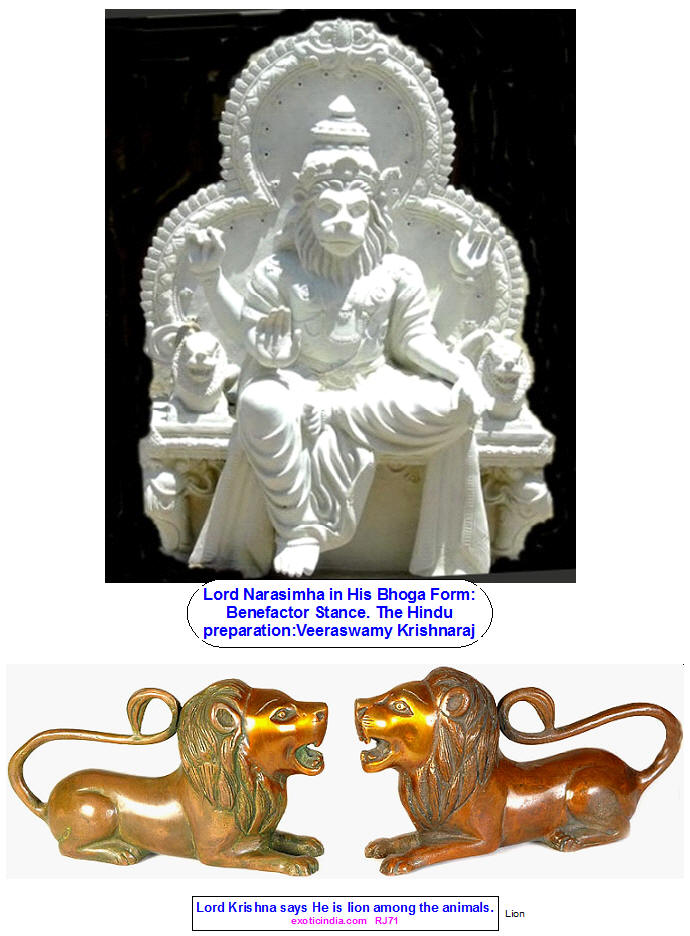
Animal Mounts for Gods.
| Destruction | Sakti | Creation | Preservation | Beginnings | War-god | Love-god | Death | Fire | War-goddess |
| Siva | Parvati | Brahma | Vishnu | Ganesa | Skanda | KAma | Yama | Agni | Durga |
| Bull | Bull | Flying Swan | Flying Garuda | Rat | Peacock | Parrot | Black Buffalo | Ram | Lion |
| Mayan | |||||||||
| Kali | Kalkin | Saturn | Sun-god | Oestra | Nerthus | Freya | Thor | Zeus | Odin |
| Tiger | Horse | Vulture | Giant Condor | Bunnies | Cows | Cats | goats | Eagle | Steed 8 legs |
The view from the West.
Bhagavan says,"I am Time" meaning
Time is in Him and He is beyond Time. The West says that the generic
expression of TIME appears in Rg Veda. Vedic Agriculturists and herdsman
associated time with the sun and the seasons (rtu). Atharva Veda talks about
time as KAla (काल). KAla existed before creation and
created the Progenitor Prajapati and the waters. Brahma was regarded as time
and timeless. Real study of Time did not take place until 300 -- 200 B.C. in
India according to the West. Solar and lunar calendars were formulated. The
West relegates and dismisses the concept of Yugas, Kalpas, and Manvantaras as
mythical theories. The West and the world had no concept of Yuga and so
embarrassingly and enviously called it a myth. The west could not count beyond
1000, when in India counts ranged beyond the capability of the west. How
could one conceive Yuga without concept of time? The world is created,
destroyed and recreated every
4,320,000 years
| Comparison of Hindu Sanskrit Numerals and Roman Numerals | |||||||||
| १ | २ | ३ | ४ | ५ | ६ | ७ | ८ | ९ | ० |
| 1 | 2 | 3 | 4 | 5 | 6 | 7 | 8 | 9 | 0 |
| I | II | III | IV | V | VI | VII | VIII | IX | |
Vishnu and Siva are forms of Cosmic Time. Sakti in the form of Kali is devourer of Time. Siva is MahakAla (Great Time) and Kali is devourer of Mahakala. Vishnu, the west says, consists of matter (Pradhana) and inducting spiritual principle (Purusa), manifest visible substance (Vyakta) and time (KAla). The Vaishnava Vishistadvaida principle of Isvara, Cit and Acit was not mentioned. Space and time are connected with cycles of creation, preservation and destruction. Immortality is the axle; the seven worlds are the seven wheels; the time is the steed with seven reins (rays of the sun).
|
Maitri Upanisad. Page 828. The Principal Upanisads. Translation by Dr. Radhakrishnan. Dec 7, 2013. Bhagavadgita verse 10:30. I am Time among timekeepers. (Bhagavan Krishna is Brahman.) VI.15. There are, verily two forms of Brahman, time and the timeless. That which is prior to the sun is the timeless, without parts. But that which begins with (has a beginning from) the Sun is time, which has parts. Verily, the form of that which has parts is the year. From the year, verily, are these creatures produced. By the rear, verily, after having been produced they grow. In the year they disappear. Therefore, the year verily is Prajā-pati, is time, is food, is the abode of Brahman, is the self. For thus has it been said: 'Time cooks (ripens) all things, indeed, in the great self. He who knows in what time is cooked, he is the knower of the Veda.' The Sun is the self of time as he is its ordainer. pacati: cooks. Pacyate: is cooked, is dissolved,. The temporal process and the Sun go together. What is prior to the Sun is non-temporal. Time is exalted as the highest principle as the source of all that is. There is a distinction between time which has parts, which is later than the Sun and the stars and the non-time which is without parts and is earlier, between time which cooks or matures all beings and that in which time is cooked or matured. |
|
Yugas |
Duration |
Standards |
Color |
Disposition |
|
Krita |
1,728,000
Years |
|
White |
Over |
|
Treta |
1,296,000
Years |
|
Red |
Over |
|
Dvāpara |
864,000 Years |
|
Yellow |
Over |
|
Kali |
432,000 years |
|
Black |
Present |
|
Maha Yuga
(total) |
4,320,000
years |
|
|
|


AUM is a filler of the empty boxes.
Kali Yuga lasts for 432,000 years; this is a magical number in many cultures. Early settlers in Iceland in 8th and 9th centuries established settlements 432,000 Roman feet apart in terms of cosmic relationship.--Joseph Campbell, The Power of Myth, Page 94.
Kali Yuga started at midnight of
Feb18, 3102 BC. (According to Bible, the world began around
October 23,
4004 BC.) These Yugas
are cyclical in nature starting from Krita Yuga. Lord Krishna was on earth by
the end of Dvāpara Yuga. As you notice in the table, Krita Yuga is the
longest, four times longer than Kali Yuga, the Treta Yuga three times longer
and the Dvāpara Yuga is only twice longer.
One Brahma's day is one Kalpa
(4,320,000,000 years) made up of one thousand Yugas or periods. One night of
Brahma is one Kalpa made up of one thousand Yugas or periods. Therefore, there
are two thousand Yugas in one Brahma's day and night. In earthly terms, these
two thousand Yugas are 8,640,000,000 years long (8.64 billion earth-years).
There are four Yugas: Krta or
Satya Yuga, Treta Yuga, Dvāpara Yuga and Kali Yuga. According to Srimad
Bhagavatam Book three, Krita Yuga had the highest Dharma (Moral and Religious
Duty, Righteousness), which diminished progressively by a quarter in the
following Yugas with proportional increase in Adharma. Dharma, compared to a
cow, has four legs: Severe penance, Internal and external purity, Compassion
and Truthfulness. As opposed to Dharma the four legs of Adharma are falsehood,
violence, discontent, and discord
|
Concept of Time in the West before the Dawn of Science. Earth was created in October 4004 B.C. Julian Calendar: God's creation. The dates are variable according to Julian or Gregorian calendar and the flaws in calculation. 1st day: Sunday, October 23, 4004 BC. God creates light ("Let there be light!") - the first divine command. The light is divided from the darkness, and "day" and "night" are named. 2nd day: Monday October 24, 4004 B.C. Waters above was separated from waters below. 3rd day: Tuesday October 25, 4004 B.C. Waters below coalesced into seas, so dry land appeared. God commands earth to bring forth grass, plants and fruit-bearing trees. Rivers and Garden of Eden were created. 4th day: Wednesday October 26, 4004 B.C. Sun, Moon and the Stars were created. Years, seasons, light, darkness, days, nights, weeks, months were created. 5th day: Thursday October 27, 4004 B.C. Teeming living creatures, birds, and sea creatures were created. 6th day: Friday October 28, 4004 B.C. More living creatures (beasts, livestock, reptiles) were created. Man and Woman in the form of Adam and Eve were created and were asked to multiply and subdue earth (and not to exploit earth). Man and animals were given plants to eat. (Man is not to eat animals.) Adam was created in His image so he will have knowledge of the divine. 7th day: Saturday October 29, 4004 B.C. God sanctifies the 7th day; it is a day of rest and Sabbath, Friday for Muslims, Saturday for Jews and Sunday for Christians. Adam and Eve were running around wearing Fig Leaves 6000 years ago. If they were lucky enough to have taken birth in India, they would have worn fine cotton. In India people wore cotton 7000 years ago. Europe would not know cotton until recently. |
Vinateya = son of
Kasyapa is the husband
of
Garuda is theriomorphic form of Vedic Aditya Vishnu. Garuda appears in the Vaishnava temples with eagle head, wings, talons, serpents and a human body. Some Garuda images have human face with eagle's hooked nose. He dispels diseases, cures poisoning with snake-bites, and removes obstacles like Lord Ganesa. His father was Kasyappa and mother was Vinata, the daughter of Daksha. Vinata lost a wager to Kadru, the co-wife of Kasyappa and mother of serpents, and so became a slave of Kadru, who demanded Ambrosia as the price of freedom of Vinata. Amrta, stashed away in heavens by the Devas, was guarded behind a rotating wheel whose spokes were razor-sharp, and by two snakes whose glance reduced the intruder into ashes. Garuda, being fleet and fast, flew in the space between the spokes, flung dirt and sand in the eyes of the snakes and absconded with Ambrosia which he gave to Kadru and thus obtained release of his mother. Unluckily for the serpents, Indra, the chief of gods, came along to recoup the lost Ambrosia (contained in the golden moon-goblet). In the struggle, a few drops of Ambrosia spilled, which was quickly licked by the serpents and which rendered them immortal but also made the tongue forked. The tongue was cut and forked from licking the Ambrosia on Darbha grass with its sharp edges. Now you know why there is an eternal enmity between talons and the forked tongues. Garuda afterwards became the Vahana (Vehicle) of Vishnu and now continues to mock the wind with his fleetness. Garuda's older brother, Urud, is the charioteer of Sun's chariot. His son, Jatayu, was killed by Ravana in his fight to prevent the abduction of Sita. Continued.
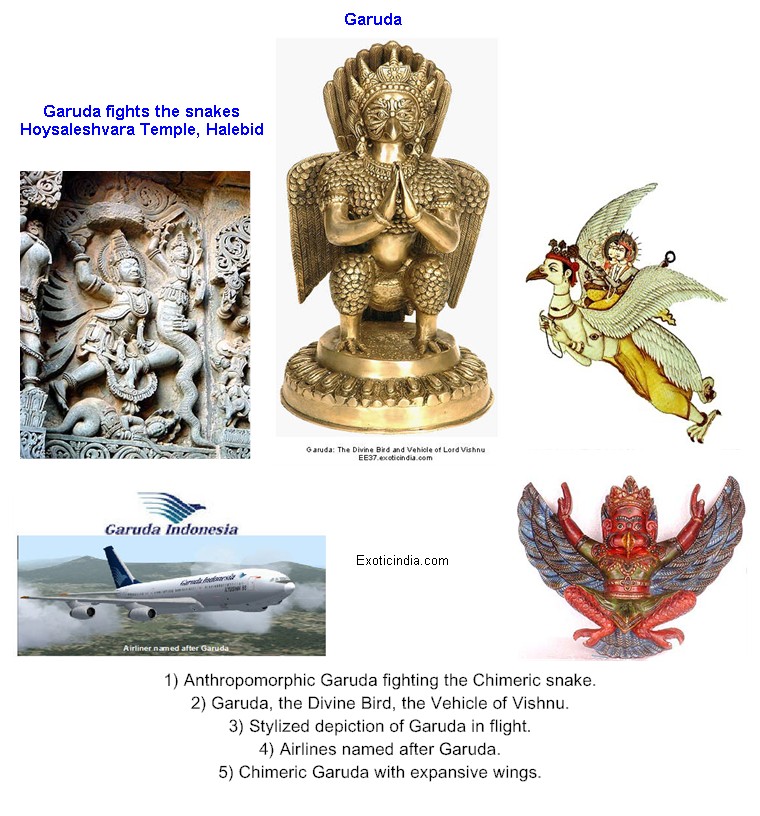
Garuda = bearer of heavy weight. Since he devours snakes, he goes by other names: Nagantaka and Sarparati apart from Tarksya. Om Tārkṣya Mantra cures people suffering from snake bite and diseases. He is considered as one of the thirty-nine avatars of Vishnu: Vihangama the ninth and Amrtaharana the eighteenth. Serpent is Sarpa in Sanskrit; now you know that if it is not for Sanskrit, you won't have a name for that thing that creeps and crawls.
The View from the West on Garuda and others
The stories of Garuda originated from non-Indo-Aryan sources. The bird was the centerpiece of nursery stories. A Naga (serpent) tribe carried the name of Garuda. Some even suggest Vishnu means bird. Garud is the one who fights with wings. Gara means swallowing a poison. Garuda is a devourer, associated with the all-consuming fire of the sun's rays. Ud = flows out. ḍī = fly. VinAyikA is the female counterpart of Vinayaka and Garuda. The West draws similarity between Garuda and the Sumerian storm-bird Zu (half man and half bird), who steals the tablet of destiny, the giver of power over destiny of everything. Remember Garuda stole Ambrosia from the heavens to release his mother from slavery. Other similarities are the Eagle form of the Egyptian Sun-god and the Candor form of Mayan sun-god. It appears all mighty birds are associated with the sun as Garuda is. They soar towards the sun.
This is the Mantra of Eulogy to Garuda: O Garuda! most excellent bird! Thou art the favored one of the Husband of Lakshmi; thy beak is hard like adamant; thy talons are sharp, and golden are thy wings. Obeisance to thee, most excellent among birds! I bow to thee, O king of birds.
As thou abidest near Vishnu with folded palms, do thou, O destroyer of the pride of enemies! help me to be there as thou art there. When thou art pleased, the Lord of the Universe is pleased, and grants success. Excerpted from The Great Liberation P 413 by Woodroffe
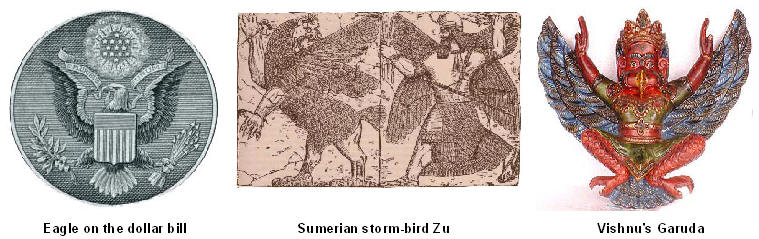
Time (Kāla)
exists in the Lord, but He is not subject to the ravages of Time. As the wind
dissipates the clouds, Time carries people from shore to shore: Samsara.
All the gunas, (Sattva, virtue; Rajas, passion; and Tamas, Darkness)
function in man due to Time. Time separates soul from body.
Time creates and destroys sun, moon, Siva, water, Indra, fire, sky,
herbs, Vasus, rivers, seas, the existent and the non-existent in its march.
When the hour of death tolls, a disease or condition pops its head to snuff
out life. The heat in the body dissipates from withdrawal of fuel, which
damages the vital functions (Garuda Purana, 2.2.35-46).
Creator is ParaKāla
(Supreme Time) and MahaKāla
(Great Time); Time is broken up into Lesser Times for the Sun, Moon, the
Earth, the seasons, living beings who are finite entities.
"Of Daityas, I am Prahalada," thus says Bhagavan Krishna. Daityas are born of Diti and Adityas are born of Aditi; both Diti and Aditi (the sisters) are married to progenitor Kasyappa. Daityas are the Asuras or demons; Adityas are Suras or gods. This just indicates that gods and demons are half brothers and so is man, half god, half demon. Prahalada comes from a family of demons but turns out to be a devotee of Vishnu and friend of gods. Prahalada the son and Hiranyakasippu the father are poles apart, the former a devotee of Vishnu and the latter a sworn enemy of Vishnu. King Hiranyakasippu does all kinds of cruel things to his son for being the devotee of Vishnu. (Here is an instance of state terrorism, lack of free association and freedom of worship.) Once he throws him down a mountain; Prahalada clutches his chest with his hands so that the Bhagavan in his heart would not sustain any injury. This is witnessed by Bhagavan, Bhuma Devi and Mahalakshmi, the latter two being Vishnu's consorts. Bhuma Devi, the Mother Earth seeing Prahalada's protective act offers Raksa (= रक्षा = protection) and cradles him in soft earth on every roll of his body until he lands in a cradle of soft earth. Prahalada lives. Of course, Vishnu in the incarnation of Narasimha, man-lion (a Divine Chimera), emerges from an apparently lifeless palace pillar in a show of shock and awe, razzle-dazzle and Wham-Bam-Boom, rips Hiranyakasippu apart and brings an end to his terror. This sudden emerging of Narasimha from the pillar was a precipitate event (and incarnation), when Hiranyakasippu kicks a palace pillar and asks his son whether his God Vishnu is in the pillar. (The imbibing gods [Suras = सुर = those who drink wine] are afraid of teetotalling Asuras and envy their discipline.)
Man-Lion Incarnation: Religion somehow brings out some scientific truths in unusual ways even before science captures their essence. All animals and humans are related to each other, considered on a scientific basis. We are 80% cow and 20% something else. Man has all the genes that a mouse has; we have only 300 genes that are special to human beings: Genetically speaking we are mouse first, cow next, and human later. Our origin begins at a single cell, and goes on to creatures of the sea, reptiles, four-legged animals, birds... The placental mammals in the tree of evolution branched out about 100 million years ago. Thirty million years ago, primates, rodents, horses, elephants, tigers, lions branched out. In people we see some vague and yet recognizable facial and or behavioral resemblance to dogs, goats, pigs, buffaloes, horses, lions, tigers, chimps, gorillas, apes, simians, a reminder that the humans and the placental animals had a common ancestral heritage. The politically correct people would not admit the obvious. Common sayings are that he pigged-out on $5 buffet-lunch , someone is a lapdog of somebody else, where does a gorilla sit? Here comes the snake in the grass, you dirty rat, .... This Commonality of behavior and physiognomy are portrayed when cars are advertised on television.
 One such ad shows an
equine-faced man finding a dancing partner in an equine-faced woman followed
by galloping horses and a myriad-horse-power car. The truth remains that
we share the trunk and branch in the tree of evolution with many animals.
More amazing is the fact that we share genes with round worm and bacteria. The
truth is our origins are lowly, and we try to rise and blossom like a lotus
flower whose origin and roots are in the slimy mud. Our evolution is
most advanced on earth and is at the terminal branches of the evolutionary
tree. Here is a depiction of Vishnu in his Theriomorphic forms,
indicating that He exists in inanimate matter, animals, humans....
One such ad shows an
equine-faced man finding a dancing partner in an equine-faced woman followed
by galloping horses and a myriad-horse-power car. The truth remains that
we share the trunk and branch in the tree of evolution with many animals.
More amazing is the fact that we share genes with round worm and bacteria. The
truth is our origins are lowly, and we try to rise and blossom like a lotus
flower whose origin and roots are in the slimy mud. Our evolution is
most advanced on earth and is at the terminal branches of the evolutionary
tree. Here is a depiction of Vishnu in his Theriomorphic forms,
indicating that He exists in inanimate matter, animals, humans....
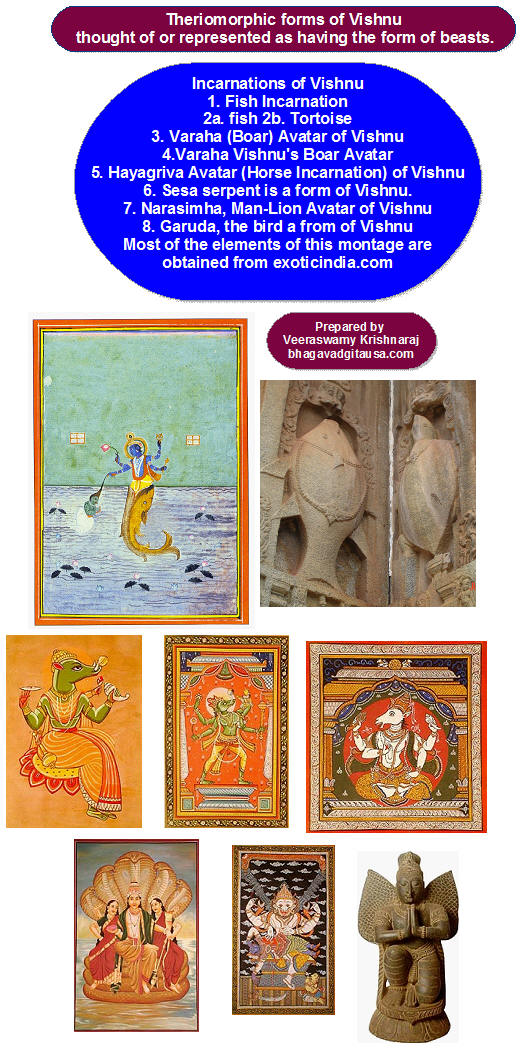
10.31:
Of all the purifiers, I am the wind. Of warriors, I am Rama. Of fish, I
am Makara (Marine Monster, Crocodile or Shark).
Of the rivers, I am the River
Ganga.
|
Man makes the Holy River Ganga into a river of sewage, a repository of dead bodies and dead animals. As it flows through highly populous areas the Ganges collects large amounts of human pollutants, e.g., Schistosoma mansoni and faecal coliforms, and drinking and bathing in its waters therefore carries a high risk of infection. While proposals have been made for remediating this condition, little progress has been achieved. Recently, the World Bank has agreed to loan India one billion US dollars over the next five years to clean up the Ganges.--Wikipedia. 2010 Mark Twain: November 30, 1835 – April 21, 1910. Mark Twain had only one nice thing to say here about Indians and that is: We only know that they (the Indians) had a civilization long before we emerged from savagery.
A word further concerning the nasty but all-purifying Ganges water. When we went to Agra, by and by, we happened there just in time to be in at the birth of a marvel--a memorable scientific discovery--the discovery that in certain ways the foul and derided Ganges water is the most puissant purifier in the world! This curious fact, as I have said, had just been added to the treasury of modern science. It had long been noted as a strange thing that while Benares is often afflicted with the cholera she does not spread it beyond her borders. This could not be accounted for. Mr. Henkin, the scientist in the employ of the government of Agra, concluded to examine the water. He went to Benares and made his tests. He got water at the mouths of the sewers where they empty into the river at the bathing ghats; a cubic centimetre of it contained millions of germs; at the end of six hours they were all dead. He caught a floating corpse, towed it to the shore, and from beside it he dipped up water that was swarming with cholera germs; at the end of six hours they were all dead. He added swarm after swarm of cholera germs to this water; within the six hours they always died, to the last sample. Repeatedly, he took pure well water which was bare of animal life, and put into it a few cholera germs; they always began to propagate at once, and always within six hours they swarmed--and were numberable by millions upon millions. For ages and ages the Hindoos have had absolute faith that the water of the Ganges was absolutely pure, could not be defiled by any contact whatsoever, and infallibly made pure and clean whatsoever thing touched it. They still believe it, and that is why they bathe in it and drink it, caring nothing for its seeming filthiness and the floating corpses. The Hindoos have been laughed at, these many generations, but the laughter will need to modify itself a little from now on. How did they find out the water's secret in those ancient ages? Had they germscientists then? We do not know. We only know that they had a civilization long before we emerged from savagery.
|
| More than 100 years after
Mark Twain pronounced the Ganges River was a River of Sewage, India
finally is doing something about it. Here is a report on this overdue
betterment of the waters of Ganges in the planning stages. December 9, 2012. Standing on the banks of river Ganga, one could hear reverberations of a famous melancholic song by legendary singer Bhupen Hazarika wafting through the air. Vistaar hai apaar, praja dono paar kare hahakar. O Ganga, tum behti ho kyun? (Your expanse is immense, people on both sides are wailing inconsolably. O Ganga, why do you flow?) Once worshipped as the ‘saviour Ganga’, harbinger of hope and purifier of souls, the mighty river is now struggling to survive and breathe freely, from the garbage and filth littered all over it. But amidst this pall of sadness, there is a ray of hope as a silent sanitation revolution is being undertaken on the banks of Ganga to make her free from trash. According to the 2011 census, about 131 million households in India have no toilets on their premises, with eight million using public facilities and 123 million defecating in the open. The river looks like a huge open cesspool in some places. A major chunk of sewage, untreated industrial effluent, run-off from chemical fertilisers and pesticides used in agriculture and huge quantities of solid waste are dumped in the river. Besides, thousands of animal carcasses and hundreds of human corpses are thrown into the river everyday, contributing to the pollution load that flows incessantly into it. But more than anything, it is the faecal matter or human waste that has become a major pollutant of the Ganga. Former Rural Development Minister Jairam Ramesh had said that the government intended to rid the country of open defecation in the next 10 years. He said that the bio-toilets would also help in curbing manual scavenging which was still prevalent in about 15 lakh insanitary latrines. It may be recalled that Defence Ministry and Rural development Ministry have also signed MoUs for installing these toilets in over one lakh gram panchayats in next few years. ‘Bio-digester’ toilets work by mixing self-multiplying bacteria with human waste in specially-made tanks. The technology helps turn human waste into biogas and odourless compost. The process involves tapping bacteria which feed on the faecal matter inside the bio-digester tank and degrade it for its release as methane gas. Bio-digesters combust this methane, ensuring it is not released into the atmosphere. Instead, it becomes useful as gas for cooking, lighting, heating and crop fertilisation. It is also being used as a source for rural electrification. It is a safe and hygienic on-site human waste disposal technology and has the potential to turn toilets in rural areas into an urban drainage system, which will not require handling human waste. The eco-friendly toilet, or E-toilet, can be set up anywhere where there is no provision of sewer lines. Though it was meant for Indian combat troops deployed in Siachen, a 6,300-metre-high (20,800-feet-high) glacier in Kashmir where temperatures can fall up to minus 50 degree Celsius (minus 58 degree Fahrenheit), it is equally suitable for rail coaches, buses and highways. It is also 100 per cent maintenance-free and economically viable. Initially, mobile bio-digester toilets, or Green Toilets, would be set up at various locations of the Kumbh Mela, where around 130 million people are expected to visit. The project will be later expanded from Har ki Paudi in Hardwar to Gangotri, Yamunotri, Kedarnath and Badrinath and at schools, bus stands, railway stations and taxi stands across the 2,500-km stretch of the Ganga basin. http://www.thehindu.com/sci-tech/energy-and-environment/mighty-river-breathe-easy/article4181144.ece?homepage=true |
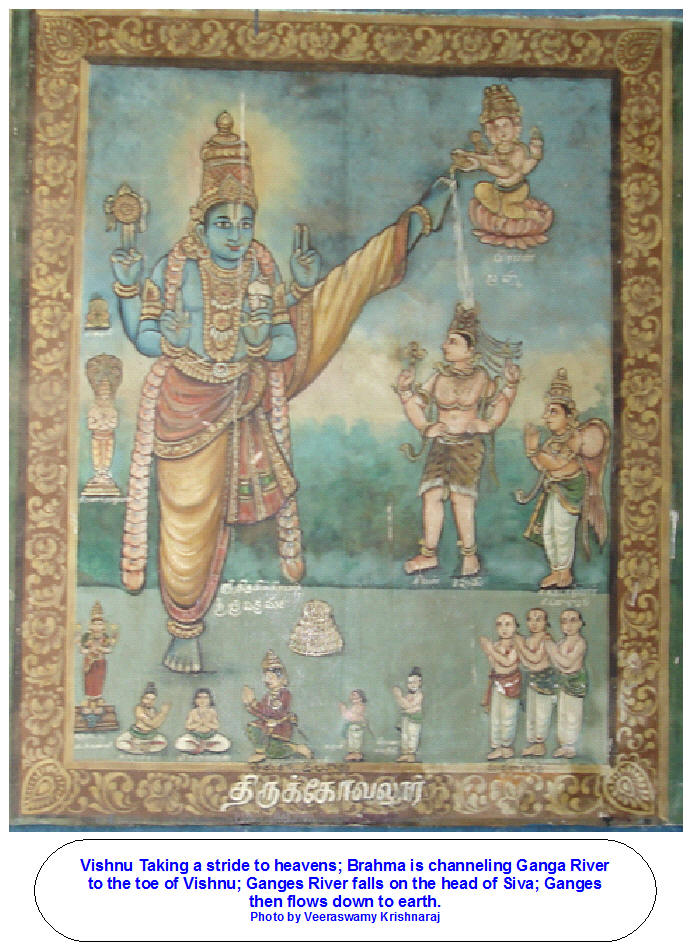
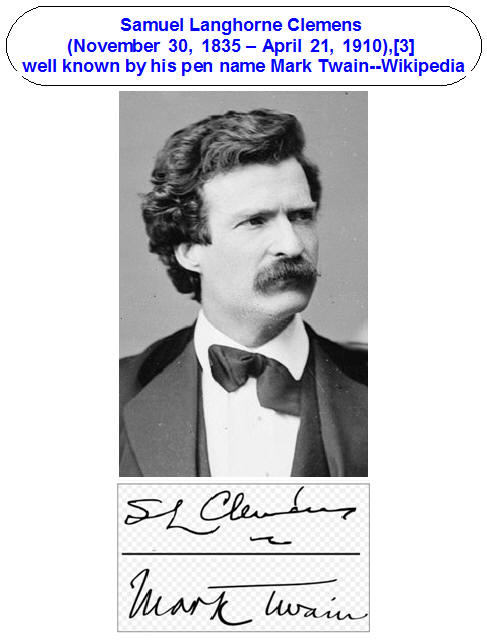 But
I should get tired of seeing them wash their mouths with that dreadful
water and drink it. In fact, I did get tired of it, and very early, too.
At one place where we halted for a while, the foul gush from a sewer was
making the water turbid and murky all around, and there was a random
corpse slopping around in it that had floated down from up country. Ten
steps below that place stood a crowd of men, women, and comely young
maidens waist deep in the water-and they were scooping it up in their
hands and drinking it. Faith can certainly do wonders, and this is an
instance of it. Those people were not drinking that fearful stuff to
assuage thirst, but in order to purify their souls and the interior of
their bodies. According to their creed, the Ganges water makes
everything pure that it touches--instantly and utterly pure. The sewer
water was not an offence to them, the corpse did not revolt them; the
sacred water had touched both, and both were now snow-pure, and could
defile no one. The memory of that sight will always stay by me; but not
by request.
But
I should get tired of seeing them wash their mouths with that dreadful
water and drink it. In fact, I did get tired of it, and very early, too.
At one place where we halted for a while, the foul gush from a sewer was
making the water turbid and murky all around, and there was a random
corpse slopping around in it that had floated down from up country. Ten
steps below that place stood a crowd of men, women, and comely young
maidens waist deep in the water-and they were scooping it up in their
hands and drinking it. Faith can certainly do wonders, and this is an
instance of it. Those people were not drinking that fearful stuff to
assuage thirst, but in order to purify their souls and the interior of
their bodies. According to their creed, the Ganges water makes
everything pure that it touches--instantly and utterly pure. The sewer
water was not an offence to them, the corpse did not revolt them; the
sacred water had touched both, and both were now snow-pure, and could
defile no one. The memory of that sight will always stay by me; but not
by request.
The view from the West:
The West says the priests started the fiction that a celestial Ganga (AkAsaganga) was issuing from the left foot of Vishnu. Ganga was called Devabhuti (flowing from heaven), MandAkini (the Milky Way), Vishnupati... The great-great grandson of Sagara, Bhagiratha prayed to Siva, and Ganga to descend to the earth to purify Sagara's sons. Siva-Gangadhara caught the three great torrents of Ganga on his matted russet hair on His head thus preventing the flooding of the earth. All this was to purify the ashes of Sagara's 60K sons destroyed by Kapila and send them to heaven and thus Ganga earned her name, Bhagirathi. Ganga River surrounds the Great City of Brahma on Mount Meru and divides into four mighty rivers going in four cardinal directions. The west claims that Ganga was a river-spirit before she was elevated to the status of River Goddess, Parvati, Mother Goddess Annapurna, and a Mermaid with sacred Saiva ash mark on her forehead by the South Indians. The Bengalis regard Ganga as white in color (depicting her purifying properties) adorned her with a crown and gave her a vahana, a makara, a lotus on her right hand and a lute on her left hand. All the bathers in Ganga go to heaven. They whose bones, hairs and other remains after death left on the banks of the river go to Swarga (heaven). Wherever Ganga (Gangaksetra) flows is sacred to the Hindus. Sin vanishes when a person sees, touches, drinks and or invokes Ganga as 'O Mother Ganga'. (Many devotees and I feel strongly that the habit of placing dead bodies in river Ganges is not a good idea.)
Santanu (the third and youngest son of Pratipa) fell in love with Ganga who morphed into a human form for the marriage. Earlier, Santanu married a fisher-girl by name Satyavathi who extracted a promise that her son would supersede his son Bhisma by previous marriage to the throne. Ganga extracted a promise from Santanu that she would leave him if he treated or talked to her unkindly . The West offers the opinion that Bhisma was the 8th son of Ganga and historically Satyavati story was open to dispute. Ganga threw the seven neonates in the river saying it was for their own good. Santanu called Ganga a murderess when she was about to drown the 8th child. Ganga then revealed that she was Goddess Ganga and their sons were the gods called Vasus who were born as humans on account of a curse of Rishi Vasistha. She named him Gangadatta (later Bhisma) and vanished for ever. The west says that this story of eight Vasus draws its inspiration from Aditi having eight sons, taking her seven sons to meet the gods and leaving behind the 8th one, Martanda. Nile River also was personified, took its origin in the heavens and later went into the underworld. Another reason why Ganga came from heaven was to fill the oceans consumed by Agastya. The west draws a parallel with the Biblical version of the river that flowed out of Eden and divided into four rivers. (Genesis II.10)
10.32: Of all creations, I am the beginning, the end, and the middle. O Arjuna, of sciences (I am) the science of self (Universal and individual). Of those who argue, I am the right argument (Vāda).
| Bhagavan Krishna says:
O Arjuna, of sciences (I am) the
science of self (Universal
and individual). Of those who argue, I am the right argument
(Vāda)--Krishnaraj.
Bhagavadgita: Comment on Vāda by Sridhara Swami Verse 10.32, page 420-421. Sanskrit Commentary by Sankaracharya and translation by Ghambhirananda. Vāda: वाद Discussion with open-mindedness, with a view to determining true purport; Jalpa: जल्प Pointless debate; Vitaṇdā: वितण्डा wrangling discussion. [Jalpa is that mode of debate by which both parties establish their own viewpoint through direct and indirect proofs, and refute the view of the opponent through circumvention (Chala) and false generalization (Jāti) and by pointing out unfitness of the opponent to be argued with (Nigraha-sthāna). But where one party establishes his viewpoint, and the other refutes it through circumvention, false generalization showing the unfitness of the opponent to be argued with, without establishing his own views, that is termed Vitaṇdā. Jalpa and Vitaṇdā result only in a trial of strength between the opponents, who are both desirous of victory. But the result of Vāda is the ascertainment of truth between the teacher and the disciple or between others, both unbiased.--Gloss of Sridhara Swami on this verse. |
10.33:
Of the letters, I am the first letter, A.
Of compounds (I am) the dual. I am also
imperishable time. I am the creator, whose face is all-around:
Brahma. (Visvatah-mukhah).
| Of the letters, I am the first letter. More than 2000 years ago, before Jesus Christ and possibly The Buddha, here is what poet Valluvar, whose day job was weaving, says in beautiful and honey-sweet Tamil. அகர1 முதல2 எழுத்தெல்லாம்3 ஆதி4 பகவன்5 முதற்றே6 உலகு7 0001
akara1 mudhala2 ezhuththellaam3 aadhi4 pakavan5 mudhatrE6 ulaku7 A1--first2-of all letters3-the beginning4 bhagavan5-the first6-in the world7 "A" is the first of all letters; the beginning of all, Bhagavan is the First in the World. Akara is like saying alpha, the first letter of the Greek alphabet. A is the first, the beginning, the life and the base letter of all letters. So also Bhagavan, the beginning of all, is the first in the world, from whom the world of beings and matter proceed. Without A there is no spoken or written word. Without A and its cohort vowel life-letters, all we can make is cockamamie sound. Without Bhagavan there is no world. Thus word and world are Bhagavan, Parabrahman and Sabdabrahman and vice versa. Sabdabrahman is the origin of the letters, words and sentences and also of the world of beings and matter. Ideas in the form of letters and their infinite combinations are passed on from generation to generation by spoken and written word. Bhagavan in his Tattvas and combinations thereof manifests in infinite forms and names. We see the mind of the author in his word; we see the handiwork of Bhagavan in his manifestations. Akaram and Bhagavan are one. When it comes to knowledge, we are all abecedarians (கற்றுக்குட்டி); God is the knower of all with no exceptions. |
Time
is in the Lord; It has no separate existence from him; It is under His dynamic
control. Time propels Avyakta, the Unmanifest to manifest itself and the
result is Mahat-tattva, the Great Principle, which is the beginning of the
creation cascade. There are three aspects to Time: God, God’s will and march
of Time. Time carries out God’s will and disturbs the equilibrium of gunas and
Prakrti and thereby creation cascade is set in motion. Time, therefore,
pre-exists creation but not the Lord Himself. Time represents the Lord’s
power, his desire to effect a change. Time has a pervasive control over man as
long as he is immersed in Samsara, until he reaches the feet of the Lord.
Starting with Mahat-Tattva, Time entered 23 principles, Mahat, ego, five
subtle elements, five gross elements, five motor and five sensory organs, and
mind. These elements by themselves could not work in an embodied soul, until
the Lord entered the body. That is Kriya-sakti
(action-power) of the Lord.
Prajapati, the creator himself is
subject to time. Brahma is subject to time. Everything under the sun and
beyond is subject to time.
Time is a vessel that is always full and replenishes itself continuously; Time never runs out; you cannot outrun Time; yet, Time is in Bhagavan; He is the only One who outlasts Time.
10.34: I am all-devouring death and
(am) the origin of future (beings). Among women (I am) fame, prosperity
(Srih), speech, memory, intelligence, firmness and patience.
Shri: One of the consorts of Lord Vishnu.
The goddesses are the powers of gods. All these qualities of the Lord proceed from the Sakti of God.
10.35: Of the hymns in Sama Veda (I am) Brhatsama; of meters, I am Gayatri; of months (I am) Margasirasa (Dec-Jan); of all seasons, I am flower bearer (spring).
Of months (I am) Margasirasa (Dec-Jan). In the West, these are the bitter months of cold; in India in December and January, the weather is clement.
| Luke 12:27 Consider the lilies how they grow: they toil not, they spin not; and yet I say unto you, that even Solomon in all his glory was not arrayed like one of these. Bible Verse as told by Jesus Christ. |

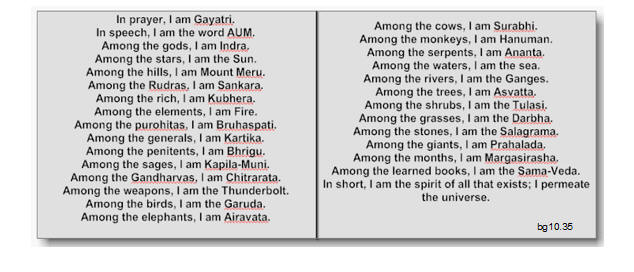
10.36:
I am the gambling of the fraudulent; of the splendid, I am the
splendor; I am victory;
I am the resolve (of the resolute); I am the absolute
virtue of the virtuous.
Bhagavan (God) is the good, the bad and the ugly. He is the world and the Universe as they are. The west finds it hard to comprehend and accept this paradigm of evil and goodness side by side in God and man. Wendy Doniger says in her book, The Origin of Evil in Hindu Mythology: "The evil which we do commit is the result of delusion (Moha) or deception (Māyā)-- and it is (the Hindu) God who creates these delusions and deceptions. Thus once again we are forced to deny the ethical hypothesis: God is not good." My explanation. We are all chips off the old bock, meaning each one of us has all the qualities of the original substance. If we are good or evil, they must have come from God. God has all the qualities of man, fauna and flora and more. He is the origin of all. Vaisnavites say that animate, inanimate, sentient and insentient entities come from the body of God. It is like the genes that we inherit from our parents responsible for traits like skin color, eye color, hereditary diseases... We cannot keep the blue eyes and discard the hereditary diseases. They came with the DNA. The qualities of God are like those of the sun: Heat, Light, ultraviolet radiation... Sun has these qualities but does not suffer from its qualities. But we enjoy the warmth and light and also develop skin cancer from UV light. You can blame the sun and God all you want for what ails us. God gave us intelligence and the right to choose. If someone chooses evil or sin, it is his problem and not God's problem. God is not going take the blame and shed blood for the sins of man. That is an easy way out of sticky problem. Why should A go to jail for what B did? If you do the crime, you do the time. Don't blame God.
|
The Complete Works of Swami
Vivekananda Volume 6 [ Page : 112 ] NOTES TAKEN DOWN IN
MADRAS, 1892-93 Virtue is that which tends to our improvement, and vice to our degeneration. Man is made up of three qualities -- brutal, human, and godly. That which tends to increase the divinity in you is virtue, and that which tends to increase brutality in you is vice. You must kill the brutal nature and become human, that is, loving and charitable. You must transcend that too and become pure bliss, Sachchidananda, fire without burning, wonderfully loving, but without the weakness of human love, without the feeling of misery. Notes by Krishnaraj: Brutal, Human and godly = Pasu, Vira, and Divya according to the Tantrics. TANTRA |
Victory is always His and He is Victory; His victory is defeat of our impure self.
Kena Upanishad (section three) tells a story to
expose the conceit and ignorance of the Vedic gods, Indra, fire-god and
wind-god. Once upon a time Brahman helped gods win over the Asuras, the
demons. Indra and other gods were very proud of "our
victory and
greatness." Sensing the self-conceit, Brahman appeared before them who
could not identify Him. The gods sent the all-knowing Agni, the fire-god, and
(omnipotent) Vayu, the wind-god (who have the power to burn and move anything
in their path) to find out who this Spirit (Yaksam) was. Knowing their
arrogance, ignorance, and self-conceit, Brahman placed a blade of grass in
front of each one of them and asked the fire-god to burn it and the wind-god
to blow it. They tried to exercise their power in vain. It was Indra's turn to
see for himself who this Spirit was.
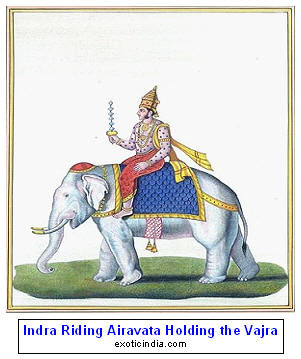 As he approached the spirit,
it disappeared and in its place, a damsel of immense, dearth-less beauty and
grace (Uma, daughter of Himalayas) appeared. Indra questioned her who the
Spirit was. She told him that it was Brahman, who obtained the victory and
glory for them and He selectively revealed Himself to the deserving gods and
men. The message is that all-knowing Brahman is superior to gods and men and
their claim of victory was in reality His victory. Fraud, splendor, victory,
and virtue are His, and gods and beings are mere instruments. That idea dawned
on Indra, the chief of gods, when Uma brought it to his attention. Uma was the
personification of wisdom sent by Brahman to dispel Indra's and gods'
ignorance. The beauty of wisdom enters the heart as ignorance exits.
Revelation came to Indra in a flash, as Brahman appeared before him and
disappeared. Brahman was not revealed to Agni and Vayu, who had only the
fortune to witness Brahman, though they wondered who He was. Even gods have no
knowledge of Brahman.
As he approached the spirit,
it disappeared and in its place, a damsel of immense, dearth-less beauty and
grace (Uma, daughter of Himalayas) appeared. Indra questioned her who the
Spirit was. She told him that it was Brahman, who obtained the victory and
glory for them and He selectively revealed Himself to the deserving gods and
men. The message is that all-knowing Brahman is superior to gods and men and
their claim of victory was in reality His victory. Fraud, splendor, victory,
and virtue are His, and gods and beings are mere instruments. That idea dawned
on Indra, the chief of gods, when Uma brought it to his attention. Uma was the
personification of wisdom sent by Brahman to dispel Indra's and gods'
ignorance. The beauty of wisdom enters the heart as ignorance exits.
Revelation came to Indra in a flash, as Brahman appeared before him and
disappeared. Brahman was not revealed to Agni and Vayu, who had only the
fortune to witness Brahman, though they wondered who He was. Even gods have no
knowledge of Brahman.
The View from the West and others
Yogi obtains spiritual
knowledge and enlightenment at lightning speed. Agni Fire is considered
as omniscient because he carries the sacrifices and oblations to gods
Tapas, Dama, and Karma (austerity, self-control, and work) are Brahma’s pratishtha (foundation); Vedas are all its parts; truth is its seat. Tapas has many functions. It pits the spirit against the body, which shrivels as spirit grows in the tapasvin, who gains supernatural powers (siddhis are eight: Anima, Mahima, Laghima, Prapti, Prakamya, Isatva, Vashistva, and Kāmarutattva). The heat (Kundalini power) generated in austerity burns up all sins (Prarabdha karma). The Primordial Being was in tapas to create this universe and beings.
10.37:
Of the Vrsnis, I am Vasudeva; of the Pandavas (I am) Dhananjaya
(Arjuna); of the Munis, I am Vyasa; of the poets, I am Usana.
10.38:
I am the punishment of the punishers; I am justice of the victorious;
I am the silence of the secrets; I am the
wisdom of the wise.
|
Bahva: Teach me and expound to me the nature of Brahman. |
|
Baskah kept his silence. |
|
Bahva asked the question two more times. |
|
Baskah: I am teaching you but you do not follow. The Self (God, Brahman) is Silence. |
| Maintain silence: 'Then
only will you see it, when you cannot speak of
it; for the knowledge of it is deep
silence and the suppression of all the senses.' Hermes Trismegistus,
Lib X 5 It is the s ūnyatā of the Buddhists. It is 'not gross, not subtle, not short, not long, not glowing, not shadowy, not dark, not attached, flavourless, smell-less, eye-less, ear-less, speech-less, mind-Iess, breath-less, mouth-less, not internal, not external, consuming nothing and consumed by nothing. It cannot be truly designated. Any description makes It into something. It is nothing among things. It is non-dual, advaita. It denies duality. This does not mean, however, that the Absolute is non-being. It means only that the Absolute is all-inclusive and nothing exists outside it.There was something formless yet complete, That existed before heaven and earth, Without sound, without substance, Dependent on nothing, unchanging, All-pervading, unfailing. The Principal Upanishads Dr. Radhakrishnan ---------------------------------------------------------------------------------------------------------------- Silence is the key to commune with the Universal Consciousness (UC). We are a series of thoughts. Between thoughts, there is a gap, where there is silence of the mind. That is where the UC exists. If you prolong the thought-free state, you are in communion with your UC. September 19, 2013 |
10.39:
Whatever may be the seed of all existence (living beings), that I am, O
Arjuna; there is no being or entity (Bhūtam), moving or unmoving that exists
without Me.
Bhutam: living being, human, animal,
and even vegetable; the world; the Spirit; the ghost; the elements.
It covers everything that you see and do not see in this universe and beyond.
There are eight million four hundred
thousand (8,400,000) species of living creatures, divided into four classes:
Andajas, egg-born; Svedajas, sweat-born (insects and vermin); Udbhijjas,
seed-born; Jarayujas, the viviparous (Garuda Purana, 11.12.2-3).
Svedajas (sweat or heat): These
creatures are called sweat-born, because sweat indicates heat. The eggs laid
by insects in the cavities of dead body come out as larvae in 12 to 24 hours
if the dead body stays warm (from the high environmental temperature).
10.40:
There is no end to My divine manifestations, O Parantapa, conqueror of
enemies. This is only a brief exposition by Me of the vastness of My
manifestations.
10.41:
Whatever being has vitality, splendor and power, know that to be a
manifestation of a fragment of My splendor.
Take all the achievements of humanity so far; all this is a fragment of His Splendor. If it is not for a spark of His, none of them would have able to do their bit and mite.
10.42:
What benefit do you gain from surfeit of this knowledge, O Arjuna? I
support this entire universe with a fraction of My energy or Myself.
End BG CHAPTER 10:
MANIFESTATION
|
Tirukkural: Tiruvalluvar prius Jesus Christ composed short couplets
discouraging consumption of meat.
251. How could anyone, who devours the meat of an animal to build his own flesh, be compassionate in his conduct? 252. Wealth doesn't stay with the prodigal; compassion doesn't stay with the meat-eater. 253. The gourmand-meat-eater will not engage in good deeds as he possesses the mind of the wielder of a weapon. 254. Compassion is not killing; lack of compassion is to engage in killing. It is an unwise act to eat meat. 255. Life can sustain without meat-eating. Even hell will not open its gates for the dead animal (which one eats). 256. If the world does not eat animals (for food), no one will sell meat. 257. Meat is a wound; they who realize this will desist from eating meat. 258. They who gave up causing hurt to others will abstain from eating meat abandoned by life. 259. Instead of making butter offerings in a thousand Homams (sacrifices), it is better not to cause death and eat the flesh of an animal. 260. He who neither kills nor buys slaughtered meat is fit for adoration with joined palms.
(259: People perform sacrifices to gods to obtain salvation (liberation.)
By Poet Tiruvalluvar (200 BC and 10 BC), Tamil Nadu 1.3.2. புலான் மறுத்தல் = abstinence from meat
|
|
http://www.gandhi-manibhavan.org/gandhicomesalive/quotes_main.htm
Ahimsa = noninjury
Gandhi on Ahimsa or noninjury
Ahimsa is the highest ideal. It is meant for the brave, never for the cowardly. T-7-128 Ahimsa is the eradication of the desire to injure or to kill. XIV-463 Ahimsa is not a matter of mere dietetics ( & dialectics): it transcends it. MM-117 Ahimsa is the highest duty. Even if we cannot practice it in full, we must try to understand its spirit and refrain as far as is humanly possible from violence. T-7-61 Ahimsa means infinite love, which again means infinite capacity for suffering. MM-295 Ahimsa is an attribute of the brave. Cowardice and ahimsa don’t go together any more that water and fire. T-5-83 Ahimsa in theory no one knows. It is as indefinable as God. T-5-248 The highest religion has been defined by a negative word: ahimsa. (a + Himsa) MM-425 Ahimsa is one of the world’s great principles which no power on earth can wipe out. MM-147 Dharma is one and one only. Ahimsa Means Moksha, and Moksha is the realization of Truth. MOG-117 Love and ahimsa are matchless in their effect. TIG-57 Love in the sense of ahimsa had only a limited number of votaries in the world. T-3-144 Ahimsa is the attribute of the soul, and therefore to be practised by everybody in all the affairs of life. MM-24 Ahimsa is the strongest force known. T-5-307 Ahimsa is the height of Kshatriya dharma (warrior's duty) as it represents the climax of fearlessness. XXV-563 The fullest application of ahimsa does make life impossible. (Noninjury to plants, seeds...make life impossible.) XXVI-335 The most distinctive and largest contribution of Hinduism to India’s culture is the doctrine of ahimsa. T-2-341 True ahimsa should mean a complete freedom from ill-will and anger and hate and an overflowing love for all. T-2-318 Ahimsa and love are one and the same thing. TIG-19 Ahimsa and Truth are so intertwined that it is practically impossible to disentangle and separate them. TIG-37 Ahimsa is my God, and Truth is my God. MM-24 Truth and ahimsa will never be destroyed. T-5-245 The principle of ahimsa is hurt by every evil thought, by undue haste, by lying, by hatred, by wishing ill to anybody. TIG-36 Ahimsa calls for the strength and courage to suffer without retaliation, to receive blows without returning any. T-7-75 Ahimsa can be practiced only towards those that (are) inferior to you in every way. XIV-463 Ahimsa was preached to man when he was in full vigor of life and able to look his adversaries straight in the face. XIV-476 The greater the realization of truth and ahimsa, the greater the illumination. XXV-521 The path of Truth is as narrow as it is straight. Even so is that of ahimsa. TIG-36 Use truth as your anvil, non-violence as your hammer and anything that does not stand the test when it is brought to the anvil of truth and hammered with ahimsa, reject as non-Hindu. XXVI-374 The removal of untouchability is one of the highest expressions of ahimsa. T-4-239 Cow-protection can only be secured by cultivating universal friendliness, i.e. ahimsa. XXV-520 Ahimsa is nothing if not a well-balanced exquisite consideration of one’s neighbour, and an idle man is wanting in that elementary consideration. T-2-354 Ahimsa is a science. The word ‘failure’ has no place in the vocabulary of science. T-5-81 Ahimsa magnifies one’s own defects, and minimizes those of the opponent. It regards the mole in one’s own eye as a beam and the beam in the opponent’s eye as a mole. T-5-91 Ahimsa must be placed before everything else while it is professed. Then alone it becomes irresistible. T-5-127 Ahimsa must express itself through the acts of selfless service of the masses. T-5-81 Ahimsa is no mere theory with me, but it is a fact of life based on extensive experience. T-7-402 Ahimsa should not fear the secret of open hand of imperialists. T-7-402 When the Gita was written, although people believed in ahimsa, wars were not only taboo, but nobody observed the contradiction between them and ahimsa. TIG-103 My ahimsa is my own. I am not able to accept in its entirety the doctrine of non-killing of animals. MM-429 What is it but my ahimsa that draws thousands of women to me in fearless confidence? T-5-291 Truth is my religion and ahimsa is the only way of its realization. T-4-250 Truth and ahimsa demand that no human being may debar himself from serving any other human being, no matter how sinful he may be. XXVI-374 One who hooks his fortune to ahimsa, the law of love, daily lessens the circle of destruction and to that extent promotes life and love. T-4-33 My Anekāntavāda is the result of the twin doctrine of satya and ahimsa. TIG-12 When two nations are fighting, the duty of a votary of ahimsa is to stop the war. TIG-40 My ahimsa would not tolerate the idea of giving a free meal to a healthy person who has not worked for it in some honest way. MM-194 Ahimsa and Truth are as my two lungs. I cannot live without them. MM-425 My errors have been errors of calculation and judging men, not in appreciating the true nature of truth and ahimsa or in their application. T-2-204 Indeed, these errors and my prompt confessions have made me surer, if possible, of my insight into the implications of truth and ahimsa. T-2-204 For me the only certain means of owing God that non-violence in practice means common labour with the body. T-2-126 All my experiments in Ahimsa have taught me that non-violence in practice means common labor with the body. T-5-225 Whatever strength the masses have is due entirely to ahimsa, however imperfect of defective its practice might have been. T-7-147 True ahimsa should wear a smile even on deathbed brought about by an assailant. It is only with that ahimsa that we can befriend out opponents and win their love. T-5-243 If our ahimsa is not of the brave but of the weak, and if (? the weak) will bend the knee before ahimsa, Gandhism deserves to be destroyed. T-5-242 The alphabet of ahimsa is best learnt in domestic school and I can say from experience that if we secure success there, we are sure to do so everywhere else. T-5-304 A votary of ahimsa always prays for ultimate deliverance from the bondage of flesh. MM-425 A steadfast pursuit of ahimsa is inevitably bound to truth--not to violence. MM-118 I see clear breach of ahimsa even in driving away the monkeys; the breach would be proportionately greater if they have to be killed. T-2-322 A votary of ahimsa cannot subscribe to the utilitarian formula (of the greatest good of the greatest number). He will strive for the greatest good of all and die in the attempt to realize the ideal. TIG-139 Woman is the incarnation of ahimsa. (Ahimsa means infinite love, which again means infinite capacity for suffering.) T-5-227 Woman is more fitted than man to make explorations and take bolder action in ahimsa. MM-294 Unless the charkha adds to your ahimsa and makes you stronger every day, your Gandhism is of little avail. T-5-242 Khadi (hand spun cloth) has been conceived as the foundation and the image of ahimsa. A real khadi-wearer will not utter an untruth. A real khadi-wearer will harbour no violence, no deceit, no impurity. T-4-21 In Swaraj (self-rule), based on ahimsa, people need not know their rights, but it is necessary for them to know their duties. MM-135 No power on earth can subjugate you when you are armed with the sword of ahimsa. It ennobles both the victor and the vanquished. T-7-11 The votary of ahimsa has only one fear, that is, of God. MM-12 A votary of ahimsa must cultivate a habit of unremitting toil, sleepless vigilance, ceaseless self-control. T-5-80 It was against the spirit of ahimsa to overawe even one person into submission. T-7-388 The richest grace of ahimsa will descend easily upon the owner of hard discipline. MM-127 Love, otherwise ahimsa, sustains this planet of ours. MM-127 In an atmosphere of ahimsa, one has no scope to put his ahimsa to the test. It can be tested only in the face of ahimsa. T-5-90 A soldier fights with an irresistible strength when he has blown up his bridges and burnt his boats. Even so, it is with a soldier of ahimsa. T-5-127 Man lives freely by his readiness to die, if need be, at the hands of his brother, never by killing him. MM-122 The strength to kill is not essential for self-defence; one ought to have the strength to die. T-3-3 If the lambs of the world had been willingly led, they would have long ago saved themselves from the butcher’s knife. T-2-52 If the circulation of blood theory could not have been discovered without vivisection, the human kind could well have done without it. MM-426 The scriptures of Christians, Mussalmans and Hindus are all replete with the teaching of ahimsa. XXV-521 By ahimsa we will be able to save the cow and also to win the friendship of the English. XXV-520
Anekāntavāda = aneka + anta + Vāda = many + conclusions or viewpoints + proposition, disputation, controversy. Anekāntavāda (Devanagari: अनेकान्तवाद) is one of the most important and fundamental doctrines of Jainism. It refers to the principles of pluralism and multiplicity of viewpoints, the notion that truth and reality are perceived differently from diverse points of view, and that no single point of view is the complete truth.[1][2] Jains contrast all attempts to proclaim absolute truth with adhgajanyāyah, which can be illustrated through the parable of the "blind men and an elephant". In this story, each blind man felt a different part of an elephant (trunk, leg, ear, etc.). All the men claimed to understand and explain the true appearance of the elephant, but could only partly succeed, due to their limited perspectives.[3] This principle is more formally stated by observing that objects are infinite in their qualities and modes of existence, so they cannot be completely grasped in all aspects and manifestations by finite human perception. According to the Jains, only the Kevalins—the omniscient beings—can comprehend objects in all aspects and manifestations; others are only capable of partial knowledge.[4] Consequently, no single, specific, human view can claim to represent absolute truth. ---Wikipedia |
English Phonemes, Spellings, Example Words, and Meaningful Names
Borrowed freely from Open Court materials and AU lesson designs
http://www.auburn.edu/academic/education/reading_genie/spellings.html
|
Phoneme |
Spelling(s) and Example Words |
Meaningful Names |
|
/A/ |
a (table), a_e (bake), ai (train), ay (say) |
Long A; Fonzie's greeting |
|
/a/ |
a (flat) |
Crying baby; baby lamb; home alone |
|
/b/ |
b (ball) |
Beating heart; drum |
|
/k/ |
c (cake), k (key), ck (back) |
Nutcracker; golf shot; camera |
|
/d/ |
d (door) |
Knocking; dribbling ball |
|
/E/ |
e (me), ee (feet), ea (leap), y (baby) |
Long E; shriek |
|
/e/ |
e (pet), ea (head) |
Rocking chair; creaky door; hard of hearing |
|
/f/ |
f (fix), ph (phone) |
Angry cat; clothes brush; electric fan; soda fizz |
|
/g/ |
g (gas) |
Croaking frog, gulping soda |
|
/h/ |
h (hot) |
Out of breath; warm breath; tired dog |
|
/I/ |
i (I), i_e (bite), igh (light), y (sky) |
Long I |
|
/i/ |
i (sit) |
Crying puppy; icky sticky; baby pig |
|
/j/ |
j (jet), dge (edge), g[e, i, y] (gem) |
Scrub brush; wood rasp; jump rope |
|
/l/ |
l (lamp) |
Flying saucer; mixer |
|
/m/ |
m (my) |
Mmm mmm good; delicious sound |
|
/n/ |
n (no), kn (knock) |
Mosquito; motorboat |
|
/O/ |
o (okay), o_e (bone), oa (soap), ow (low) |
Long O; Oh, I see |
|
/o/ |
o (hot) |
Say ah; doctor sound; cool drink; yawn |
|
/p/ |
p (pie) |
Popcorn; water drip; stone skip; soap bubbles |
|
/kw/ |
qu (quick) |
Coffee pot; typewriter |
|
/r/ |
r (road), wr (wrong), er (her), ir (sir), ur (fur) |
Chain saw; angry lion; robot; growling dog |
|
/s/ |
s (say), c[e, i, y] (cent) |
Flat tire; hair spray; sizzling bacon |
|
/t/ |
t (time) |
Ticking clock; timer; automatic sprinkler |
|
/U/ |
u (future), u_e (use), ew (few) |
Long U |
|
/u/ |
u (thumb), a (about), e (loaded), o (wagon) |
I dunno; mother bear; punch in the stomach; foghorn |
|
/v/ |
v (voice) |
Electric shaver; airplane; vacuum |
|
/w/ |
w (wash) |
Lariat; fly rod; washing machine |
|
/ks/ or /gz/ |
x (box, exam) |
Soda can; grease gun |
|
/y/ |
y (yes) |
Sticky mess |
|
/z/ |
z (zoo), s (nose) |
Buzzing bee; arc welder; zipper |
|
/OO/ |
oo (boot), u (truth), u_e (rude), ew (chew) |
Ghost; howling wolf; owl |
|
/oo/ |
oo (book), u (put) |
Lifting weights; chin-up bar |
|
/oi/ |
oi (soil), oy (toy) |
Seal; squeaky gate; spring |
|
/ou/ |
ou (out), ow (cow) |
It hurts; inoculation; sting |
|
/aw/ |
aw (saw), au (caught), a[l] (tall) |
Poor thing; crow |
|
/ar/ |
ar (car) |
Spinning tire; grinding gears; gargle |
|
/sh/ |
sh (ship), ti (nation), ci (special) |
Be quiet; watering the lawn |
|
/hw/ |
wh (white) |
Blow out the candle |
|
/ch/ |
ch (chest), tch (catch) |
Old train; antique car; chipmunk |
|
/th/ or /th/ |
th (thick, this) |
Peeling tape; angry goose; wet shoes |
|
/ng/ |
ng (sing), n (think) |
Gong; string bass |
|
/zh/ |
s (measure) |
Sawing wood; sander |
http://www.auburn.edu/academic/education/reading_genie/spellings.html