
|
Bhagavad-Gita: 18 Chapters in Sanskrit |
| Download Bhagavadgita-all 18 chapters in Sanskrit, English, |
| transliteration and word for word translation. |
Bhagavadgita in English
| bg07-Sanskrit | bg10-Sanskrit | bg11-Sanskrit | bg12-Sanskrit | ||
| bg13-Sanskrit | bg14-Sanskrit | bg15-Sanskrit | bg16-Sanskrit | bg17-Sanskrit | |
https://myindiastories.com
www.bhagavadgitausa.com
Veeraswamy Krishnaraj: Tolerance with love is to speak in tongues of all faiths, hold in the heart the Truth of all faiths and see
all faiths in the face of humanity.
Contact me: Feedback Form
You have your Google search engine tailored for this site.
Please enter the word(s) in the search box; it will take you to the file with that word in this web site. Enjoy your visit here.
About the author:
Veeraswamy Krishnaraj, M.D; F.R.C.P (Canada) is a board certified pediatrician in active practice until the end of 1998. He immersed himself in study of Hinduism in depth. He has sufficient knowledge and understanding of Hindu religion that he is confident to publish this book. He kept the words simple, supple, illuminating and to the point, while retaining the original flavor, beauty and grace. Compound words in Sanskrit are a nightmare for the beginner, as they are spliced together compactly in one continuous stretch of characters. He parsed the compound words into digestible syllables or words with superscripts and sequential numbers and rearranged the words in the verse in a readable form in English. In this book, he claims ownership of shortcomings and cedes the rest to Bhagavan.
This book is good for students, and devotees reading the Bhagavad-Gita in Satsang (true company). Two verses nestle in two boxes in one page with no break or carry-over to the next page. Diacritics help the reader enunciate the words like a Sanskritist. The English words are reader-friendly. Wherever there is a need for elaboration, an addendum supports it.
Simplicity, authority, universality, and profundity are the hallmark of the Bhagavadgita, the Bible of the Hindus. The Bhagavadgita is the Song of the Lord. It provides guidelines for daily living with no dogmas and ritual overtones. It encourages and supports your individuality. It also explains the consequence of errant ways. Total surrender to Bhagavan releases the devotee from the ills of life on earth. Hinduism as a term is an external appellation from non-Hindus. Its true name is Sanatana Dharma (Eternal Law or Eternal Order) commensurate with Rta (Cosmic Order). The beauty about the Bhagavadgita is its appeal is universal.
09/21/2017
Chapter Five: Yoga of Renunciation of Action
5.1: Arjuna said:
O Krishna, You praised (extolled) the yoga of
renunciation of action and then the yoga of action. Of these two, tell me for
sure which is better.
Arjuna wants
clarification from Krishna. Krishna
praised both karma yoga and Sannyāsa for gaining liberation even for an
accomplished jnāna yogi. Arjuna wanted to know for sure which one is better.
5.2:
Sri Bhagavan said:
Both renunciation of action and performance of
action lead to salvation. Of the two, karma yoga (yoga of action) is better
than renunciation of action.
Karma yoga can become part of one's daily
activities more easily than renunciation of action. A total renunciation of
action is a difficult proposition. Between Karma yoga and Jnāna yoga, Jnāna
yoga is more difficult because it has an intellectual flavor. Not that it is
better or only the intelligent ones can continue to practice it; but it is not
suitable for every one. It takes study of Vedanta and its application to the
nature of the world; it takes more discipline, control of the mind and the
senses, and an integrated person to perform Jnāna yoga. Vedic doctrine of
liberation forms the basis for Jnāna and Karma yoga, while devotion to a
chosen or desired deity is the centerpiece of Bhakti yoga.
Karma yoga is cleansing of the mind by selfless
work and has two conditions: Vairagya (nonattachment) and practice. As a motto, Karma yogi
says, “Not me, but you, service before self (my interest).”
“No pain, no gain” means pain (effort) for the yogi and gain for the
recipients of yogi’s wisdom
5.3:
It is common knowledge the enduring renouncer (nityasannyāsi) neither detests
nor desires; he is free from dualities, O Mighty-armed one; and he finds
release easily from bondage.
Sannyāsa is the fourth stage in the life of the twice born; Brahmacharya (student), Grihasthya (householder), and Vanaprathya (hermit) are the preceding stages. The fourth stage namely Sannyāsa (the renouncer) is giving up of all the duties of preceding stages and dharma that goes with them. The aim is to gain moksa or liberation. The Ksatriyas and Vaisyas can go up to stage three, that of a hermit, and the Sudra has to stop at stage two, that of a householder. A Brahmana only, by convention, can practice Sannyasa. The Grihastya stage is the most important stage of all, because it supports all other stages. In Vanaprathya the practitioner gives up artha, kāma and dharma (accumulation of wealth, raising a family and performing his duties); and his sole aim is moksa or liberation of soul.
There are six kinds of renouncers, Avadutta, being the most austere.
|
|
|
|
|
|
|
|
|
|
|
|
|
|
|
|
|
|
|
|
|
|
|
|
|
|
|
|
|
|
|
|
|
|
|
|
|
|
|
|
|
|
|
|
|
|
|
|
|
|
|
|
|
|
|
|
|
|
|
|
|
|
|
|
|
|
|
|
|
|
|
|
|
|
|
|
|
|
|
|
|
|
|
|
|
|
|
|
|
|
|
|
|
|
|
|
|
|
|
|
|
|
|
|
|
An Avadutta will not cross, wade, or swim in a river for he only takes air baths. He will not climb a tree to pick a fruit. He waits like a python for the food to come to him; he has to be fed; If he is not fed he will not eat and goes hungry. Please go to Avadhuta for more details.
5.4:
The ignorant, but not the learned (Panditah) say that Sankhya (yoga) and
(karma) yoga are different. One who is expert in one gets the benefit of
fruits of both.
The aim of the various kinds of yogas is to destroy ego and find one’s
true identity, that is Atman; and the result is the experience,
Kaivalya, bliss and liberation. Kaivalya is the
state of absolute freedom and splendid isolation; Purusa detaches itself from
prakriti. Before one experiences Kaivalya or Samadhi, one should make sure
that one meets certain qualifications, known as Angas (which means limbs or
body parts):
(1) Yama (don’ts): sexual abstinence (celibacy),
ahimsa (noninjury), no lies, no theft, no greed.
(2) Niyama (dos): meditation on Brahman or Isvara;
silence (mauna); study of Vedas (svādyāya), Upanishads, and moksa-promoting
books; repeating of mantra OM; Tapas (ascetic practice); Sauca (clean body and
mind) ; Santosha (contentment); Isvara Pranidhāna (submission to God,
God-Pleasing actions).
(3)
Asana*:
body positions and postures.
(4) Prānayama: breath control .
(5) Pratyahara (withdrawal): no contact between
senses and objects of senses. This should come natural to him.
(6) Dharana: concentration and focus of mind on
an object or idea .
(7) Dyana: meditation.
(8) Samādhi: Convergence, one-pointedness,
Subject and object (Yogi) unity.
Asana*: Go to file Tantra Three Tirumantiram for details on Asanas.
As you see, this is demanding. Once somebody has
gone through the angas and jnāna yoga, he is already a renouncer. In another
commentary, I will describe Bhakti yoga, Saranāgati and Prapatti
(self-surrender and resignation to God) which the Alvars practiced.
Ascending these angas or steps is stepwise and progressive with no skips and jumps: first Yama, Niyama and Asana bring the body under control; second the breath comes under control; Pratyahara brings the senses under control; Dharana, Dyana and Savikalpa Samadhi bring the Manas (mind) to cessation (Ni-vritti) and buddhi alone shines. Further progress from Savikalpa to Nirvikalpa Samadhi takes the Yogi to a state of union of his atma with Brahman.
Most of the schools of yoga, voluntary (non-profit) and commercial organizations, teach only what sells easily: Asana, Pranayama, Dharana and Dyana. It is hard to sell and practice the foundation pieces, Yama and Niyama. Kaivalya and Samādhi without Yama and Niyama are hard to achieve.
Swami Sivananda says:
If you want Samadhi, you must know well the process of Dhyana. If you want Dhyana, you must know accurately the method of Dharana. If you want Dharana, you must know perfectly the method of Pratyahara. If you want Pratyahara, you must know Pranayama. If you want Pranayama you must know Asana well. Before going to the practice of Asana, you should have Yama and Niyama. There is no use of jumping into Dhyana without having the various preliminary practices. (page 154, Kundalini Yoga)
This is what Woodroffe says:
The statement of such obvious truths would hardly be necessary were it not that there are still some who see in all Yoga mere " Shamanism, feats of breathing, acrobatic posturing," and so forth. On the contrary, no country since the Middle Ages and until our own has laid greater stress on the necessity of the association of morality and religion with all forms of human activity, than India has done.
The practice of Yama and Niyama leads to renunciation of, and detachment from, the things of this world and of the next, arising from the knowledge of the permanent and impermanent, and intense desire for and incessant striving after emancipation, which characterizes him who is Mumuksu, or longs for Liberation. --The Serpent Power, page 191-192, para 1.
5.5: The place which is achieved by Sankhya Yogi is attained by karma Yogi also. He, who sees Sankhya yoga and karma yoga as one, sees (the truth).
The place = sthānaṁ4 = State of Liberation.
यत्सांख्यैः प्राप्यते स्थानं तद्योगैरपि गम्यते ।
एकं सांख्यं च योगं च यः पश्यति स पश्यति ॥५- ५॥
yat
sāṁkhyaiḥ prāpyate sthānaṁ tad yogair api gamyate
ekaṁ sāṁkhyaṁ ca
yogaṁ
ca
yaḥ
paśyati
sa
paśyati
5.5
sāṁkhyaiḥ2 = by Sankhya; yat1prāpyate3 = that is reached; sthānaṁ4 = place [state of Liberation]; tat5 = that; yogaiḥ6 = by the Yogis; api7 = also; gamyate8 =is attained; ekam9 = one; sāṅkhyam10 = Saṅkhya; ca11 = and; yogam12 = Yoga; ca13 = and; yaḥ14 = who; paśyati15 =sees; saḥ16 = he; paśyati17 = sees really.
5.6: But renunciation without karma yoga, O Mighty armed one, is difficult to attain. One engaged in karma yoga is a munih or sage and attains Brahman without any delay.
Attaining to Brahman with karma yoga is easier than with Jnāna yoga. Reaching Brahman is different from merging with Brahman. In Sankaracharya’s Advaita theory the jiva becomes one with Brahman, once ignorance lifts, and knowledge of Brahman is not far off. In Ramanujacharya's theory, atomic souls (Jiva) are distinct and separate entities, although the original source was Brahman; once it becomes an atomic entity (anu), it will not merge with God or Brahman, on liberation; but they remain as separate entities in closeness to Brahman. In Vaikuntha or Heaven, it lives a life in close friendship with Vishnu, on gaining moksa or liberation after death. Ramanuja does not believe in Jivan mukti, that is liberation before death, while Videhamukta is moksa or liberation of the life monad or anu after death.
|
Sayings Sri Ramakrishna
Emancipated soul = Jivan Mukta. Corporeal liberation, liberation while alive is an important tenet of Saivism. 953. How does the emancipated soul live in the world?
He lives in the world like the diver-bird. It dives into water, but the water does not wet its plumage; the few drops of water which may possibly stick to its body are easily shaken off when it once flaps its wings. Comment: Water here means merits and demerits which accumulate karma with resultant rebirth. In Jivan Mukti, the liberated soul does not accumulate karma, though he is engaged in worldly acts. |
Tantrics of Kularnava Tantra believe in merging with Brahman, the Mother Goddess (here called Brahmamayi). The individual soul merges into the Mother as a river merges into the sea, losing its identity. It is called Brahmakaivalya or Nirvana. The Great Mother (Brahman/Brahmamayi) who is Consciousness without attributes, body, and parts, beyond the grasp of mind and speech, assumes forms for the sake of Sadhakas. Tantrics believe that the Brahmamayi assumes the form of Vishnu, Siva, and Brahma under names Brahmamayi, Vishnumayi, Sivamayi or Rudramayi. She is the creator, maintainer and destroyer.
Vaikuntha is a vast region in the sky, supreme
and effulgent. It is 18 crores Yojanas (14 billion miles) above the earth. All
other regions, except Goloka, are below Vaikuntha. Honey flows freely in the
land of Vaikuntha. Wish-yielding trees burst forth continuously with
all-season extravaganza, all at the same time. The residents enjoy bounty of
nature including singing birds, amenities like golden chariots and company
with women with extraordinary beauty and winning smiles, not appealing to
earthbound passions.
The word Muni is a derivation from Maunam:
maunam is silence and the practitioner is a muni.
The Muni, the Gods, and the Wind in Vedas
Muni, the silent one, with his long hair flying
in the wind and the saffron cloth billowing, follows the wind and goes where
gods have gone before. His munihood is his calling card and passport to
regions, where mortal men can never take their bodies. Every time a god needs
an assistant, there you see a muni in attendance.
There he is, the same moment the god makes a wish. Such is the glory of
a muni. He flies faster than the wind (and thought), leaving us poor embodied
souls breathless and sitting still. Such is his speed and agility.
When could I drop my sloth, and slumber?
Please tell me how and when?
Could I ever be a muni? Is it in my cards?
Could I go where muni goes, please tell me?
Vayu (the wind god) is the best friend of a muni. Vayu’s steed stands
waiting to take the muni to the oceans east and west. The steed knows the
sylvan beasts, Gandharvas and Apsaras, but unafraid, gallops along, with muni
at the reins. The wind caresses his locks and his flowing beard. What
tenderness! What sweetness!
What friendship! Vayu,
riding along, churns and bends to aid muni's passage. He is the muni who
drinketh water from a cup with Rudra. Note: Vishnu created Vayu, Brahma and
Rudra.
Gandharvas and Apsaras are celestial males and
females respectively, engaged in fun and frolic, dance and music; they are the
purveyors of soma juice for the gods. Soma juice, whose identity as a drink
has a shroud of mystery. There are several conflicting reports on the identity
of the plant’s juice; it caused inebriation and hallucinations. It might be a
mushroom juice from Amanita muscaria; according to scriptures, the priests
(and the gods) imbibed the soma juice before initiating sacrifices.
5.7:
A karma yogi, who is a pure soul and a conqueror of his self and his senses,
and who identifies his self with the selves of all beings, although engaged in
work, shows no change or stain.
Karma yoga, pure by itself, does not take on any
taint, if the actions are pure and virtuous; if the senses are under control;
if one performs god-loving acts and identifies his self with the self in
others. Qualities (gunas) and modifications of Prakrti make the difference
between gods and men; but the difference never affects the self, which is the
same and equal in all. Karma yogi uses his body in the service of man and god:
use of the body in karma yoga is forgivable and his work does not taint his
soul because karma yogi works in uplifting the self of each person, he serves.
The doer of this karma is the self itself and the beneficiary is one's own
self or other selves; hence, actions are not binding, do not cause any karmic
inflows into the subtle body and carry no taint.
Karma yoga is easier than Jnāna yoga and offers benefits sooner.
A true karma yogi saves others before he saves
himself. Ramanuja said that he
would rather go to hell with all the sins of the world and thus save the world
with his mantra than to use it for himself. That mantra is "Om Namo Narayana."
Alvars considered serving the devotees of Narāyana as serving Lord Narāyana
Himself.
Isa Upanishad (Verse 6)
says that he, who sees his self in all beings and the selves of all beings in
his own self, entertains no doubt (about his conviction): Brahman is One and
his manifestations are many.
5.8:
He is steady in yoga, knows the truth, and thinks without doubt that he does
not do anything, while seeing, hearing, touching, smelling, eating, moving,
sleeping, breathing,
(Continued in next verse)
5.9:
speaking, discharging (evacuation), grasping, opening, or closing his eyes. He
realizes the senses act in the realm of sense objects.
All as described earlier, these are the products
of prakrti: five sensory organs, five motor organs, manas, and prānas.
Tanmatras (merely that) by their nature act in the realm of senses and their
matching sense organs; some of them are under voluntary control and some are
not. The self itself wallows in the senses but its higher nature is stainless.
It is like pebble in a river; it is wet from water but is not soaking wet with
water. It is like diamond in dirt, but diamond is not dirt.
5.10:
He, who dedicates his works to Brahman without
attachment to work, is never subject to sin as a
lotus leaf (does not get wet) by water.
Ramakrishna Paramahamsa says the following in reference to this verse: Sayings of Ramakrishna Page 88, Saying 268: What is the state of man who is in the world but is free from attachments? He is like the lotus leaf in the water, or like a mud-fish in the marsh. Neither of these is polluted by the element in which it lives. The water wets not the leaf, nor does the mud stain the glossy coat of the fish.
Once the work is a dedication to the highest
Self, action is not binding, and proceeds from Atman itself.
In this context, Brahman is prakrti, the progenitor of all senses,
sense organs and actions. By his actions, the yogi is essentially acting in
the realm of prakrti; but once the yogi dedicates his actions to and
identifies himself with Atman, sin or karma does not contaminate his actions.
Ramana Says, “Work is no work, karma is akarma, when there is no sense of
doership.” The (images of) fire
or flood in the cinema (celluloid) does not affect the white screen (or the
celluloid itself) on which the images appear (are projected). There is so much
of talk about work and attachment (but not about dedication) to work. Thought,
speech and deed generate karma with three results: neutral, positive and
negative. (More on the results later) This karma is the cause of rebirth. The
thrust of this message is on the means and methods to avoid rebirth or
transmigration of the soul, and reach Brahman or gain eternal bliss by
dedicating the work to the Lord. Simply put, dedicate the work to the Lord and
thus neutralize karma caused by actions.
5.11:
The yogis perform actions with body, mind, intelligence, and senses
without attachment for purifying the self.
|
The Principal Upanisads page 100-101-102. Dr. Radhakrishnan. Sep 23, 2013 The Taittirīya Upaniṣad reduces the knowledge of the Vedas to an inferior position by assigning it to mano-maya (mind-made) self which has to be surmounted before final truth is attained. The self is perceived, according to the Kaṭha Upaniṣad, not by logical reason but by spiritual contemplation, adhyātma-yoga. The real is not attained by force of intellect or by much learning but is revealed to the aspirant whose will is at rest in Him. We realise God by the clarity of illumination, jñāna-prasādena. |
|
|
The Bṛhad-āranyaka Upaniṣad teaches that, while those who put their trust in the intellect cannot attain to a knowledge of Brahman, yet there is an apprehension of His being by those who are childlike. Bālya includes humility, receptivity or teachableness and an earnest search. The writer asks us to give up the pride of learning, pāṇḍitya. A self-denial which includes our intellectual pride and power is demanded. Purity of intellect is different from congestion of it. To attain purity of vision, we require a childlike nature which we can get by tranquillising the senses, simplifying the heart and cleaning the mind. |
|
|
It is through quietening the strivings of the will and the empirical intellect that the conditions are realised for the revelation of the Supreme in the individual soul. 'Therefore having become calm, subdued, quiet, patiently enduring and collected, one sees the Self just m the self. |
|
|
Even as we have an intellectual discipline for the theoretical understanding of the world, we have a moral and spiritual discipline for the direct apprehension of truth. Even as we cannot understand the art of swimming by talking about it and can learn it only by getting into the water and practising swimming, so also no amount of theoretical knowledge can serve as a substitute for the practice of the life of spirit. We can know God only by becoming godlike. To become godlike is to become aware of the light in us, by returning consciously to the divine centre within us, where we have always been without our knowing it. Detachment (vairāgya) is the essential |
|
|
means for the attainment of wisdom (jñāna). Only the pure in heart can see God. |
|
|
We must cultivate a religious disposition. God is revealed only to those who believe that He is. When in doubt, later tradition asks us to give the benefit of the doubt to the theist. For if there is no God, there is no harm in believing in Him; if there is, the atheist would suffer. Faith, as trust in the universe, in its reliability, in its essential soundness and decency, is the starting-point of spiritual development. |
|
|
Spiritual inclination is essential for the pursuit of spiritual life. In the Bṛhad-āranyaka. Upaniṣad, Yājñavālkya offers to divide all his earthly possessions between his two wives, Kātyāyanī and Maitreyī. The latter asks whether the whole world filled with wealth can give her life eternal. Yājñavālkya says: 'No, your life will be just like that of people who have plenty of things, but there is no hope of life eternal through wealth.' Maitreyī spurns the riches of the world remarking, 'What shall I do with that which will not make me immortal?' Yājñavālkya recognises the spiritual fitness of his wife and teaches her the highest wisdom.
Ethical preparation is insisted on. If we do not abstain from wrong-doing, if we are not composed in our minds, we cannot attain to spiritual wisdom. Our moral being must be purged of all evil. The Śvetāśvatara Upaniṣad tells us that we should cleanse our natures to reach the goal, since even a mirror can reflect an image properly only if it is cleansed of its impurities. We must renounce selfish desire, surrender material possessions, become bereft of egotism. The path is 'sharp as the edge of a razor and hard to cross, difficult to tread. A teacher who has attained the goal may help the aspiring soul. Truth has not only to be demonstrated but also communicated. It is relatively easy to demonstrate a truth, but it can be communicated only by one who has thought, willed and felt the truth. Only a teacher can give it with its concrete quality. He that has a teacher knows, ācāryavān puruṣo veda. Only he must be a proper teacher who embodies truth and tradition. Only those who have the flame in them can stir the fire in others. The individual should develop the habit of introversion, of abstracting from the outside world and looking within himself. By a process of abstraction, we get behind knowing, feeling and willing to the essential Self, the God within. We must silence our speech, mind and will. We cannot hear the voice of the still spirit in us, so long as we are lost in vain talk, mental rambling and empty desires. The mind must strip away its outer sheaths in complete detachment, return to its inward quiet and fix its attention on the essential Self which is the ground and reality of the whole universe. The MuṇḍakaUpaniṣad brings out the need for concentrated attention and undistracted effort2 An ordered, disciplined training of all our powers, a change of mind, heart and will is demanded. Several forms of meditation are advised Symbols (pratīka) are used as supports for meditation. We are free to use the symbols which are most in conformity with our personal tendencies. Meditation on the praṇava is suggested in the Maṇḍūkya Upaniṣad It is said that the Self cannot be realised except by those whom the Self chooses. Self-realisation is possible through the grace of the Divine God-vision is the fruit of strenuous effort and Divine grace. Only the Spirit in us can raise us to the spiritual status. The Real, which is the basis of this manifold world of things and minds, can be apprehended directly and immediately only by those who fulfil certain conditions and submit to the leadings of the spirit. We do not so much hold the idea of the Real as the idea holds us We are possessed by it. Vidyā and avidya are two ways of apprehending Reality. |
5.12: A yogin, giving up the fruits of his actions, attains everlasting peace arising from steadfastness. The man ignorant of yoga, wanting in faith, by induction of desires, and attached to fruits of actions is ever bound.
|
From 'The Sayings of Sir Ramakrishna'
by Sri Ramakrishna Paramahamsa.
216. A husbandman was watering a
sugar-cane field throughout the day. After finishing his task he saw that
not a drop of water had entered the field; all the water had run
underground through several big rat-holes. Such is the state of the
devotee who worships God, secretly cherishing ambitions and
worldly desires in his heart.
Though he may be praying daily, he makes no progress because his entire
devotion runs to waste through the rat-holes
of these desires, and at the end of his lifelong devotion,
he remains the same as before.
217. Why does the mind become unsteady
when engaged in contemplation? The fly sits at times on the sweetmeats
kept exposed for sale in the shop of the confectioner; but when a
scavenger passes by with a basketful of filth, the fly leaves the sweets
and at once settles on the filth. On the other hand, the bee in search of
honey sits only on flowers and never on filthy objects. Worldly men, like
flies, get occasionally a momentary taste of the sweetness of Divine love,
but their natural hankering after filth soon brings them back to the
dung-hill of worldliness. The great Paramahamsas are, however, always
absorbed in the contemplation and enjoyment of Divine love.
|
5.13: The embodied soul, while controlling all his activities, renouncing them in his mind, and remaining in happiness in the city of nine gates, neither works nor causes any work.
Depicting the soul as a person or body.
The nine gates of the embodied soul are two ears,
two eyes, two nostrils, mouth, reproductive and evacuative organs. The
individual soul by itself is pristine in its free state and has no karmic
loads. But once the soul wraps itself with the body and other sheaths, it
takes on a load of karma, its fruits and consequences. Once there is no more
karmic inflow, by controlling all activities, that embodied soul is
action-free and is ready for moksa.
5.14:
The Lord (the Self) does create neither the doership, nor the
activities of people, nor the connection between the activities and their
fruits. But one's own Nature prevails.
The Self is neither the doer, nor the act, nor
the fruit, nor the connector between the act and the fruit. These come
naturally, according to the vāsanās that cling to the subtle body. The law of
karma is inexorable and even Lord Krishna had to die (from an arrow shot) at
the hands of a hunter, for karma is the supreme law; demands resolution on
this earth before death, if liberation is the goal; or has to be erased by the
grace of God. Karma explains the disparity and differences among family
members, communities, societies, boroughs, counties, states, countries, races,
and all unexplained and explained events, such as wars, accidents, deaths,
massacres, famines, prosperity and poverty among nations. Meritorious karma
results in meritorious fruits and unmeritorious karma results in unpleasant
results; if one keeps on doing good acts, he will take birth repeatedly
enjoying the good fruits. But the best state is null karma (Acarpous Karma)
. Pure Freedom, according to Ramanamaha Rishi, is getting rid off all vāsanās,
good and bad, which ensures moksa or liberation.
The Lord does not create doership, activities,
connection, and their fruits. His own incarnation follows that pattern. The story behind
his incarnation illustrates this point. Krishna takes his incarnations to
destroy adharma and establish dharma. He himself could not escape the long arm
of karma. Vishnu’s incarnations were due to that karma.
Once the Asuras took shelter in hermitage of Bhrgu Muni. Vishnu, Indra
and other lesser gods seized the hermitage and Bhrgu’s wife pleaded with gods
and asked them to leave her hermitage forthwith. She threatened to burn them
down with the fire of her Tapas. At the suggestion of Indra, Vishnu killed
Bhrgu’s wife. (Bhrgu once kicked Vishnu on his chest. The story on that
incident is in the supplement section titled “The Cagey Sages.”) Bhrgu Muni
cast a curse on Vishnu saying that he would be born a human being seven times.
Bhrgu, being a muni and sage, brought his wife back to life immediately for
them to witness his power.
5.15:
The all-pervading Brahman or Supreme
accepts neither the sin nor the merit of anyone. Ignorance envelops wisdom,
deluding the living creatures.
Brahman = Expansion, growth, all-pervasion.
“Everyone's sins and merits are his own.” It is unlike Christianity, in which Jesus Christ assumes the sins. Here Vibhu refers to Brahman, Narāyana, or Krishna pervading the whole universe. It is not the individual soul as explained by Ramanuja. The Sankara's Brahman is all-pervasive and there is no difference between Jiva and Brahman: They are the same. The world is a product of māyā and Avidya. Once ignorance and māyā attenuate and disappear, realization of Brahman becomes reality and Sankara's Jivas merge with Brahman on liberation. Ramana Maharishi advises his devotees to assume responsibility for their deeds and says, “If you concede that all your deeds are Siva's deeds, your being is not different from Siva's. If it is different and you claim freedom, then your deeds are yours, NOT Siva's at all."
Now the exception according Siddhantist. The deeds of enlightened souls (deeds of Ramana Maha Rishi) do not engender Karma. Siva degerms the seeds of karma-producing deeds of the enlightened souls, buries them in Maya (material cause of the universe and beings according to Saiva Siddhantist) and consigns them to rot and decay.
KAma (lust), Krodha (anger), Lobha (greed), Moha (delusion), Mada (pride), and MAtsarya (envy) are the commonly known six sins.
Wisdom, ignorance, and delusion
According to Vallabha's philosophy of Suddhadvaita or Pure Monism, Krishna is God or Brahman or the Supreme. Vallabha's world is NOT an illusion as Sankara’s universe. The individual soul is part of Brahman; it is like a spark in the fire; it and Brahman are identical. Jiva pervades the whole being as the sandalwood aroma pervades the room. Jiva is Brahman with a difference: It is atomic in size and does not enjoy Brahman’s consciousness and bliss – which remain in a potential state- unless it gains liberation. Jiva is enveloped by Avidyam (ignorance of not appreciating that Brahman and Jiva have organic relationship with one another.) As dirt covers the diamond, I-ness, ahankāra, and the products of Prakrti cover and burden the jiva (individual soul, monad). This embodiment of Jiva by the body and samsāra (transmigratory existence or life on earth) are illusions created by I-ness or ego. Jiva forgets its origin and the support it gets from Brahman. This I-ness sets Jiva up for a conflict with other jivas and the world around it. This web of false relations with other jivas and the world around it is māyā: Soul’s body, its relationship with other jivas, and samsāra are all māyā or illusion. Achintya Bhedabheda: (Incomprehensible difference - non-difference) According to this, the individual souls are like sparks bursting out of the fire. Yes, the Jivas are non-different from Bhagavan because they are made of the same constitution. Yes, the Jivas are different from Bhagavan because Isvara (Bhagavan) is the Lord, Master and Controller of Maya Sakti and the Jivas come under the control of Isvara and His Maya.
5.16:
For those, in whom knowledge of the Self destroys ignorance, that
knowledge lights up or illumines the Supreme like the sun.
The self itself is pristine, but ignorance and inflow of karma taint it. Knowledge of the self in a person contracts with karma in samsāra, and expands with moksa or liberation. Atman has two kinds of knowledge: to paraphrase Ramanuja, one is knowledge of self, or self-awareness; and the other is external awareness (awareness of objects other than itself).
The external awareness of self contracts with
ignorance and expands with knowledge. It is like saying that you know your
"self," but are ignorant of matters other than your "self." When that
knowledge dawns, it is like the rising sun. According to Jains, the three
jewels (Ratna Triya) are Right Belief, Right Knowledge, and Right Conduct.
There are others who interpret it differently. Ignorance is defined as not knowing the difference between the body and the soul (self): Body-soul identification is ignorance. In reality they are two entities. The ego, the veiling wall of darkness, asserts mine-ness of the body and the world and conceals the self, that is the sun. The self is stable and immutable in its structure, functions and stance, while the ego's targets, aspirations, and desires change with time and age. Self's stability against changing desires is the nature of reality; destruction of ego and embracing of the stable self amount to destruction of ignorance and acquisition of knowledge. The self is like the sun and the ego of ignorance is like darkness, dissipation of which along with acquisition of knowledge of the self reveals the sun and reality.
Gandhi says (paraphrase) that the self shines in the spiritual heart; the darkness of ignorance envelopes the light that is knowledge. When the darkness of ignorance is destroyed, the light of God is revealed. Knowledge is to be obedient to God and act according to his prompts.
There are four elements in this verse: the knowledge or the wisdom of the self, ignorance, the sun, and the Supreme. Self's inherent quality is light and wisdom, while ignorance is ego and not knowing the duality of self (soul) and body. Once the ignorance is destroyed, the innate wisdom of the self reveals the Supreme, that is Parmataman, as the sun illumines its universe.
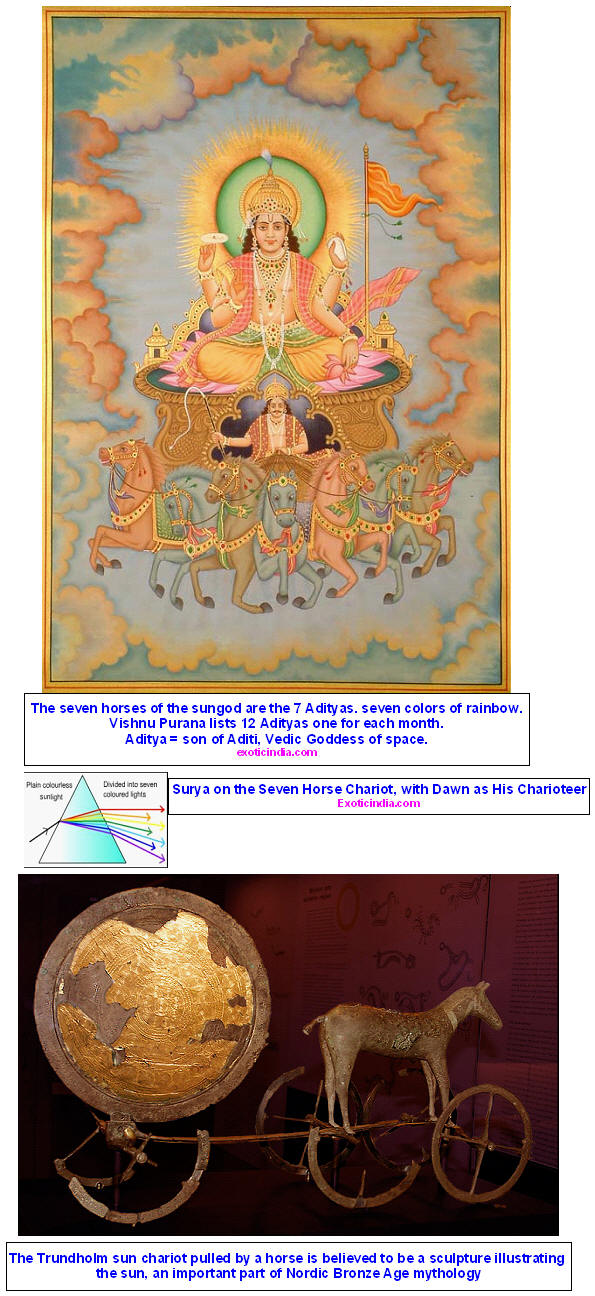
Could the seven horses of the sun be the Rainbow colors: VIBGYOR (= Violet, Indigo, Blue, Green, Yellow, Orange and Red?
5.17:
They, whose intelligence, mind, and faith are steady in Him and who
have taken refuge in the supreme, attain That (Supreme abode) from where there
is no return, having cleaned their sin by knowledge.
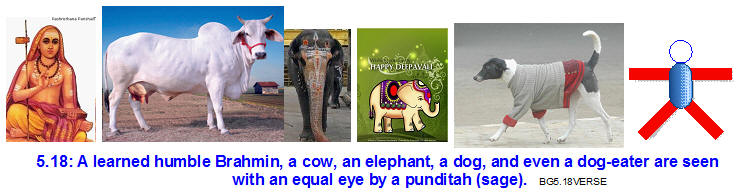
5.18:
A punditah (sage) regards (sees) with an equal eye a learned humble
Brahmin, a cow, an elephant, a dog, and even a dog-eater.
|
Biocentrism and Biocentrist Concur with ancient Hindu thoughts. January 15, 2014. HinduismIn Hinduism: Hinduism contains many elements of biocentrism. In Hinduism, humans have no special authority over other creatures, and all living things have souls ('atman'). Brahman (God) is the "efficient cause" and Prakrti (nature), is the "material cause" of the universe.[22] However, Brahman and Prakrti are not considered truly divided: "They are one in the same, or perhaps better stated, they are the one in the many and the many in the one." [22] However, while Hinduism does not give the same direct authority over nature that the Judeo-Christian God grants, they are subject to a "higher and more authoritative responsiblity for creation."[22][unreliable source?] The most important aspect of this is the doctrine of Ahimsa (non-violence). The Yājñavalkya Smṛti warns, "the wicked person who kills animals which are protected has to live in hell fire for the days equal to the number of hairs on the body of that animal."[22] The essential aspect of this doctrine is the belief that the Supreme Being incarnates into the forms of various species. The Hindu belief in Saṃsāra (the cycle of life, death and rebirth) encompasses reincarnation into non-human forms. It is believed that one lives 84,000 lifetimes before one becomes a human. Each species is in this process of samsara until one attains moksha (liberation). Another doctrinal source for the equal treatment of all life is found in the Rigveda. The Rigveda states that trees and plants possess divine healing properties. It is still popularly believed that every tree has a Vriksa-devata (a tree deity). Trees are ritually worshiped through prayer, offerings, and the sacred thread ceremony. The Vriksa-devata worshiped as manifestations of the Divine. Tree planting is considered a religious duty.[22] The paradigm of biocentrism and the values that it promotes are beginning to be used in law. In recent years, cities in Maine, Pennsylvania, New Hampshire and Virginia have adopted laws that protect the rights of nature.[19] The purpose of these laws is to prevent the degradation of nature; especially by corporations who may want to exploit natural resources and land space, and to also use the environment as a dumping ground for toxic waste.[19] http://en.wikipedia.org/wiki/Biocentrism_(ethics) Last Thursday (9th Jan 2014), reports of a strong licorice-like odor led to the discovery of a leak from a chemical storage tank at Freedom Industries in Charleston, W.Va. The leak released an estimated 7,500 gallons of 4-methylcyclohexane methanol into the Elk River, a tributary of the Kanawha. The site is about two miles upstream from the intake at West Virginia American Water's treatment plant that provides drinking water for some 300,000 residents of nine counties in the Charleston area, who were ordered to stop using tap water for anything besides flushing toilets.--News reports January 13, 2014 http://www.southernstudies.org |
|
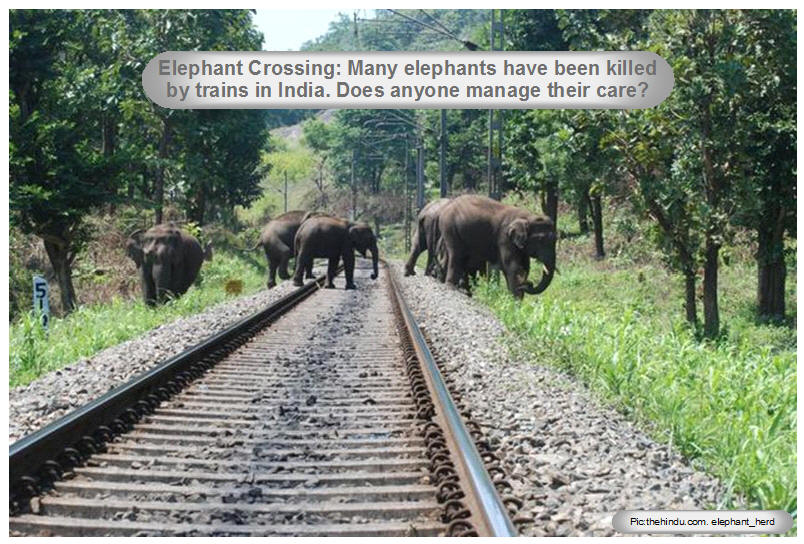
A sage looks at all living beings with an equal eye because he see the SELF in each one of them. |
|
Then he said. 'Verily, not for the sake of the husband is the husband dear but a husband is dear for the sake of the Self. Verily, not for the sake of the wife is the wife dear but a wife is dear for the sake of the Self. Verily, not for the sake of the sons are the sons dear but the sons are dear for the sake of the Self. Verily, not for the sake of wealth is wealth dear but wealth is dear for the sake of the Self. Verily, not for the sake of Brahminhood is brahminhood dear but brahminhood is dear for the sake of the Self. Verily, not for the sake of kṣatriyahood is kṣatriyahood dear but kṣatriyahood is dear for the sake of the Self. Verily, not for the sake of the worlds are the worlds dear but the worlds are dear for the sake of the Self. Verily, not for the sake of the gods are the gods dear but the gods are dear for the sake of the Self. Verily, not for the sake of the beings are the beings dear but the beings are dear for the sake of the Self. Verily, not for the sake of all is all dear but all is dear for the sake of the Self. Verily, O Maitreyī , it is the Self that should be seen, heard of, reflected on and meditated upon. Verily, by the seeing of, by the hearing of, by the thinking of, by the understanding of the Self, all this is known. Page 197 Brhad-aranyaka Upanisad. The Principal Upanisads. By Dr. Radhakrishnan. October 2, 2013. |
|
Sayings of Sri Ramakrishna
960. When a man is on the plains, he sees the lowly grass and the mighty pine tree and says, "How big is the tree and how small is the grass!" But when he ascends the mountain and looks down from its high peak, the grass and the tree blend into one indistinguishable mass of verdure. So, in the sight of worldly men, there are differences of rank and one is a king and another is a cobbler; one is a father and another is a son; and so on. But when the divine vision is attained, all appear equal; and there remains no distinction of good and bad, or of high and low.
Sayings of Sri Ramakrishna, page 306
Dangers of misunderstood philosophy 1076. A teacher once instructed his disciple, "Everything that exists is God," The disciple understood this instruction literally and not in its true spirit. One day, while he was passing through a street, he came across an elephant. The driver (Mahut) shouted aloud from the back of the animal, "Move away, move away!" The disciple, however, argued within himself, "Why should I move away? I am God and so also is the elephant. What fear has God from Himself?" Reflecting thus, he did not move. So the elephant caught hold of him by his trunk and dashed him aside. He was hurt severely, and going back to his teacher, related the whole story. The teacher then said, "All right. You are God and the elephant too is God; but God in the shape of the elephant-driver was warning you from above. Why did you not pay heed to His warning?
1073. A
Rajah was once taught by his Guru the sacred doctrine of Advaita (Monism),
which declares that the whole universe is Brahman (God). The king was very
much pleased with this doctrine. Going in, he said to his queen, "There is
no distinction between the queen and the queen's maidservant.
So the maid-servant shall be my queen henceforth." The queen was thunderstruck at this mad proposal of her lord. She sent for the Guru and complained to him in a piteous tone, "Sir, look at the pernicious result of your teachings," and told him what had occurred. The Guru consoled the queen and said, "When you serve dinner to the king today, have a potful of cowdung also served along with the dish of rice." At dinner-time the Guru and the king sat down together to eat. Who could imagine the rage of the king when he saw a dish of cow-dung served for his meal! The Guru, seeing this, calmly interrogated, "Your Highness, you are well-versed in the knowledge of Advaita. Why do you then see any distinction between the dung and the rice?"
The king became exasperated and exclaimed, "You who pride yourself to be such a great Advaitin (Monistic philosopher), eat this dung if you can." The Guru said, "Very well," and at once changed himself into a swine and devoured the cow-dung with great gusto and afterwards again assumed his human shape. The king became so ashamed that he never made again his mad proposal to the queen. |
The Hindu sacred texts glorify
a humble Brahmin because he lives for god, man and other beings. Since he is a
preceptor, a man of god, and god’s representative on earth, even his shadow is
sacred and therefore, one should not step on his shadow (Garuda Purana
1.96.54). Brahmins, snakes,
Ksatriyas, and Atman (Brahman) should never be insulted (GP 1.96.55). Daily
study of Vedas is mandatory for a Brahmin who should never desire for wealth.
He can take charity from a king, a pupil or his clan member to satisfy his
hunger (GP 1.96.35).
GP (1.213.3) states the duties of a Brahmin are
explained in Sruti and Smrti, which are his two eyes. The guiding principles
of a Brahmin come from Sruti, Smrti and the virtuous acts of others. Truth,
charity, sympathy, renunciation, knowledge, sacrifice, worship and
self-control are the eight qualities of the virtuous.
Krishna Paramatma expresses a similar sentiment in The Uddhava Gita, Dialogue Five, Verse 7. In this instance, Krishna includes things and people in the list. Since things have Self, wanton destruction of things is not respecting the Self.
7 All people and things must become equal
In the eyes of such a devotee
Be they spouse, children, home or wealth, Friends or relatives.
The devotee must seek only the Self in all.
--Translation by Swami Sarasvati.
|
December 12, 2014. Pope Francis on dogs. All dogs do go to heaven, according Pope Francis. During a recent appearance in St. Peter’s Square, the pope comforted a boy mourning the death of his dog and said, “One day, we will see our animals again in the eternity of Christ. Paradise is open to all of God’s creatures.” The pontiff, who took his papal name from St. Francis Assisi, patron saint of animals, sparks new debate over whether animals have a place in the afterlife. Francis’s predecessor, Pope Benedict XVI, has previously said animals are “not called to the eternal life,” but it remains unclear what Francis meant by his remarks. http://www.thedailybeast.com/cheats/2014/12/12/pope-proclaims-animals-welcome-in-heaven.html
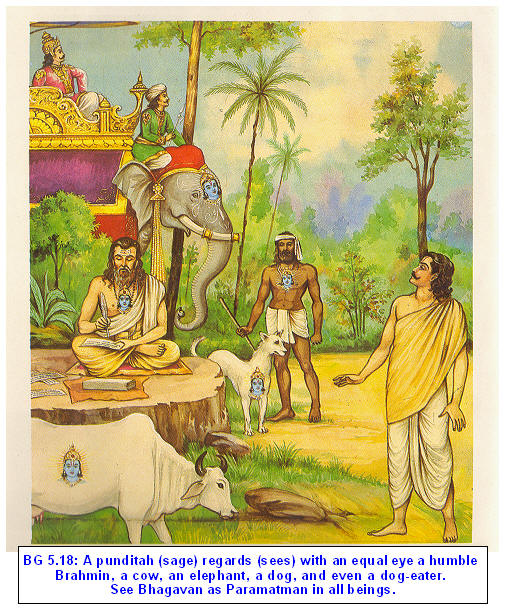
5.18:
A punditah (sage) regards (sees) with an equal eye a learned
humble Brahmin, a cow, an elephant, a dog, and even a dog-eater. |
Once Ramakrishna Paramahamsa (year 1855) was faced with a broken idol of Krishna. The priest carrying the idol of Krishna dropped it and the idol's right foot was broken in several places at the base of the toes. The learned pundits told Ramakrishna Parmahamsa that a broken idol cannot be worshipped and therefore should be immersed (disposed of) in the Ganges River. The proprietress of the temple Rani Rasmani was very sad. RKPH came up with a solution. He told Rani that she would not throw away her son-in-law with a broken leg but take him to a doctor to mend the fracture. RKPH repaired and reattached the toes of the idol and installed it for worship against the established rules of temple worship. Here we see an instance of what Krishna himself said thousands of years ago that "things" and people have Self. He had to break his toes to illustrate his point. Krishna made the priest drop the idol, break his toes and let RKPH repair them and restore the sanctity of the idol, thus showing the equality of people and things, a concept alien to many people.
All beings are dear not for the sake of being, but for the sake of Self
(Br. UP 2.4.5). Brahman is all-pervasive both in the insentient and the
sentient, and from ameba to man. In man, the sentience expresses the most and
in the ameba, it expresses the least. The soul is the same but the embodiment
is different and the pundit sees and feels that all living beings are equal.
To put it succinctly, there is a metaphysical unity in
empirical diversity. This is one of the underlying precepts for ahimsa,
noninjury. The souls in the animals have to climb the evolutionary ladder,
before these souls can attain to Brahman. The soul has fallen on hard times
and the animal soul could have been a human soul in the previous birth; this
step down is because of karma; the animal soul has to take on a human body
before it can gain moksa. The quality and the nature of Atman in the animals
and human beings are the same, but prakrti makes the difference. The pristine
nature and intrinsic knowledge of Atman in the animal is no different from
that of the human. Mahat or buddhi consists of three entities, namely
subconsciousness, consciousness, and superconsciousness. In animals, the
subconsciousness or mere consciousness is the instinctive mind, which by its
nature lacks reason and intuition. Intuition is defined as present knowledge
in continuum from previous existence. By the instinctive mind, a bird builds a
nest, and an animal avoids a poisonous plant; fish or animal, when faced with
a new set of circumstances alien to its instinct, is dead in the water, or out
of its element and resources. The Self or Atman is All-Knower and
All-Knowledge; all our knowledge comes from the Atman or Soul. The
receptiveness of the animal's brain is low and that of the human brain is
high. The animal's inadequate brain can manifest only instinct drawn from the
subconscious self, while the human brain, more developed and more receptive,
displays not only instincts, but also reason, intellect, and intuition. In
yogis more (all-knowing) eternal knowledge percolates through. Another way of
putting it is how much a person reflects the all-knowing Atman in him. The
more a person reflects, the more of a yogi he becomes. To sum up, animals have
instinct and subconsciousness (mere consciousness); man has instinct, reason,
intellect, intuition, and self-consciousness. Instinct, reason, intellect,
intuition, self-consciousness, and superconsciousness are present in Yogis.
Logic (reason), intelligence, and science work well within the scope of the
phenomenal world but do not offer any spiritual inspiration or revelation.
What is important for an individual self is not being but becoming. Death is
not the end of the journey but only the next step for the individual soul to
reach its goal of becoming which is superconsciousness.
The more learned one is, the humbler he becomes.
The riper the fruits are, the greater and lower the branches bend: Knowledge
is humility. The soul of a dog-eater or a Brahmin is of the same source and
therefore can receive SatChitAnanada, Being-Awareness-Bliss. There are no
double standards here.
A dog-eater, in this verse, means that he is a
person of mixed caste, most likely a Chandala, born of a Brahmin mother and
Sudra father.
Mixed castes according to Garuda Purana
1.96-1-73, as narrated by Yajnavalkya.
|
Father |
Mother |
The offspring |
|
Brahmin |
Ksatriya |
Muurdhaabhisikta |
|
Brahmin |
Vaisya |
Ambastha |
|
Brahmin |
Sudra |
Nisaada, Parvata |
|
Ksatriya |
Vaisya |
Maahisya |
|
Ksatriya |
Sudra |
Mleccha |
|
Vaisya |
Sudra |
Karana |
|
Ksatriya |
Brahmin |
Suta
(Sūta) |
|
Vaisya |
Brahmin |
Vaidehaka |
|
Sudra |
Brahmin |
Chandaala (Lowliest of all) |
|
Vaisya |
Ksatriya |
Maagadha |
|
Sudra |
Ksatriya |
Ksattr |
|
Sudra |
Vaisya |
Ayogava |
|
Maahisya |
Karanii |
Rathakaara |
ThAkura lists twelve qualities of a Brahmana: truthfulness, control of the senses, austerity, freedom from malice, modesty, tolerance, freedom from envy, sacrifice, charity, fortitude, studying the Vedas, and accepting vows. Page 51- Jaiva Dharma.
|
Here is what Tirumular one of the most celebrated poet and devotee of Siva-Sakti says about Brahmins. Tamil verses by Tirumular and English Translation by Dr. Natarajan |
|
|
12.. அந்தண ரொழுக்கம் |
12 DHARMA OF BRAHMINS (Brahmanas) |
|
224. அந்தணர் ஆவோர் அறுதொழில் பூண்டுளோர் செந்தழல் ஓம்பிமுப் போதும் நியமஞ்செய் தந்தவ நற்கரு மத்துநின்று ஆங்கிட்டுச் சந்தியும் ஓதிச் சடங்கறுப் போர்களே. 1 |
224: Brahmins Stand in Holy Path |
|
225. வேதாந்தங் கேட்க விருப்பொடு முப்பதப் போதாந்த மான பிரணவத் துள்புக்கு நாதந்த வேதாந்த போதாந்த நாதனை ஈதாந்தம் எனாதுகண்டு இன்புறு வோர்க்களே. 2 |
225: Through Vedanta They Seek the Endless Bliss |
|
226.காயத் திரியே கருதுசா வித்திரி ஆய்தற்கு உவப்பர் மந்திரம் ஆங்கு உன்னி நேயத் தேரேறி நினைவுற்று நேயத்தாய் மாயத்துள் தோயா மறையோர்கள் தாமே. 3 |
226: They Incessant Chant Gayatri and Savitri Mantras |
|
227.பெருநெறி யான பிரணவம் ஓர்ந்து குருநெறி யாலுரை கூடிநால் வேதத் திருநெறி யான கிரியை யிருந்து சொரூபமது ஆனோர் துகளில்பார்ப் பாரே. 4 |
227: They Attain the Manifestness State of God |
|
228. சத்திய மும்தவம் தானவன் ஆதலும் எய்த்தரும் இந்தியம் ஈட்டியே வாட்டலும் ஒத்த உயிர்கள் உண்டா யுணர்வுற்று பெத்தம் அறுத்தலும் ஆகும் பிரமமே. 5 |
228: To Sunder Birth's Bonds is to Realize Brahmam |
|
229.வேதாந்தங் கேட்க விரும்பிய வேதியர் வேதாந்தங் கேட்டுந்தம் வேட்கை ஒழிந்திலர் வேதாந்த மாவது வேட்கை ஒழிந்திடம் வேதாந்தங் கேட்டவர் வேட்கை விட்டாரே. 6 |
229: Vedanta is to be Rid of Desires |
|
230.நூலும் சிகையும் நுவலிற் பிரமமோ நூலது கார்ப்பாசம் நுண்சிகை கேசமாம் நூலது வேதாந்தம் நுண்சிகை ஞானமாம் நூலுடை அந்தணர் காணும் நுவலிலே. 7 |
230: Tuft and Thread Alone do not Make a Brahmin |
|
231.சத்தியம் இன்றித் தனிஞானம் தானின்றி ஒத்த விடயம்விட் டோ டும் உணர்வின்றிப் பத்தியும் இன்றிப் பரன் உண்மை யின்றிப் பித்தேறும் மூடர் பிராமணர் தாமன்றே. 8 |
231: Attributes of True Brahmins |
|
232.திருநெறி யாகிய சித்தசித் தின்றிக் குருநெறி யாலே குருபதம் சேர்ந்து கரும நியமாதி கைவிட்டுக் காணும் துரிய சமாதியாந் தூய்மறை யோர்க்கே. 9 |
232: They Seek Samadhi State |
|
233.மறையோர் அவரே மறையவர் ஆனால் மறையோர்தம் வேதாந்த வாய்மையினால் தூய்மை குறையோர்தன் மற்றுள்ள கோலா கலமென்று அறிவோர் மறைதொந்து அந்தண ராமே. 10 |
233: They Stand Firm in Vedanta Truth |
|
234.அந்தண்மை பூண்ட அருமறை அந்தத்துச் சிந்தைசெய் அந்தணர் சேரும் செழும்புவி நந்துதல் இல்லை நரபதி நன்றாகும் அந்தியும் சந்தியும் ஆகுதி பண்ணுமே. 11 |
234: True Brahmins Bring Prosperity to Earth |
|
235.வேதாந்த ஞானம் விளங்க விதியிலோர் நாதாந்த போதம் நணுகிய போக்கதுபோதாந்த மாம்பரன் பாற்புகப் புக்கதால் நாதாந்த முத்தியும் சித்தியும் நண்ணுமே. 12 |
235: Through Vedanta They Scale the Heights of Siddhanta |
|
236. ஒன்றும் இரண்டும் ஒருங்கிய காலத்து நன்றும் இருந்தும் நலம்பல பேசினும் வென்று விளங்கும் விகிர்தனை நாடுவர் சென் வணங்குந் திருவுடை யோரே. 13 |
236: They Seek Merger in Lord |
|
237.
தானே
விடும்பற்று இரண்டும் தரித்திட நானேவிடப்படும் ஏதொன்றை நாடாது பூமேவு நான்முகன் புண்ணிய போகனாய் ஓமேம் ஓர்ஆ குதிஅவி உண்ணவே. 14 |
237: They Vision Brahma in Aum |
5.19. Here they whose mind is in equilibrium conquer Samsara and are established [abide] in Brahman, who is flawless and the same.
Remaining in equilibrium means that they regard all beings equally: Prince and the pauper, Brahmana and Chandala, man and monkey. Brahman is the Self that is flawless and the same in all beings, without any taint.
Prakrti covers and contaminates the individual
soul. Brahman is free from such contamination and thus is the same in
everybody. Knowing that Prakrti-free selves (the soul) are equal, they stand
firm in Brahman.
5.20:
He neither rejoices for getting that which is pleasant nor laments at
getting that which is unpleasant. Since he is steady in his intelligence
without bewilderment,
the knower of Brahman or God stands firm in God.
Brahmani Sthitah: Stands firm in Brahman,
established in Brahman.
The sweet and sour experiences, compared with those of the birds on the tree, are those of the body and not of the self, and therefore, the stainless self, thus knowing, abides in Brahman. Logic, reason and human intelligence, (intuitive intelligence is a separate entity) do not measure up to understand and know Brahman and the study of scriptures is only a preliminary step in that process. Brahman is the thread that runs through all living entities as in a garland, binds all living entities high and low, and holds and moves the puppets of the world of beings and nature.
Knower of Brahman is one who possesses Brahman knowledge, the knowledge of the Self. Panchadasi (4.55-69) quotes Suresvara, saying that he who pretends to be a knower of Brahman without any moral restraint is like a dog with unclean eating habits. The knower of Truth does not wallow in impurities like a pig in a sty. He who rises above the impurities and desires of the mind is worthy of worship as if he is god. A man who wades in his mind in the river of passions, gets wet with those passions which lead him to attachment, longing, frustration and anger. These can be avoided by meditation on formless Brahman. Once the mind erases the world of matter from its memory, the mind ceases to dwell on the objects and becomes blank like a clean slate; he acts like a dumb and mute person. He is on the doorway opening into the world of Nirvana. If the mind wanders into objects of desire, it is easy for him to bring it back to tranquil state by meditation. He who knows no distraction is a knower of Brahman; he is Brahman Itself. He, who is not concerned whether he is in union with Brahman or not, is Brahman Itself.
5.21:
He, whose soul has shed all attachments to external sense objects,
enjoys happiness in the self. He, with his “self” absorbed in Brahma yoga,
enjoys undecaying (imperishable) happiness or bliss.
5.22:
Certainly, the accompanying pleasures from contact between senses and
sense objects are source (seats) of sorrow. They have a beginning and an end,
O Kaunteya, and the wise do not take any pleasure in them.
Kaunteya: Son of Kunti, or Arjuna. The fleeting pleasures resulting from the contact of the senses with the sense objects are a source of pain. Knowing that they are Atman, they do not indulge themselves in such pursuits and abide in Brahman. The story of two birds explains this. The first bird is the witness, not eating any fruits. The companion bird eats sweet and sour fruits, alternating between pleasure and pain, until it finds wisdom from its own self and abides in the Self.


5.23:
He, who can endure the flood of desire and anger, before he gives up
his body, is a yogin and a happy man.
Vega: rush, force, flood
Here and now, there is a promise of wisdom and
happiness.
Only if one longs for the experience of the self,
he gives up desire and anger. There is no implication here that the person
controlling himself and experiencing the self will get jivan-mukti, liberation
when he is alive. This yogin, having fried his karmic seeds, remains in
Kaivalya and Samādhi.
5.24: He, who finds happiness, pleasure, and the inner light within his self, is a yogin and having become Brahman, attains Brahman (and the bliss of Brahman or beatitude of Brahman).
|
What is the Inner Light? The Principal Upanisads page 97-98. Dr. Radhakrishnan Sep 22, 2013 |
|
If the real is misconceived as an object of knowledge, it cannot be known. Empirical objects may be known by outer observation or inner introspection. But the self cannot divide itself into the knower and the known. Logical reasoning is incapable of comprehending the living unity of God and man, the absolute and the relative. Logical incapacity is not evidence of actual impossibility. Reality unites what discursive reason is incapable of holding together. Every atom of life is a witness to the oneness and duality of God and the world. Being can never be objectified or externalised. It is co-inherent and co-existent in man. It is unknowable because we identify existence with objectivity.This is true, to a limited extent, of purely external things like tables and chairs. They are net to be reduced to sensations or concepts arising in the knowing mind. But spiritual reality is not revealed in the way in which objects of the natural world or principles of logic are apprehended. Yājñavalkya tells us that the self is its own light when the sun has set, when the moon has set, when the fire is put out, ātmaivāsya jyotir bhavati. It is our deepest being behind the vestures of body, life, mind and intellect. Objectivity is not the criterion of reality, but the criterion is reality itself revealed in our very being. We ask for a criterion of knowledge on the assumption of a duality between the knowing subject and the Known object. If the object appears alien and impenetrable, then the question of knowing it becomes a problem. But no object can be set in opposition to the spirit and so the question of criterion does not arise. True knowledge is an integral creative activity of the spirit which does not know anything external at all. For it everything is its own life. Here there is identity, possession, absorption of the object at the deepest level. Truth in spiritual life is neither the reflection nor the expression of any other reality. It is reality itself. Those who know the truth become the truth brahma-vid brahmaiva bhavati. It is not a question of having an idea or a perception of the real. It is just the revelation of the real. It is the illumination of being and of life itself. It is satyam, Jñānam. Knowledge and being are the same thing, inseparable aspects of a single reality, being no longer even distinguishable in that sphere where all is without duality. Where there is duality, there one sees another, hears another. We have objective knowledge. While vijñāna deals with the world of duality, ānanda implies the fundamental identity of subject and object, non-duality. Objectification is estrangement. The objective world is the 'fallen' world, disintegrated and enslaved, in which the subject is alienated from the object of knowledge. It is the world of disruption, disunion, alienation. In the 'fallen' condition, man's mind is never free from the compulsion exercised by objective realities. We struggle to overcome disunion, estrangement, to become superior to the objective world with its laws and determinations. |
5.25: The sages, who restrain the mind, whose sins are destroyed, whose doubts and dualities are dissolved, and who are devoted to the welfare of all beings, attain Bliss of Brahman.
The sage restrains his mind, he destroys his
sins, he clears his doubts and transcends his dualities, he devotes his life
to the welfare of all living creatures, and he attains to the bliss of Brahman
and Brahman Himself.
5.26: The beatitude of Brahman is imminent in the
ascetic, who removed his desire and anger, whose
mind exercises restraint, and who has knowledge of the self.
Matted hair, deerskin, and pious pretension do not make an
ascetic. An ascetic in name and epicure in
practice, though he professes to know Brahman, is far away from Brahman.
Appearance does not make an ascetic, though he wanders naked and shameless; a
donkey does the same. Jackals,
rodents and deer live in the forest, eat grass, and drink water: are they
ascetics? The frogs and fish take birth, eat and die in Ganga. Are they
ascetics? –Garuda Purana, II.49.64-67-68.
This passage has reference to
Avadutas, who renounce the world and live on
what is offered to them or on leaves, roots and fallen fruits.
Avadhûta = one who has shaken off himself worldly feeling and obligation.
Here is what Sankara says in Bajagovindam about a false ascetic.
Verse 14. (There goes) one with matted hair; (here comes) one with shaven head; (there sits) yet another with plucked hair and saffron cloth; the fools sport various disguises. They all claim to "see;" (What they "see" no one knows and neither he knows what he "sees.") In reality he does not "see." All this Vesha (disguise) is to fill the belly.
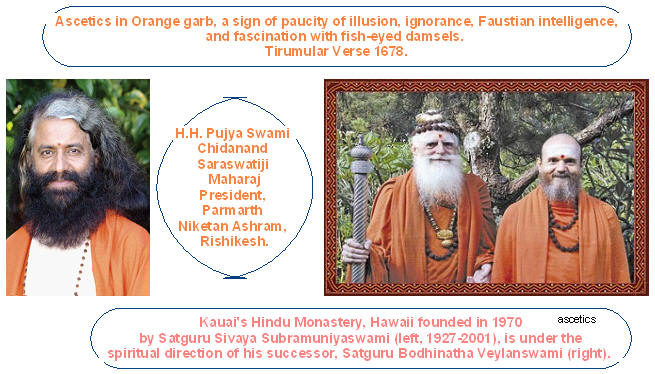
Here is what Ramakrishna Paramahamsa (February 18, 1836 - August 16, 1886) says in saying 386, page 115, in Sayings of Sri Ramakrishna: The wearing of the orange garb of the Sannyasin naturally causes sacred thoughts to rise in the mind. Every kind of dress has its own association, although dress in itself has no special significance.
Here is what Tirumular (around 500 CE) of Tirumantiram says about ascetics.
மயல் அற்று இருள் அற்று மாமனம் அற்றுக்
கயல் உற்ற கண்ணியர் கைப்பிணக்கு அற்று
தயல் அற்றவரோடும் தாமே தாமாகிச்
செயல் அற்று இருப்பார் சிவ வேடத்தாரே. Verse 1678.
Devoid of delusive intellect or mind, devoid of egoism, devoid of feeling of self-centeredness, devoid of passion of fondling the tender hands of fish-eyed damsels, and devoid of delusion of mind, the ascetics find Sivaness and become Siva themselves. They sport the guise of Siva, having abandoned all external acts and becoming themselves-- one with the One (that is Siva).
Here the guise of Siva indicates the orange garb that ascetics wear.
5.27:
Abandoning all sense objects, fixing the gaze
between the eyebrows,
and keeping the movement of air up and down (Prāna, Apāna) the nostrils in
equilibrium within the nostrils, (continued)
Between the eyebrows: antare bhruvoh or Bhru madhya. √ Bhram = Brow. As you see here Brow is derived from Sanskrit word Bhram.
5.28:
The sage, who has controlled his senses, mind, and intellect; who has
his highest aim moksa or liberation;
and who freed himself from desire, fear, and anger, is forever free
(liberated).
Prāna and Apāna breaths:
See comment on verse 9 chapter 10 for details.
|
The Principal Upanisads. By Dr. Radhakrishnan, Page 122. Sep 26, 2013 What is liberation? Yājñavalkya centres his attention on oneness with the Absolute Brahman, a state where there is no desire, there is no passion, not even any consciousness, pretya saṁjña nāsti.1 When honey is prepared by the collection of various juices, the latter cannot discriminate from which trees they were drawn, even so when the souls are merged in the Real, they cannot discriminate from which bodies they come.2 The self rises above the distinction of subject and object which characterises all empirical consciousness. It is altogether time-transcending. This is impersonal immortality where the soul achieves absoluteness, unconditioned being.3 It is illumined consciousness. |
|
1 B U II 4 12, IV 5 13 2 C U VI 6 10 B U IV 3 21 |
|
3 Cp Viveka-ciūḍāmaṇi, ascribed to Saṁkara. It also occurs in Gaudapada's Kārikā, on Mā. U |
|
na nirodho na cotpattir na baddho na ca sādhakaḥ |
|
na mumukṣur na vai mukta ity eṣā paramārthatā. |
|
There is no destruction, nor is there origination. There is no one bound nor is there one practising discipline. There is no seeker of freedom nor is there the freed. Such is the highest state. |
5.29:
Knowing me thus as the enjoyer of all sacrifices and austerities (Yajana-tapasam)
and the supreme Lord of this whole world or universe, the Friend of all living
beings, one attains peace.
Any sacrifice, made to any gods goes to Lord Krishna Himself, since He is the Supreme Lord of all souls, including those of gods. He is the universe and the enjoyer of all Sacrifices. He is the friend of all the devotees, easy of access, loving as a parent, kind, and compassionate with infinite grace, though inscrutable. He is the knowledge, the Knower, and Doer but the Unknowable too.
Paramahamsa Babaji says the following on Krishna. Parabrahma Krishnachandra is the one and only Infinite Substance (brhad vastu) and the jivas are his innumerable atomic particles. Like sparks emanating from an undivided fire, the jivas emanate from Krishna, who is the embodiment of innumerable consciousness. The jiva has the full function of consciousness, with which he should seek Krishna.
End of Chapter Five: Yoga of Renunciation of Action